What Is a Warehouse Rack and Which System Fits Your Storage Needs
A warehouse rack is a steel or aluminum framework built to store palletized, boxed, or loose goods above floor level, so a facility can use vertical space instead of spreading inventory across the floor. The right rack system depends mainly on load weight, item shape, and how often stock needs to be picked: pallet racking suits palletized bulk goods, mezzanine racking adds a second usable floor without new construction, cantilever racks handle long or irregular items such as pipe and lumber, supermarket shelf units are built for retail-facing display and backroom storage, and office & home shelves cover lighter household or small-business storage. Choosing among these categories is less about which one is broadly superior and more about matching the rack to the load, the building height, and the picking pattern used on site.
This guide walks through each rack category, compares typical load capacity and space efficiency, and outlines practical steps a warehouse manager, retailer, or facility planner can take when specifying a new storage system. A rack manufacturer or shelving supplier will usually design each product line around a defined duty rating, whether light, medium, or heavy, so the weight and dimensions of what will be stored are almost always the first decision point before choosing between a warehouse rack, a shelving unit, or a raised platform.
Rack Categories Covered in This Guide
Pallet Racking – for palletized bulk storage in distribution centers and warehouses
Mezzanine Racking – for adding a second storage or work level inside an existing building
Cantilever Racks – for long, bulky, or irregularly shaped items
Supermarket Shelf systems – for retail display and backroom storage
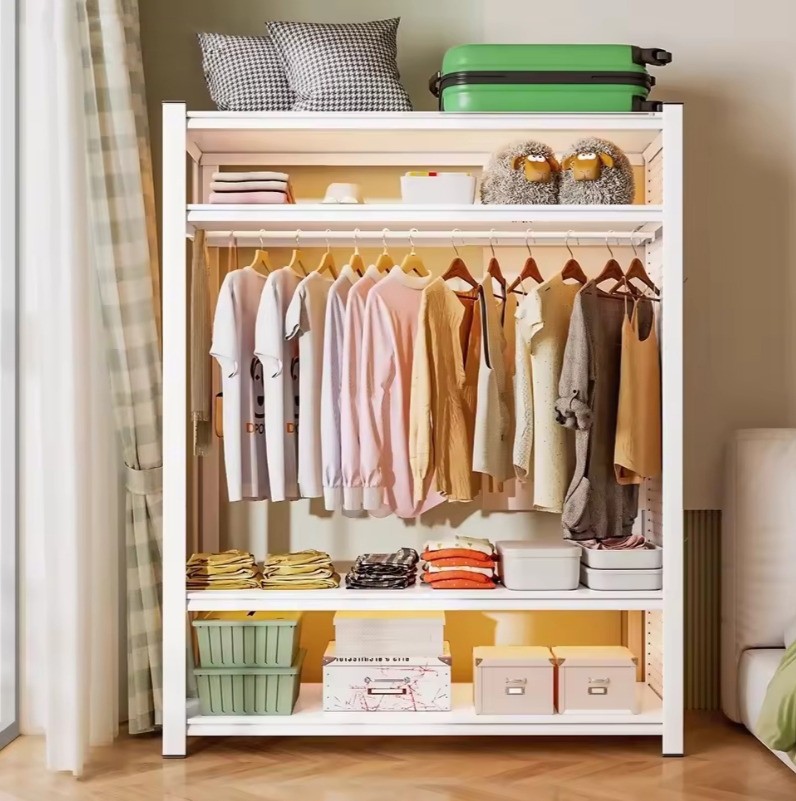
Office & Home Shelves – for lighter household and small-business storage, including garment racks and closet systems
Warehouse Rack Categories at a Glance
Before comparing individual products, it helps to see how the main rack and shelving categories typically differ in load duty, height range, and the industries that use them most. The table below gives a general reference point rather than an exact specification sheet, since actual load capacity always depends on the specific beam, upright, and connector design a rack manufacturer uses. Pallet racking and mezzanine racking generally sit at the higher end of the duty range, while supermarket shelf and office & home shelves are built for lighter, more frequently rearranged loads.
Table 1. General comparison of common warehouse rack and shelving categories based on typical industry specifications.
Rack Type
Typical Duty Level
Typical Height Range
Common Industries
Pallet Racking
Medium to heavy duty
Up to full building height
Distribution, retail, food and beverage, manufacturing
Lumber, steel and pipe, furniture, construction supply
Supermarket Shelf
Light to medium duty
Around 2 to 2.5 meters
Grocery, convenience retail, wholesale stockrooms
Office & Home Shelves
Light duty
Around 1.8 to 2.2 meters
Home closets, small offices, light retail storage
Pallet Racking for Warehouse and Distribution Center Storage
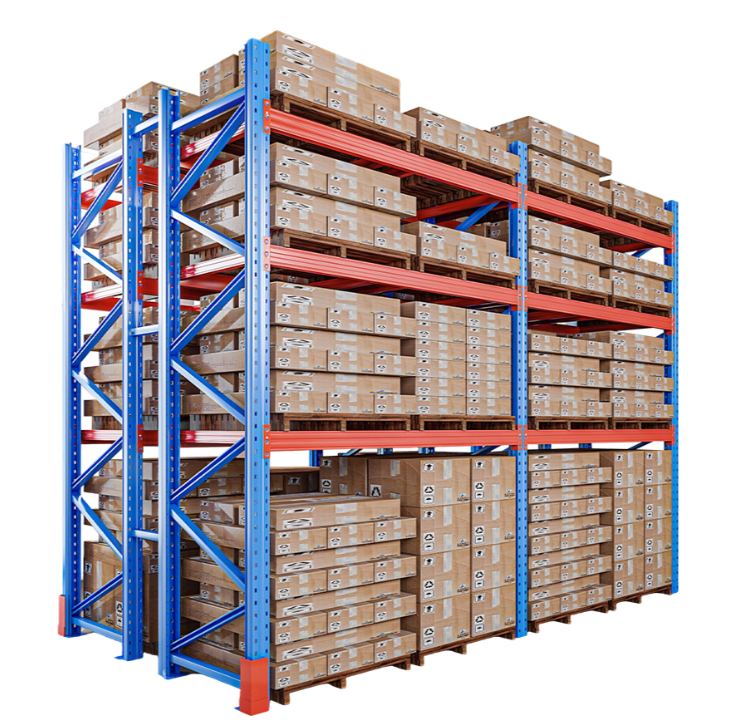
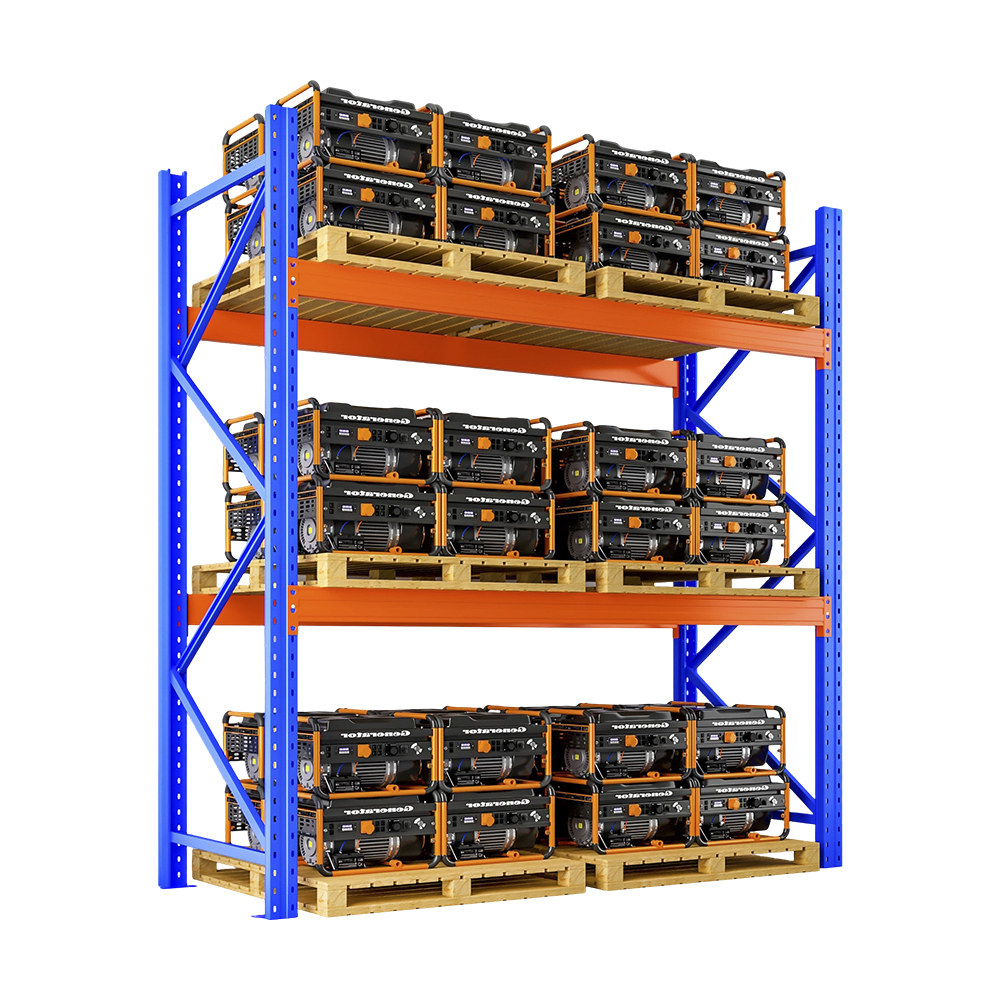
Pallet racking is the most widely used warehouse rack format for storing palletized goods above floor level. A typical selective pallet racking system consists of vertical upright frames, horizontal load beams, and wire mesh or steel decking, arranged in rows separated by aisles sized for a forklift or reach truck. Because every pallet position sits behind its own aisle, selective pallet racking gives direct access to each load without needing to move other pallets first, which makes it a common choice for distribution centers, food and beverage warehouses, and automotive parts storage where order picking speed matters.
Beyond the selective layout, warehouses handling high volumes of the same stock keeping unit sometimes use drive-in or double-deep pallet racking to increase density at the cost of some selectivity. A rack manufacturer will size the upright frame gauge, beam profile, and floor anchoring based on the intended pallet weight and stacking height, and most facilities label each bay with its rated load capacity so operators do not exceed the safe working limit of the pallet racking. Regular inspection for beam deflection, frame damage from forklift contact, and loose connectors is a standard part of keeping any warehouse rack system safe over its working life.
Storage Density Comparison Across Rack Types
The chart below places several common rack types on a single relative scale to show how storage density typically changes from simple floor shelving to engineered multi-level systems. Storage density here refers to how much usable storage volume a system creates within a fixed floor footprint, not the exact tonnage a single beam can hold. Because warehouse floor space is one of the largest fixed costs a facility manager works with, density is usually one of the first variables considered when comparing a warehouse rack investment against simple flat storage. The comparison groups standard shelving, supermarket shelf units, cantilever racks, selective pallet racking, and mezzanine racking side by side using a relative index rather than any single supplier's published figures. Reading the chart from top to bottom shows the general pattern that systems adding vertical levels, such as pallet racking and mezzanine racking, tend to outperform single-level shelving on the same floor area.
Mezzanine racking sits at the top of this relative index because it does not just stack goods higher within one level, it creates an entirely new floor plate inside the existing building envelope, effectively doubling usable area on the footprint it occupies. Selective pallet racking follows closely behind, since stacking loads to several beam levels up to the building's usable height multiplies capacity well beyond what a single floor of shelving can hold. Cantilever racks score lower on this particular density index, which reflects that their main advantage is not raw stacking density but the ability to store long or oddly shaped items that would not fit cleanly on beam-and-deck pallet racking in the first place. Supermarket shelf units and standard shelving sit at the lower end of the scale because they prioritize easy visual access and frequent restocking over maximum vertical stacking, which matches how retail and light-duty storage environments actually operate. It is worth noting that a lower density score is not a weakness in every context, since a supermarket shelf that is easy to restock several times a day is doing its job even though it stores less volume per square meter than a fully stacked pallet racking bay. Facility planners should treat storage density as one input among several, alongside load capacity, aisle width for material handling equipment, and how quickly individual items need to be picked. A warehouse that mixes slow-moving bulk stock with fast-moving retail-ready cartons often ends up using more than one rack type in different zones rather than relying on a single system throughout the building. Building height is another practical constraint, since a site with a low roof clearance may not be able to reach the higher density scores shown for pallet racking or mezzanine racking regardless of how the racks are configured. For this reason, the chart is best used as a starting reference for comparing general characteristics, not as a substitute for a proper warehouse layout calculation carried out with a qualified rack manufacturer or structural engineer. Once density has been weighed against these other factors, most facilities are able to narrow the rack type down to one or two realistic candidates before requesting detailed drawings.
Mezzanine Racking: Adding a Second Storage Level Without Expanding the Building
Mezzanine racking is a raised structural platform built inside a warehouse, supported by steel columns and beams, with decking, a staircase, and guardrails added to create a usable floor above the existing ground level. Because the platform uses the vertical space between the working floor and the roof, a mezzanine can add a substantial amount of new storage or work area without extending the building footprint, which is one reason it is often chosen by e-commerce fulfillment centers and third-party logistics operators facing rising real estate costs. Depending on how it is engineered, the space below a mezzanine racking structure can be used for pallet racking or cantilever racks, while the deck above supports pick modules, packing stations, or additional light-duty shelving.
Because a mezzanine is a load-bearing structure rather than a simple shelving unit, the design needs to account for the weight of stored goods, foot traffic, and any equipment placed on the deck, along with fire code requirements such as sprinkler clearance and means of egress. A rack manufacturer that also engineers mezzanine platforms will typically size the column grid and beam spans around the intended point loads and provide stamped structural drawings for the local building department where required.
The isometric diagram above is a simplified structural illustration, not a fabrication drawing, and shows the main elements of a typical mezzanine racking platform: the upper deck, the support columns that carry the load down to the floor, a staircase for access, and a guardrail along the open edge, with additional pallet racking or shelving positioned underneath the platform.
Typical Warehouse Floor Area Allocation
The donut chart below illustrates a commonly used planning benchmark for how floor area is generally split inside a warehouse between storage racks, aisles, staging or dock space, and office or other uses. This kind of breakdown is often used informally by warehouse designers as a starting point before a detailed layout is drawn, rather than as a fixed rule that applies to every building. Because aisle width and staging space cannot simply be removed, adding a mezzanine racking level is one of the few ways to increase storage share without taking floor area away from the functions that keep a warehouse running. The four segments shown are storage racks, aisles and access routes, staging or dock area, and office or other support space, each expressed as a share of the total floor area. Looking at how much of a typical warehouse footprint is already committed to aisles and staging helps explain why many facilities look upward, toward pallet racking height or a mezzanine racking platform, once ground floor space runs out.
Storage racks – approximately 55 percent
Aisles and access routes – approximately 25 percent
Staging and dock area – approximately 12 percent
Office and other support space – approximately 8 percent
Reading the donut chart from the largest segment down, storage racks generally take up just over half of a typical warehouse floor plate, which already reflects the assumption that the facility is using pallet racking or shelving efficiently rather than storing goods loose on the floor. Aisles and access routes make up the second largest share, since forklifts, reach trucks, and order pickers all need a minimum clear width to maneuver safely between rack rows, and this width cannot be reduced without changing the type of equipment used. Staging and dock area is smaller but still significant, covering the space needed to stage incoming and outgoing pallets near loading doors before they move into or out of storage. Office and other support space is usually the smallest segment, covering administrative areas, break rooms, and any equipment charging or maintenance zones. Because aisles, staging, and office space are largely fixed requirements rather than flexible ones, the storage segment is where a facility has the most room to improve through better racking, and mezzanine racking is one of the more direct ways to grow that segment without expanding the building. Adding a mezzanine racking level effectively creates a second version of the storage segment stacked above the first, without adding new aisles, staging, or office space, which is why the space efficiency gain from a mezzanine can be larger than simply adding a few more pallet racking bays at ground level. This is also why mezzanine racking is frequently chosen by fast-growing e-commerce and third-party logistics operations that need more storage or pick locations quickly but cannot easily relocate or expand their building footprint. The trade-off is that a mezzanine requires a heavier upfront structural investment and a longer planning process than adding a row of shelving, since it involves columns, beams, decking, and often a fire code review. For businesses with a lower roof and less available headroom, cantilever racks or supermarket shelf units may be more appropriate than trying to fit a full mezzanine racking platform into the available height. As with the storage density chart, this floor allocation breakdown should be treated as a general planning reference rather than an exact measurement of any specific building.
Cantilever Racks for Long, Bulky, and Irregular Loads
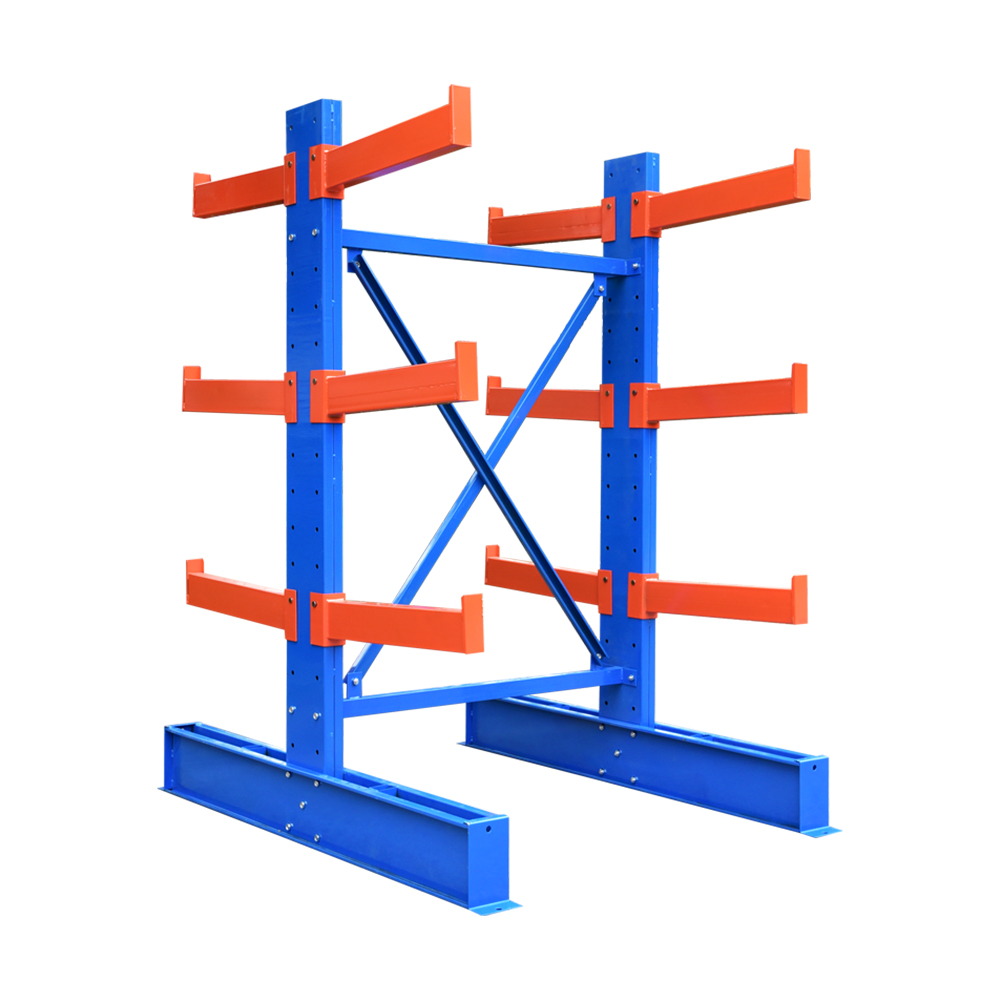
Cantilever racks use a column and base design with horizontal arms extending outward, and no vertical framework at the front of the bay, which leaves an open face for loading long items from the side or by crane. This open-arm design makes cantilever racks well suited to lumber, steel bar and pipe, furniture, carpet rolls, ladders, and other items that do not fit cleanly on a standard pallet, since there is no beam or upright blocking the length of the load. Arms can usually be adjusted or repositioned along the column at different heights, which allows a single cantilever rack row to store several different lengths of material at once.
The isometric diagram above shows the main structural elements of a single-sided cantilever rack: the vertical column, the base that anchors the column to the floor, a diagonal brace for stability, and the horizontal arms that carry the load. Double-sided cantilever racks use the same column with arms extending on both sides, which is common in indoor storage aisles where material can be loaded and unloaded from either side.
Table 2. General examples of items commonly stored on cantilever racks by typical arm length.
Duty Level
Typical Arm Length
Example Items
Light duty
Approximately 0.6 to 1 meter
Molding, trim, small pipe bundles
Medium duty
Approximately 1 to 1.5 meters
Lumber, furniture, carpet rolls
Heavy duty
Approximately 1.5 to 2.5 meters
Structural steel, long pipe, large coils
Outdoor cantilever racks used in construction supply yards or steel storage areas are usually finished with a galvanized coating for corrosion resistance, while indoor units are more commonly powder coated. Because cantilever racks concentrate load along the arm rather than across a flat deck, correct arm spacing and column bracing matter more here than on most other rack types, and it is generally worth checking the rated capacity for the specific arm length and spacing in use before loading heavy or unevenly balanced material.
Heavy-Duty Racking for Industrial Equipment and Machinery Storage
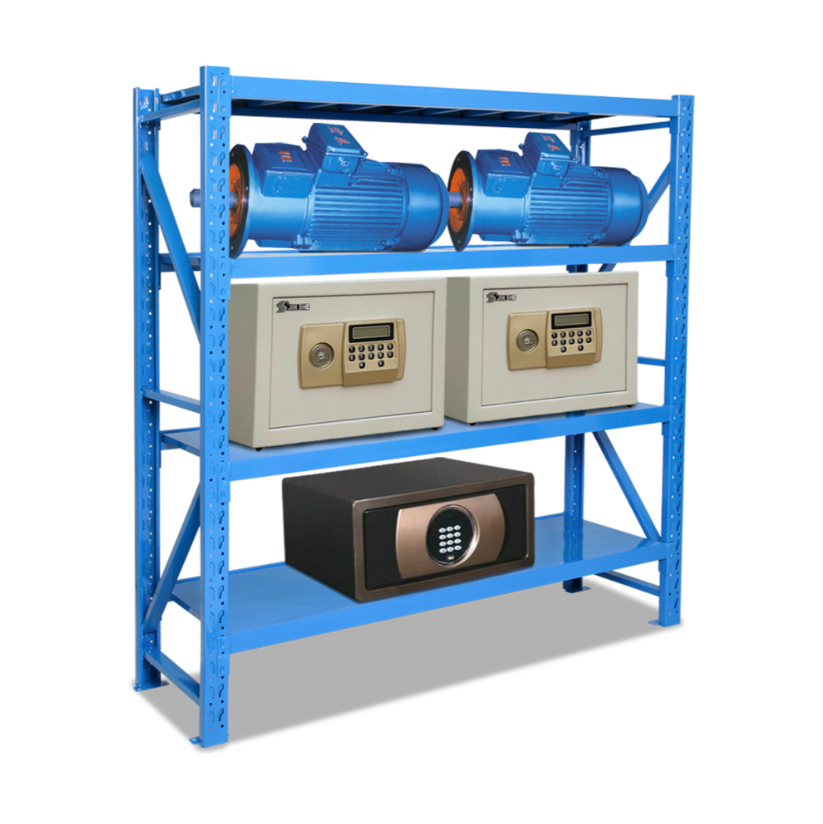
Some warehouse rack applications involve concentrated point loads rather than evenly distributed cartons, such as storing motors, molds, engine components, or other machinery parts. Heavy-duty racking for this kind of load typically uses thicker gauge steel, reinforced upright frames, and solid steel shelf decking instead of wire mesh, so that the weight of a single heavy component does not exceed the capacity of a small deck area. This type of rack is common in manufacturing plants, equipment rental yards, and maintenance workshops where individual items can weigh far more than a typical carton of retail goods.
Because these loads are often uneven or bulky, clear load rating signage for each bay and shelf level becomes especially important, and many facilities mark the maximum point load as well as the total distributed load a shelf can carry. Anchoring the rack frame securely to the floor slab and keeping forklift traffic clear of upright frames both reduce the risk of impact damage, which is one of the more common causes of structural failure in heavy-duty racking over time. When specifying this type of warehouse rack, it is generally worth confirming with the manufacturer how the shelf decking has been reinforced for concentrated loads, rather than assuming that a heavier-looking frame automatically means a higher safe capacity.
Supermarket Shelf and Retail Backroom Storage Solutions
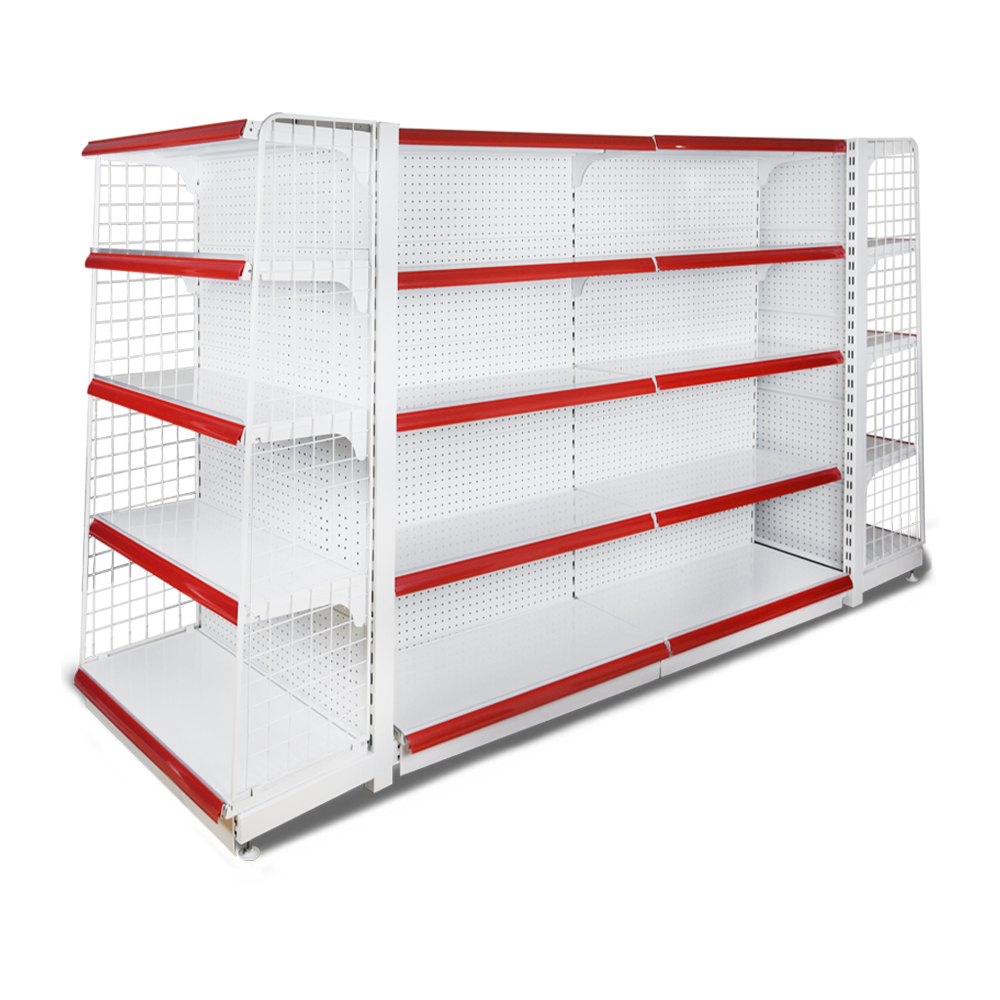
A supermarket shelf system generally refers to two related but distinct products: front-of-store gondola shelving designed for customer-facing display, and medium-duty backroom shelving used to hold overstock cartons before they reach the sales floor. Both are typically rated for lighter, more evenly distributed loads than pallet racking, since the priority is easy visual access and frequent restocking rather than maximum stacking height. Adjustable shelf levels are a common feature, allowing a grocery or convenience retail location to reconfigure a supermarket shelf layout for seasonal merchandising or changing product mixes without replacing the frame.
Backroom shelving in a supermarket or wholesale stockroom is often specified in galvanized or coated steel for durability in areas that see frequent restocking traffic, and shelf spacing is usually set to match common carton heights for the categories being stored, such as beverages, packaged dry goods, or refrigerated items awaiting placement in cold storage. Retail chains sourcing shelving in volume from a wholesale supplier or manufacturer typically look for consistent shelf dimensions across locations, since this simplifies planogram changes and makes it easier to move fixtures between stores as layouts change.
Office & Home Shelves: Garment Racks, Closet Systems, and Light-Duty Storage
Office & home shelves cover a lighter duty category than warehouse rack or supermarket shelf products, generally built from thinner gauge coated steel and designed for household or small-business environments rather than continuous forklift traffic. This category includes garment racks for hanging clothing, closet organization systems that combine hanging rails with shelves and storage bins, and simple utility shelving for home, garage, or small office use. Because these products are usually assembled without welding, using boltless or simple bolt-together connections, they are easier for an end user to set up and reconfigure than industrial racking.
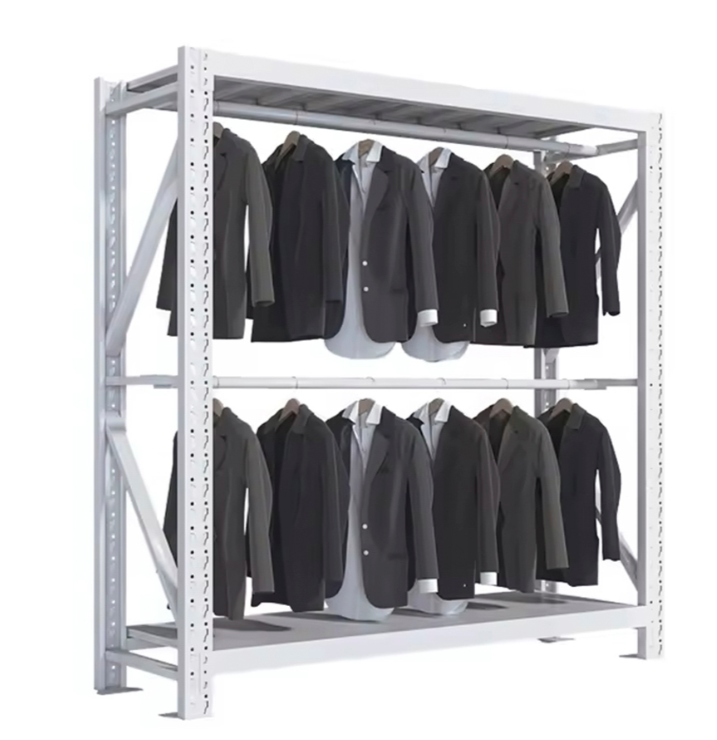
A garment rack is a common example within this category, typically consisting of upright supports, a horizontal hanging rail, and one or more shelf levels above or below the rail, used both in small retail back-of-house areas for clothing storage and in homes as an alternative to a built-in closet. Closet organization systems extend this idea further, combining hanging space with fixed or adjustable shelves and sometimes drawer units, arranged to fit a specific closet footprint.
Common finishes for office & home shelves include powder-coated steel and, for lighter applications, coated wire, both chosen for a balance of appearance and everyday durability rather than the higher load ratings expected of a warehouse rack. Typical settings include home closets, laundry rooms, garages, and small office or retail stockrooms where a business needs simple, adjustable storage without the cost or footprint of an industrial racking system.
How to Choose the Right Rack System for Your Facility
Choosing between pallet racking, mezzanine racking, cantilever racks, supermarket shelf units, and office & home shelves generally comes down to a short list of practical questions rather than a single formula. Load weight and item shape usually narrow the choice first: palletized goods point toward pallet racking, long or irregular items point toward cantilever racks, and lighter loose goods point toward shelving. From there, available floor-to-ceiling height determines whether a mezzanine racking level is realistic, and how often individual items need to be picked determines whether a more selective, lower-density layout is worth the extra floor area it uses.
Identify the typical unit load: palletized, boxed, loose, or long and irregular.
Measure available floor-to-ceiling height and any roof or sprinkler clearance limits.
Estimate how often each stored item needs to be picked or accessed.
Confirm aisle width needed for the forklift, reach truck, or order picker in use.
Ask a rack manufacturer or supplier for load-rated drawings before finalizing a layout.
Comparing Rack Types Across Key Selection Criteria
The radar chart below compares pallet racking, cantilever racks, and mezzanine racking across five practical selection criteria: load capacity, space efficiency, item accessibility, installation speed, and suitability for long items. Each axis is scored on a simple one-to-five scale, with five representing the strongest general performance on that criterion among the systems compared here, not an absolute or universal ranking. This kind of side-by-side comparison is useful for narrowing down options early in a project, before moving on to a detailed layout with exact dimensions and load figures. Because each rack type is engineered for a different combination of priorities, no single shape on this chart is meant to look larger overall than the others across every axis. The comparison is intended to support the decision framework above by showing at a glance where each system tends to be strongest and where it tends to trade off against something else.
Pallet Racking
Cantilever Racks
Mezzanine Racking
Pallet racking scores well on item accessibility and installation speed in this comparison, reflecting that a selective layout gives direct access to each pallet and can generally be installed in standard bolted sections without the structural design work a mezzanine requires. Cantilever racks score highest on long-item suitability, which is expected since this is the specific problem the design solves, while scoring lower on space efficiency because the open-arm layout does not stack as densely as beam-and-deck pallet racking. Mezzanine racking scores highest on space efficiency for the reasons discussed earlier in this guide, since it adds an entire new level, but scores lowest on installation speed because it involves structural engineering, column footings, and often a building code review before installation can begin. None of the three systems scores highest across all five criteria, which is consistent with the earlier point that rack selection is a matter of matching priorities rather than finding a universally superior product. A facility mainly concerned with picking speed for fast-moving retail-ready pallets will likely weight item accessibility and installation speed more heavily and lean toward pallet racking. A construction supply or steel distribution business handling long material will weight long-item suitability most heavily and lean toward cantilever racks regardless of the lower space efficiency score. A business facing a hard limit on floor area but with adequate ceiling height may prioritize space efficiency above installation speed and accept the longer project timeline that a mezzanine racking installation involves. It is also common for a single facility to use more than one of these systems in different zones, for example running mezzanine racking above ground-level pallet racking in a bulk storage zone while using cantilever racks in a separate area for incoming raw material. Because the underlying scores are illustrative rather than measured from a specific installation, this chart works best as a discussion starting point with a rack manufacturer or supplier, who can convert these general priorities into an actual load-rated layout. Revisiting the five criteria after getting a preliminary layout back from a supplier is a reasonable way to confirm that the system selected still matches the original priorities once real dimensions and costs are on the table.
Industry Trends Shaping Demand for Warehouse Racks
Multiple industry market research reports covering the warehouse racking sector describe continued growth in the value of the global market over the coming years, generally pointing to e-commerce order fulfillment, third-party logistics expansion, and warehouse automation as recurring demand drivers, though estimates of exact market size vary between research providers. A recurring theme across these reports is that rising e-commerce volumes require warehouses to hold a wider range of stock keeping units with faster turnover, which tends to favor more selective pallet racking layouts and, where floor space is limited, mezzanine racking to add pick locations without a new building.
Relative Growth in Warehouse Racking Demand
The area chart below shows an illustrative upward trend in demand for warehouse racking systems over a ten-year span, built to reflect the general direction described across several market research reports rather than any single published data series. The horizontal axis represents time from roughly 2019 through 2029, while the vertical axis represents a relative demand index rather than a specific currency value. This kind of chart is useful for visualizing direction and pace of change even when exact figures differ between research providers, which is common in a market covered by many independent analysts. The steady upward slope reflects a pattern repeated across most of the reports reviewed for this guide: demand for racking has grown fairly consistently rather than in sharp jumps, which fits a market driven by ongoing warehouse construction and expansion rather than a single major event. Reading the chart from left to right shows how a gradually accelerating slope in the later years lines up with the increased pace of e-commerce fulfillment center construction reported in the same period.
Several structural factors help explain the general upward direction shown in this chart. Growth in online retail has pushed more fulfillment activity into dedicated warehouses rather than traditional store backrooms, and each of these facilities typically needs its own set of pallet racking, supermarket shelf-style pick shelving for small items, or mezzanine racking for expansion. Third-party logistics providers, who operate warehouse space on behalf of multiple client businesses, have also expanded their footprint in many regions, and each new site represents a fresh racking specification project. Rising industrial land and construction costs in many markets have made it more attractive to add capacity by building up rather than out, which supports demand for mezzanine racking and taller pallet racking configurations within existing buildings. Cantilever racks have also seen steady interest tied to construction material distribution and renewable energy component storage, where long items such as steel bar, pipe, and cable reels need dedicated storage outside standard pallet formats. Automation adoption, including automated storage and retrieval systems, has changed some racking specifications toward narrower aisles and taller, more precisely engineered frames, though manually operated pallet racking and shelving remain common across most small and mid-sized facilities. Regional patterns also vary, with market research generally describing faster racking demand growth in parts of Asia-Pacific tied to expanding manufacturing and retail infrastructure, alongside steady replacement and upgrade demand in more established markets. None of these drivers guarantee uniform growth in every segment or region, and a business evaluating a new rack manufacturer or supplier should weigh its own facility plans more heavily than any single industry-wide trend. Even so, the consistent direction across independent reports, e-commerce growth, land cost pressure, and warehouse automation, gives a reasonably grounded basis for expecting continued investment in pallet racking, mezzanine racking, cantilever racks, and shelving over the next several years. Facility planners can use this general context to justify longer-term investment in a rack system rather than treating a racking purchase as a short-term or purely reactive decision. As always, a specific project should be sized against actual throughput and inventory data rather than the general market trend shown here.
Manufacturing Quality, Safety Standards, and Working With a Rack Manufacturer
Warehouse rack systems are structural products, and their safe working load depends on steel grade, beam and upright design, connection quality, and correct installation, not just overall size or appearance. In North America, the Rack Manufacturers Institute publishes widely referenced design and installation guidance for steel storage racks, and similar national or regional standards exist in other markets, giving buyers a general benchmark to ask a rack manufacturer or supplier about when comparing pallet racking, cantilever racks, or shelving products. Asking a supplier how their published load ratings relate to this kind of recognized guidance is a reasonable step before finalizing a large racking order.
Beyond design standards, production quality depends on factors such as steel gauge consistency, weld or bolt connection quality, and corrosion protection through powder coating or galvanizing, along with sample load testing during development of a new rack profile. A manufacturer with an established production facility, trained welding and assembly staff, and defined quality control checkpoints is generally better positioned to maintain consistent load ratings across a large order than a smaller operation without formal quality procedures.
Shanghai King Global Shelf Co., Ltd. is a manufacturer of shelving and storage solutions for the logistics and warehousing sector, producing home racks, industrial heavy-duty shelving, and warehouse storage systems. Founded in 2010, the company has built production capability with a modern manufacturing facility, an experienced team, and defined quality control procedures. Its product range spans pallet racking, mezzanine racking, cantilever racks, supermarket shelf units, and office & home shelves, each designed to support storage efficiency and space utilization for different markets. The company works with both domestic and overseas customers, offering flexible configurations and responsive service across its warehouse rack and shelving product lines.
When comparing rack manufacturers or wholesale suppliers, it is generally useful to request material certificates for the steel used, ask how load ratings were determined, and confirm what documentation is provided for installation and periodic inspection. A supplier that can walk through these details clearly, rather than only providing a product photo and dimensions, is usually easier to work with over the full life of a warehouse rack installation, from initial layout through any future reconfiguration.
Frequently Asked Questions About Warehouse Racks and Shelving
Q1: What is the difference between pallet racking and general shelving?
A1: Pallet racking is designed to carry palletized loads on beams spanning between upright frames, typically accessed by forklift, while general shelving, including supermarket shelf and office & home shelves, is designed for boxed or loose items accessed by hand at lighter duty ratings.
Q2: How much weight can a warehouse rack hold?
A2: Capacity depends on the specific frame gauge, beam profile, and bay spacing used, which is why manufacturers assign a duty rating, light, medium, or heavy, to each product line and label individual bays with their rated load rather than relying on a single universal figure.
Q3: What is mezzanine racking typically used for?
A3: Mezzanine racking is generally used to add a second storage or work level inside an existing building, commonly for additional pick locations, packing stations, or extra storage in facilities such as e-commerce fulfillment centers and third-party logistics warehouses.
Q4: What kinds of items are typically stored on cantilever racks?
A4: Cantilever racks are typically used for long or irregularly shaped items such as lumber, structural steel, pipe, furniture, and carpet rolls, since the open-arm design avoids the front obstruction found on standard pallet racking.
Q5: Can a supermarket shelf system be used for general warehouse storage?
A5: A supermarket shelf unit can work for light-duty warehouse or backroom storage of boxed goods, but it is generally not rated for the heavier, higher pallet loads that dedicated pallet racking or heavy-duty racking is designed to carry.
Q6: What should a business check before ordering rack systems from a manufacturer?
A6: It is generally worth confirming the steel gauge and load rating for the intended use, asking how ratings relate to recognized racking design guidance, and reviewing what installation and inspection documentation the manufacturer or supplier provides with the order.
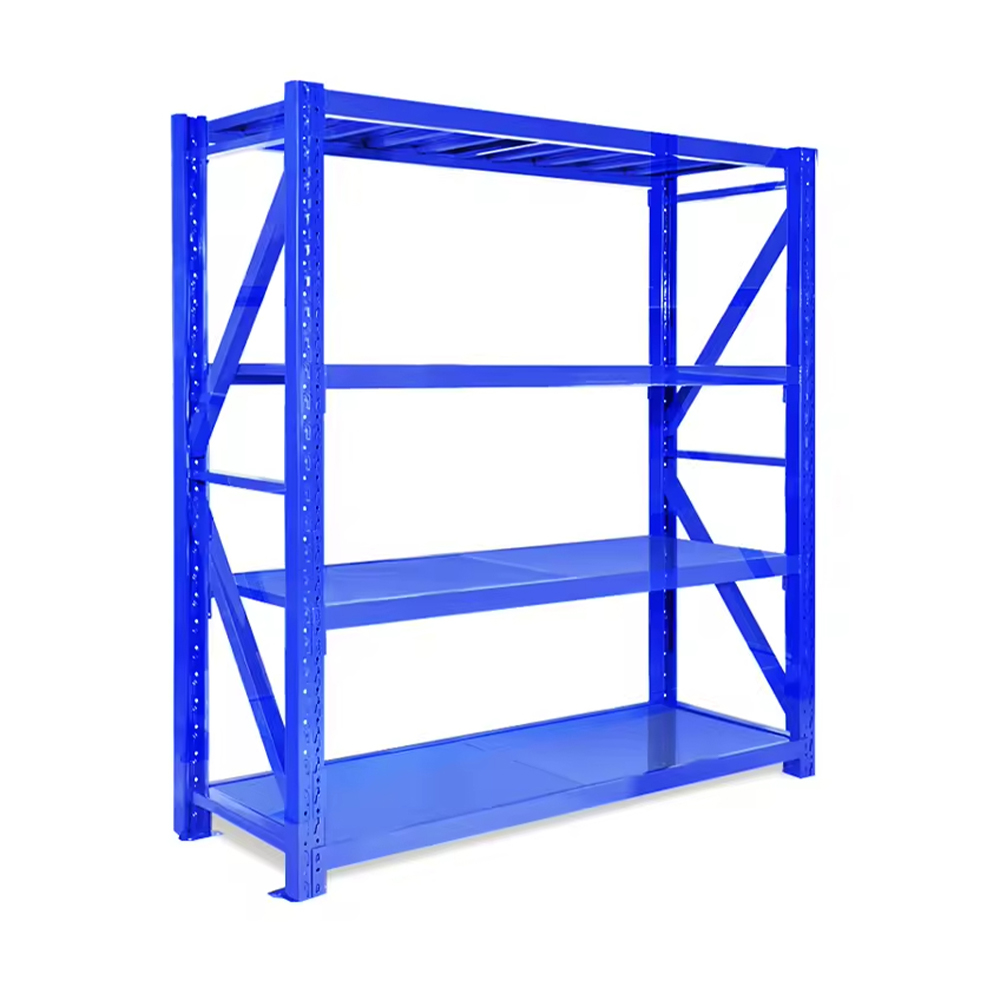
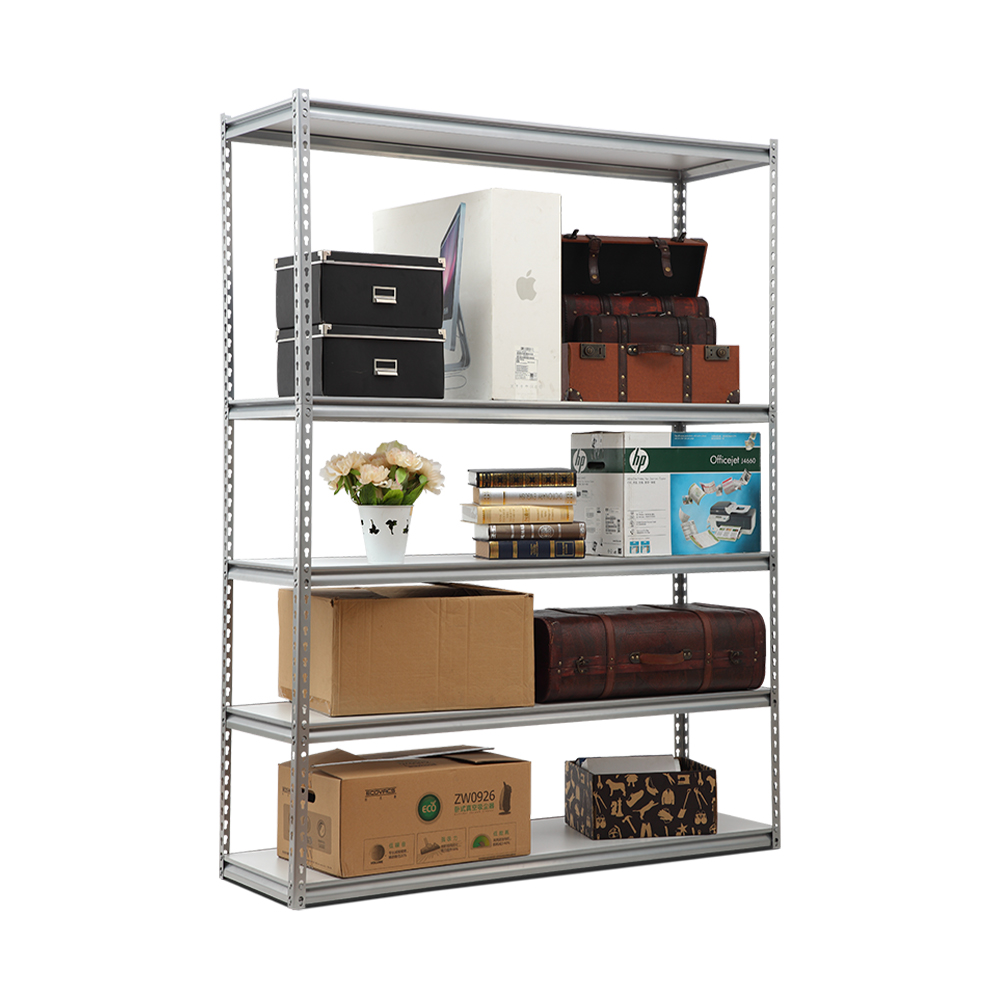
·Light-Duty High-Capacity Storage Rack This storage rack is engineered for light-duty daily use, with a load capacity of up to 200kg per layer to meet daily storage needs.The butterfly hole upright design enables tool-free installation, while the height-adjustable shelves allow flexible customization to fit items of different sizes.·Premium Anti-Rust Construction for Long-Term Use Made of high-quality steel with a professional anti-rust coating, this rack offers exceptional durability and corrosion resistance for long-term daily use.The reinforced structure ensures excellent stability, preventing wobbling even when fully loaded, making it a reliable storage solution for daily life.·Tool-Free Quick Assembly Design Featuring an innovative butterfly hole upright structure, this rack can be easily assembled without any complicated tools, saving your time and effort.The detailed installation manual is included, allowing one person to complete the assembly in a short time without professional help.·Flexible Adjustable Layer Height The shelves can be freely adjusted to different heights, making it easy to store items of various sizes, from small boxes to large luggage and home appliances.This flexible design ensures that you can make the most of the vertical space, adapting to your changing storage needs at any time.·Multi-Scene Adaptable Storage Solution This versatile storage rack is perfect for home, office, retail store and light industrial use, meeting all your daily storage needs.Whether you need to organize books in the study, sundries in the living room, goods in the retail store or tools in the workshop, this rack can handle it all.
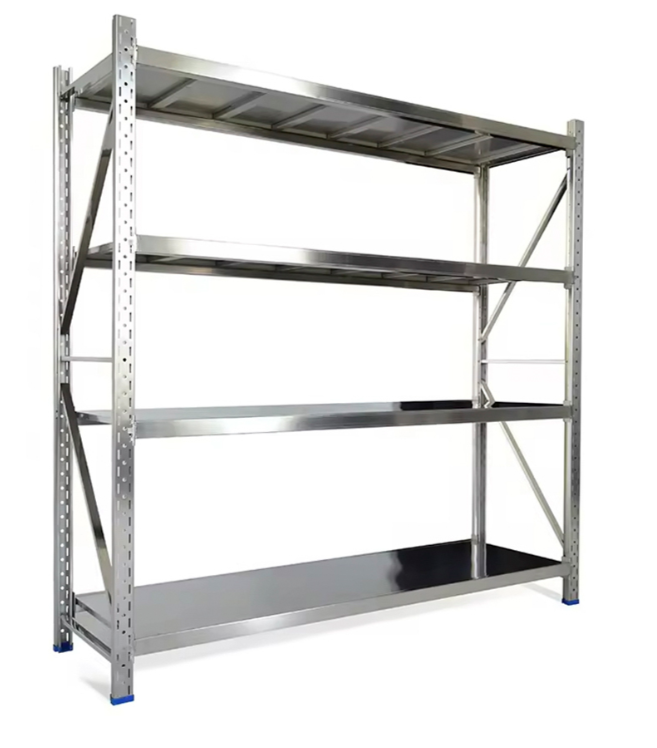
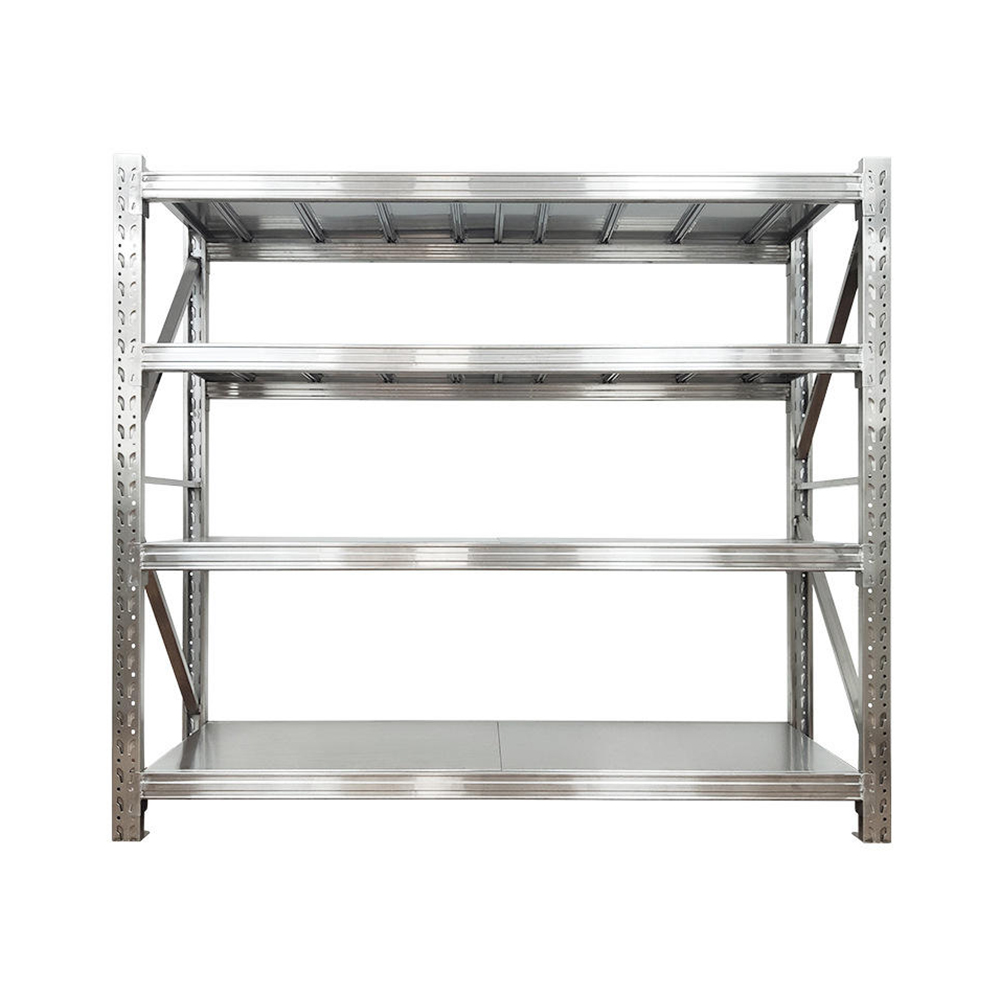
【Heavy-Duty Stainless Steel Storage Rack】This industrial-grade storage rack is constructed from high-quality stainless steel, offering exceptional durability, corrosion resistance and easy maintenance, making it ideal for heavy-duty industrial, commercial and home use.With a load capacity of 500kg per layer, this rack is capable of storing the heaviest items, from industrial equipment and tools to bulk goods and household appliances.【Solid Punched Upright Design for Enhanced Stability】The solid punched upright design provides superior structural support and stability, ensuring that the rack remains rigid and wobble-free even when fully loaded with heavy items.This professional engineering design significantly improves the overall load-bearing performance of the rack, making it a reliable storage solution for heavy-duty applications.【Rust & Corrosion Resistant Stainless Steel Construction】Stainless steel is naturally resistant to rust, corrosion and stains, making this rack perfect for use in humid environments such as kitchens, bathrooms, garages and outdoor storage areas.Unlike ordinary steel racks, this stainless steel rack will not rust or corrode over time, ensuring a long service life and maintaining its sleek appearance for years.【Easy to Clean & Maintain】The smooth, non-porous stainless steel surface is incredibly easy to clean and maintain. Simply wipe it down with a damp cloth or mild detergent to remove dust, dirt, grease and stains, and it will look as good as new.This low-maintenance design saves you time and effort, making it ideal for busy households and commercial environments.【Reinforced Structure for Long-Term Durability】The reinforced beams and uprights form a robust support structure, capable of withstanding long-term heavy use without bending, deforming or collapsing.This heavy-duty construction ensures that the rack will remain stable and reliable for many years, even in the most demanding industrial and commercial environments.
【Light-Duty Adjustable Home Storage Rack】This light-duty storage rack is specifically designed for home use, featuring adjustable shelf height, making it easy to customize the rack to fit your specific storage needs.Whether you need to store books, clothes, household supplies, kitchen utensils or other items, this flexible rack can be adapted to accommodate items of all sizes, helping you keep your home organized.【Tool-Free Quick Assembly Design】This storage rack features an innovative tool-free assembly design, allowing you to quickly and easily assemble the rack without any complicated tools or professional help.All necessary hardware and a detailed installation manual are included, and one person can complete the assembly in a short time, saving you time and effort.【Rust-Resistant & Durable Construction】Constructed from high-quality steel with a premium anti-rust coating, this storage rack offers exceptional durability and corrosion resistance, making it suitable for use in humid environments such as kitchens, bathrooms and balconies.The reinforced structure ensures that the rack remains stable and secure, even when fully loaded, providing a reliable and long-lasting storage solution for your home.【Multi-Scene Adaptable for Home Use】This versatile storage rack is perfect for use in every room of your home, from the living room, bedroom and study to the kitchen, bathroom, balcony and garage.It can be used to organize books in the study, clothes in the bedroom, kitchen supplies in the kitchen, toiletries in the bathroom, tools in the garage, and much more, making it a truly all-in-one home storage solution.【Space-Saving Vertical Storage Design】This vertical storage rack makes the most of your home's vertical space, allowing you to store more items without taking up extra floor space.It is ideal for small apartments, studios and condos, where every inch of space is precious, helping you keep your home tidy and clutter-free, while still providing ample storage capacity.
【Double-Sided Retail Display Storage Rack】This innovative retail display rack features a double-sided design, maximizing your retail display space and allowing you to showcase twice as many products in the same floor area.It is the perfect display solution for retail stores, supermarkets, convenience stores and other commercial environments, helping you attract more customers and increase sales.【Adjustable Shelves for Custom Product Display】The shelves can be easily adjusted to different heights, making it easy to accommodate products of various sizes, from small cosmetics and snacks to large household goods and electronics.This flexible design allows you to customize the display to fit your specific product range, ensuring that every item is showcased in the best possible way.【Sturdy Steel Construction with Anti-Rust Finish】Constructed from high-quality steel, this display rack offers exceptional stability and durability, capable of holding a large number of products without bending or wobbling.The durable anti-rust powder coating finish provides excellent corrosion resistance, extending the service life of the rack and maintaining its sleek, professional appearance for years.【Modern & Attractive Retail Design】This display rack features a modern, minimalist design that will complement any retail store decor, attracting customers' attention and enhancing the overall shopping experience.The open design allows customers to easily view and access products from both sides, increasing the likelihood of impulse purchases and boosting your sales.【Easy to Assemble & Relocate】This rack comes with all necessary hardware and a detailed installation manual, making assembly quick and hassle-free.The lightweight yet sturdy structure makes it easy to move and relocate, allowing you to rearrange your store layout quickly and easily to adapt to changing product displays and seasonal promotions.
【Ideal Storage Solution for Long & Irregular Goods】If you need to store long, oversized or irregularly shaped items that don't fit on standard pallet racks, this specialized storage rack is the perfect solution.It is designed specifically to accommodate items such as pipes, lumber, steel bars, carpets, rolls of fabric, construction materials and other long goods, keeping them organized, secure and easily accessible.【Improve Material Handling Efficiency】The wide-load accessible design of this rack makes it easy to load and unload long items using standard warehouse equipment, such as forklifts and pallet jacks.This reduces the time and labor required for material handling, improves operational efficiency, and minimizes the risk of damage to your goods during loading and unloading.【Maximize Your Warehouse Storage Space】This rack allows you to make the most of your warehouse's vertical space, storing long items vertically or horizontally to maximize your storage capacity.It helps you keep your warehouse organized and clutter-free, reducing wasted floor space and improving overall space utilization in your facility.【Safe & Secure Storage for Valuable Goods】The reinforced steel structure and stable design ensure that your long and valuable goods are stored safely and securely, with minimal risk of falling, bending or damage.This gives you peace of mind, knowing that your expensive materials and equipment are well-protected and stored in a safe, organized manner.【Versatile for Multiple Industrial Applications】This rack can be used in a wide variety of industrial settings, including warehouses, factories, construction sites, lumber yards, plumbing supply companies and more.Its versatile design and customizable configuration make it suitable for almost any application that requires the storage of long or irregularly shaped items.
【Maximize Warehouse Storage Efficiency】This pallet storage rack allows you to fully utilize your warehouse's vertical space, significantly increasing your storage capacity and improving overall warehouse efficiency.It is the perfect solution for storing bulk palletized inventory, allowing you to organize your goods systematically and access them quickly and easily when needed.【Customizable to Your Warehouse Layout】The modular design of this rack allows you to customize the layout to fit your warehouse space, whether you need a single row, multiple rows, or a complete warehouse storage system.You can easily adjust the height, width and depth of the racks to fit your specific warehouse dimensions and storage needs, creating a truly customized storage solution.【Improve Inventory Management】By organizing your palletized goods on these racks, you can easily categorize and track your inventory, making stocktaking and inventory management much simpler and more efficient.This helps reduce the risk of lost or misplaced goods, improves order fulfillment speed, and ensures that your warehouse operations run smoothly.【Safe & Compliant Industrial Storage】This rack is designed and manufactured to meet all industrial safety standards, ensuring that your warehouse storage system is safe and compliant with relevant regulations.【Cost-Effective Warehouse Storage Solution】This industrial-grade pallet rack offers exceptional performance and durability at a competitive price, making it a cost-effective alternative to more expensive custom warehouse storage systems.It is built to last for many years, providing a long-term return on your investment and reducing your overall warehouse storage costs over time.



 English
  Español
  русский
  Français
  한국어
한국어  عربى
عربى  ไทย
ไทย  Deutsch
  Bahasa Melayu
  Português
  Polskie