


 English
  Español
  русский
  Français
  한국어
한국어  عربى
عربى  ไทย
ไทย  Deutsch
  Bahasa Melayu
  Português
  Polskie
China Tel: +86-13761540945
Thailand Tel: +66 99 109 1956
Thailand Tel: +66 92 242 5845
liwu78465@gmail.com



Heavy Duty Rack Supplier
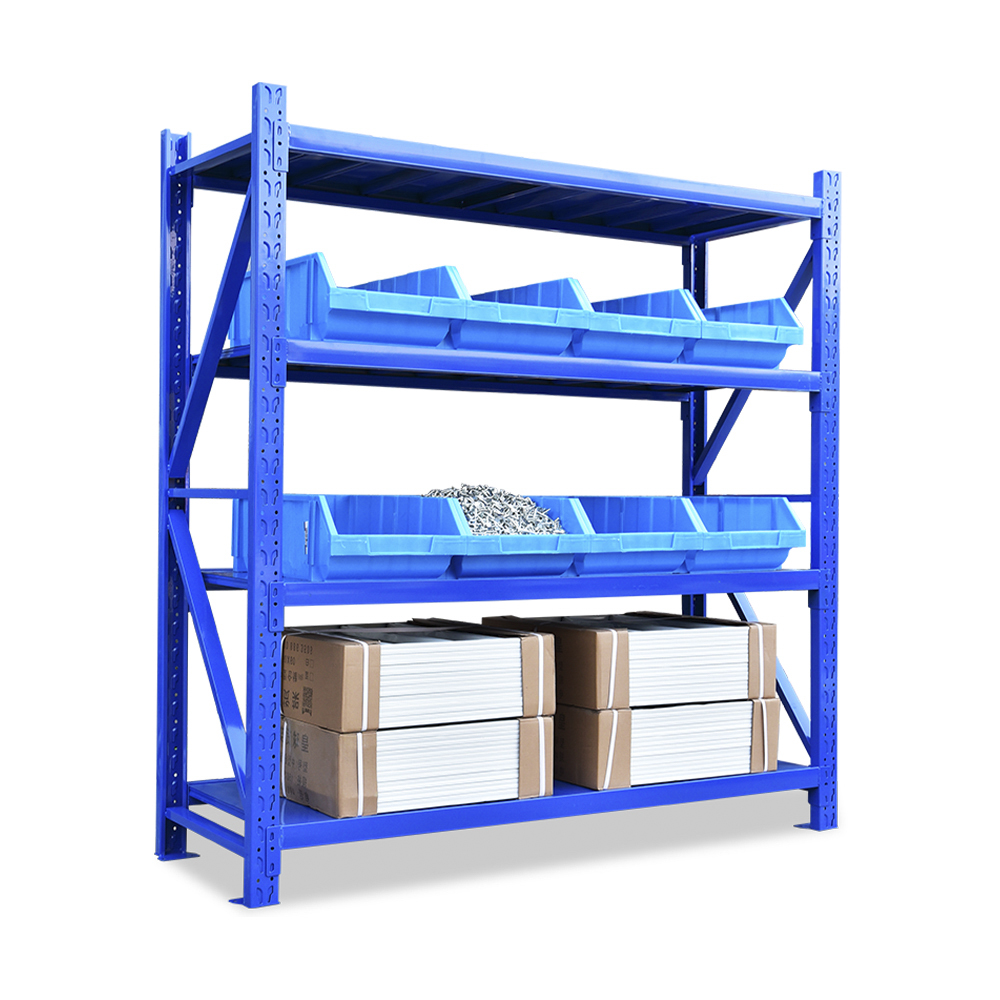
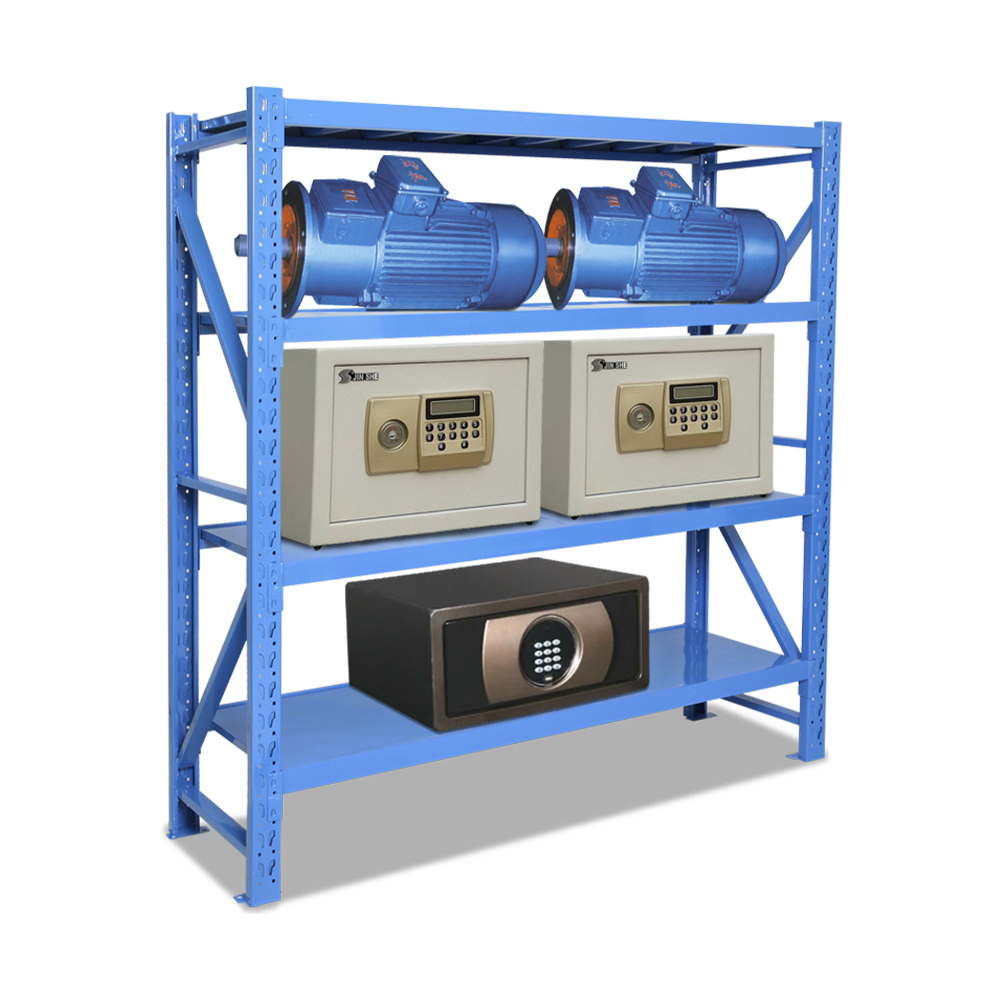
Heavy-Duty Rack (with a load capacity of over 500kg per layer) is specifically designed for the following application scenarios:
Core Application Scenarios
·Industrial Warehouses: Ideal for storing large, heavy-duty raw materials, bulk goods, and industrial equipment, suitable for high-density storage in manufacturing and production hubs.
·Logistics & Distribution Centers: Perfect for organizing and stacking heavy pallets, finished products, and large-sized cargo, supporting efficient sorting and distribution operations.
·Heavy-Duty Workshops: Used to store heavy machinery parts, tools, metal components, and oversized inventory, meeting the stringent load-bearing requirements of industrial processing.
This rack features superior load-bearing strength, a robust column structure, and high-efficiency installation design, making it the optimal choice for heavy-load and bulk storage needs in industrial environments.
What Sets Us Apart
Who We Are
Better Shelving, Better Business
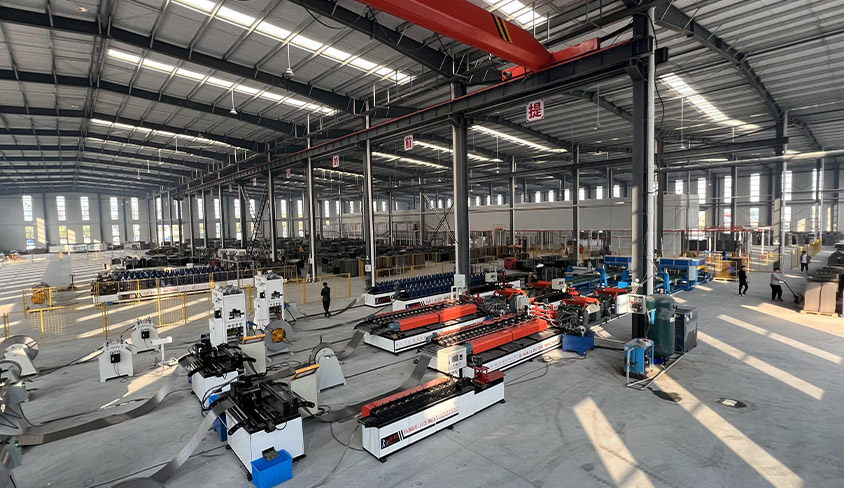
Shanghai King Global Shelf Co.,Ltd. is a leading manufacturer of shelving and storage solutions for
logistics and warehousing. Specializing in home racks, industry heavy-duty shelving, and warehouse
optimization systems. Founded in 2010, we have built strong production capability with a modern facility,
experienced team, and reliable quality control. We are China Heavy Duty Rack Supplier and Wholesale Heavy Duty Pallet Rack Factory, our products are designed to improve display, storage
efficiency, and space utilization for different markets. With stable quality, flexible solutions,
and responsive service, we support customers in both domestic and overseas markets.
About Us


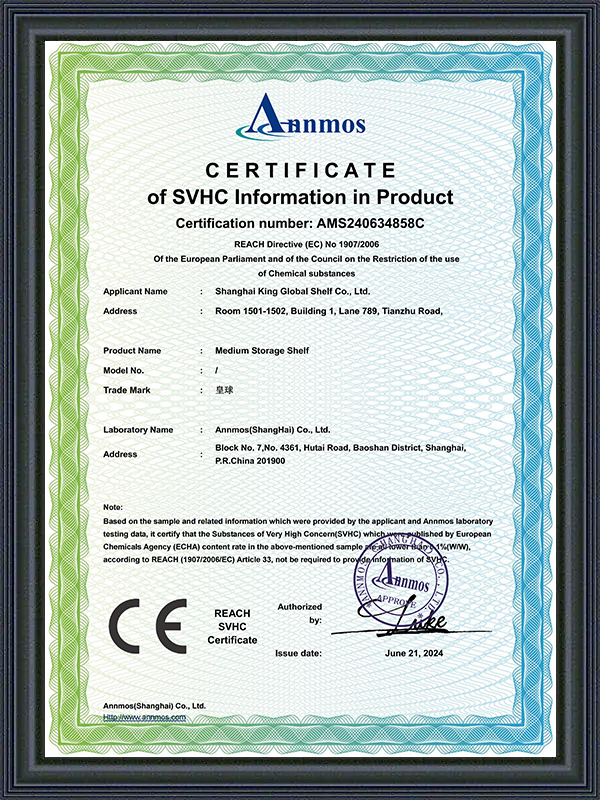
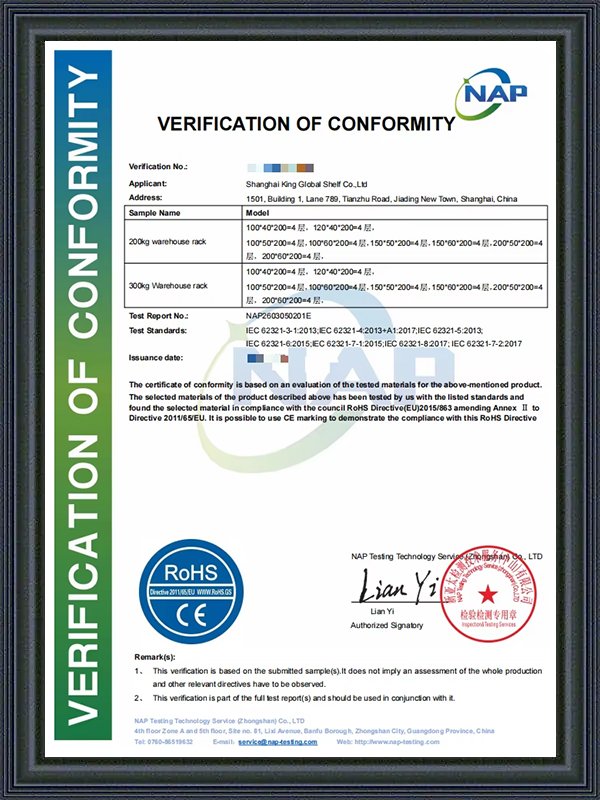
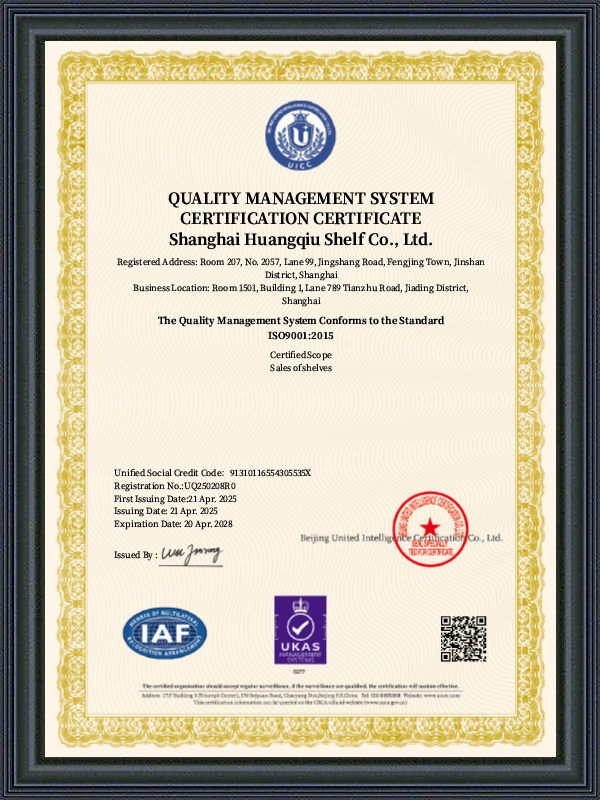
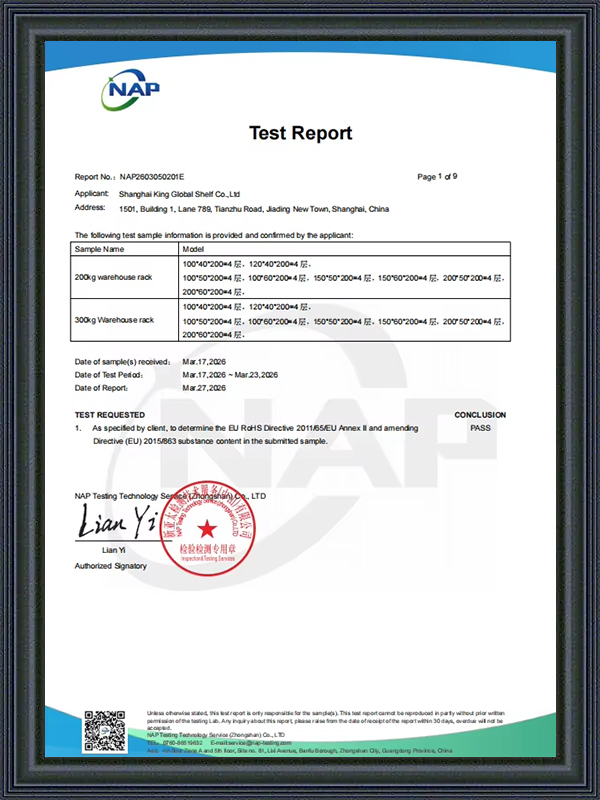
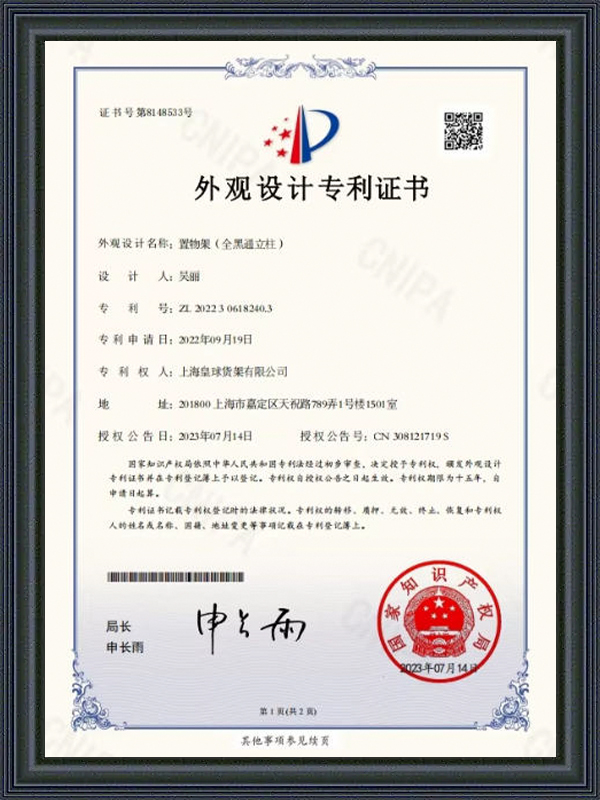
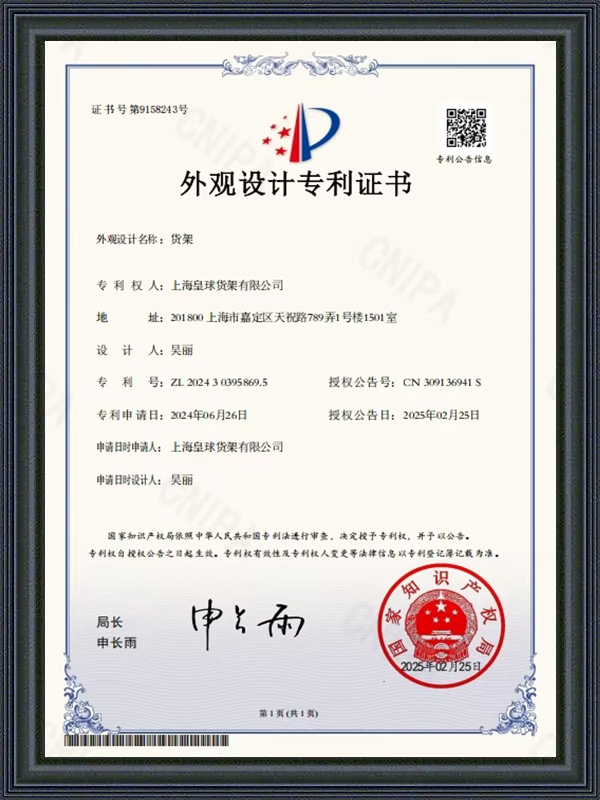
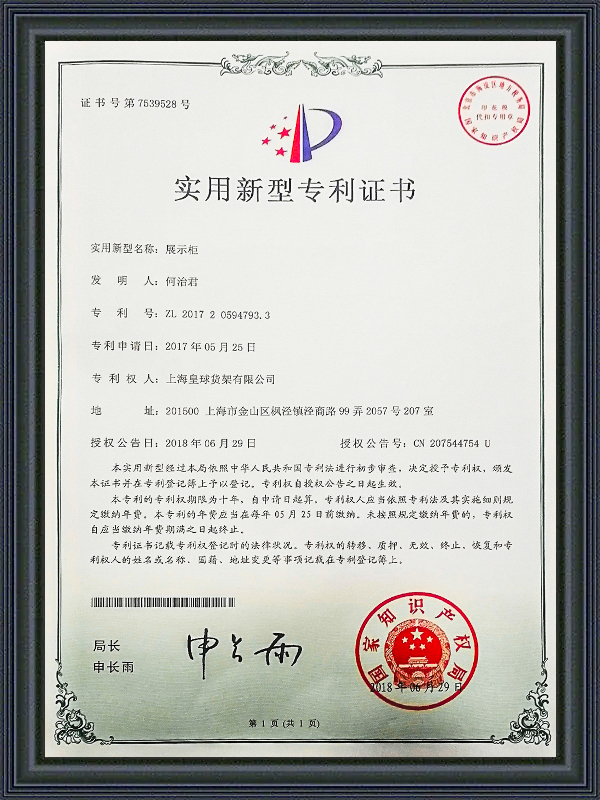
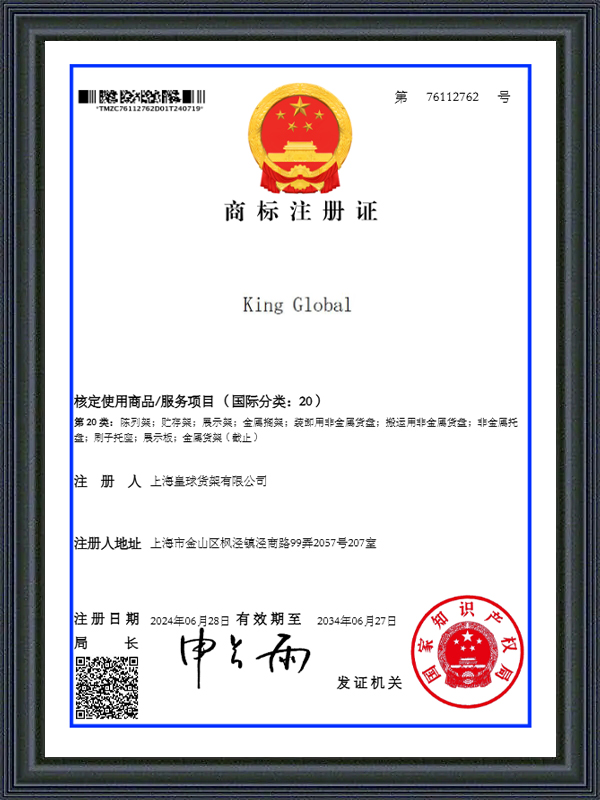
Honor
Certificate Of Honor
-

 2026-09-21
 Industry News
-
2026-09-15
Industry News
-
2026-09-08
Industry News
-
2026-09-01
Industry News
Feedback
Message Feedback
Knowledge
Heavy Duty Rack Industry knowledge
1. Heavy Duty Rack and Heavy Duty Pallet Rack Overview
A heavy duty rack is a structural steel storage system engineered to support fully palletized goods at significant weight per level, making it the standard choice wherever concentrated, high-volume loads must be stored safely above the warehouse floor. A heavy duty pallet rack extends this same principle specifically around standard pallet dimensions and forklift handling, using reinforced uprights, box-section beams, and heavy-gauge connectors to carry loads well beyond what light or medium duty shelving is designed for. This category sits at the top of the general duty classification range, built for environments such as high-volume distribution centers, cold chain warehouses, and automotive parts storage, where beam levels must reliably support dense, palletized weight across long spans without excessive deflection. The defining characteristic of a heavy duty rack is not simply thicker steel, but a complete structural system, upright, beam, connector, and base plate, engineered to work together under sustained industrial load.
Because heavy duty pallet rack systems are typically installed in high-traffic forklift environments, safety accessories and structural bracing play a larger role in this category than in lighter shelving classes. The remainder of this article reviews core structural components, common configuration types, load and spacing comparisons presented through several data visuals, application scenarios, selection guidance relative to other duty classes, and maintenance practices relevant to long-term safe operation.
Reinforced upright frames, box-beam connections, and correct floor anchoring together determine how safely a heavy duty rack performs under continuous industrial use.
2. Core Structural Components
A heavy duty rack relies on the same general component categories found across pallet racking, but each part is scaled and reinforced to handle substantially higher load. The two-column layout below groups the main components for quick reference.
(1) Reinforced Upright FramesUpright frames in a heavy duty pallet rack use thicker steel gauge and wider column profiles than lighter duty classes, with horizontal and diagonal bracing sized to resist the greater overturning forces created by heavier, taller pallet loads. |
(2) Box-Section Load BeamsBeams in this category are commonly formed as closed box sections rather than open channels, since a box profile resists twisting and bending more effectively under the concentrated point loads typical of fully loaded pallets spanning long bay widths. |
(3) Safety Accessories and Bracing
Row spacers, upright column guards, beam safety clips, and anti-collapse mesh are frequently specified alongside a heavy duty rack to reduce the risk of impact damage or dislodgement in busy forklift aisles, given the higher consequence of failure at this load range compared to lighter shelving.
3. Common Configuration Types
A heavy duty pallet rack can be arranged in several configurations depending on accessibility and density needs within a facility. The three cards below can be scrolled horizontally for quick side-by-side reference.
| Selective Heavy Duty Rack Offers direct forklift access to every pallet position from the aisle, suited to operations with many different stock keeping units. |
| Double-Deep Heavy Duty Rack Stores two pallets in depth per position to increase density while retaining reasonable access using deep-reach forklifts. |
| Drive-In Heavy Duty Rack Allows forklifts to enter the structure itself for high-density storage of bulk palletized goods with fewer distinct stock keeping units. |
Selecting between these configurations generally depends on the same accessibility versus density trade-off seen across pallet racking more broadly, with heavy duty applications simply operating at a higher load range than standard warehouse racking.
4. Load Capacity Range Compared to Medium Duty Racking
Comparing the load capacity range of heavy duty pallet rack against medium duty racking helps clarify why these two classes are not interchangeable despite both handling palletized or mixed goods. Before viewing the diverging chart below, it is useful to understand that duty classes are typically described by a range rather than a single fixed number, since beam length, upright gauge, and bay configuration all shift the achievable capacity within a class. Medium duty racking generally covers a lower to moderate range suited to mixed carton and pallet storage, while heavy duty pallet rack extends into a substantially higher range built specifically for dense, fully palletized loads. There is some overlap between the upper end of medium duty and the lower end of heavy duty, which is why borderline applications sometimes require a closer engineering review rather than a simple duty class label. The diverging bar chart below presents an indexed comparison of the general capacity range for each class, extending left and right from a shared center line.
This diverging chart shows medium duty racking occupying an indexed range roughly from 30 to 55, while heavy duty pallet rack extends from around 55 up to 100 on the same illustrative scale, with a small overlap zone near the boundary between the two bars. The overlap zone matters because it reflects real installations where a heavier medium duty configuration and a lighter heavy duty configuration can sit close to one another in practical capacity, even though they are labeled as different duty classes. Above this overlap, heavy duty pallet rack continues to extend well beyond what medium duty racking is designed to reach, reflecting its thicker upright gauge, box-section beams, and reinforced connectors built specifically for palletized industrial loads. This comparison also illustrates why simply asking for the heavier of two options is not always the correct approach, since heavy duty pallet rack adds structural weight considerations that are not necessary once medium duty racking already covers the required load range. Facility planners generally use this kind of range comparison early in the design process, before finalizing beam length and bay spacing for a specific project.
The extended upper range of heavy duty pallet rack is what allows it to serve distribution centers and automotive parts storage where medium duty racking would not be appropriate.
5. Beam Capacity and Recommended Aisle Width by Bay Span
Beam span length is one of the most direct factors affecting both load capacity and the forklift aisle width needed to safely maneuver pallets into a heavy duty rack bay. Before viewing the combination chart below, it helps to understand that these two factors move in different directions as span length changes, which is why they are shown together rather than separately. As beam span increases, indexed capacity per beam generally decreases due to greater deflection risk across a longer unsupported length, while the recommended aisle width tends to increase modestly to accommodate the longer pallet runs and turning geometry involved. Viewing both trends on the same chart makes clear that longer bay spans are not simply a matter of adding more beam length, since capacity and maneuvering space both need to be reconsidered together. The combination chart below uses columns for indexed beam capacity and a connected line for indexed recommended aisle width across three general bay span categories.
In this combination chart, the blue columns representing indexed beam capacity decline steadily from short span through medium span to long span, confirming that longer unsupported beam lengths generally carry less load per position before deflection limits are reached. At the same time, the orange line representing indexed recommended aisle width trends upward across the same three span categories, reflecting how longer pallet runs and wider turning geometry typically require additional maneuvering space for standard forklift equipment. The combination of a declining capacity trend alongside a rising aisle width trend illustrates why bay span selection is rarely just a structural decision, since it also directly affects how much floor area a facility must dedicate to aisles rather than storage. Short-span configurations offer the highest beam capacity and narrowest aisle requirement, making them attractive where floor space is limited but pallet weights are high. Long-span configurations reduce the number of uprights needed across a given run, which can be useful for very long storage rows, but this comes at the cost of both lower per-beam capacity and a wider aisle allowance. Facility planners typically work through this trade-off alongside the load capacity range discussed earlier, since together these two comparisons cover most of the structural and spatial decisions involved in a heavy duty rack layout.
Balancing beam capacity against aisle width is a core trade-off in heavy duty pallet rack layout planning, and neither factor should be optimized in isolation from the other.
6. Comparing Configuration Types Across Key Factors
Selective, double-deep, and drive-in heavy duty rack configurations each perform differently across density, accessibility, and typical installation complexity, and viewing these factors together in a grid format makes the trade-offs easier to compare than reading separate descriptions alone. Before viewing the grid below, it helps to know that darker shading in this comparison represents a stronger relative performance on that particular factor, while lighter shading represents a comparatively weaker performance. Selective heavy duty rack generally scores strongly on accessibility since every position is reachable directly from the aisle, but scores lower on density because of the aisle space required throughout the layout. Drive-in heavy duty rack shows the reverse pattern, scoring strongly on density but lower on accessibility since only front-facing pallets in each lane can be reached without moving other stock. Double-deep heavy duty rack sits between these two extremes across most factors, reflecting its role as a compromise configuration. The shaded grid below presents this comparison across three factors for the three configuration types introduced earlier in this article.
Reading across this grid, selective heavy duty rack stands out with darker shading on both accessibility and installation simplicity, reflecting its straightforward bolted construction and full pick access to every position, though its lighter shading on density confirms the expected trade-off from dedicating aisle space throughout the layout. Drive-in heavy duty rack shows the opposite pattern, with darker shading concentrated on density alone, consistent with a structure that maximizes pallet positions per square meter at the cost of both accessibility and a more involved installation process due to its rail and guide rail components. Double-deep heavy duty rack occupies the middle ground across all three factors, which is exactly the compromise position this configuration is generally chosen for when neither full accessibility nor maximum density alone meets the facility's needs. Facilities handling a wide product mix with frequent picking generally lean toward the selective pattern shown here, while those storing large volumes of fewer distinct products lean toward the drive-in pattern. This grid format is intended to summarize the general relationships already discussed in earlier sections, offering a quick visual reference rather than introducing new numerical claims beyond what has already been covered.
No single heavy duty rack configuration scores strongly across every factor, so layout selection should be driven by which factor matters most for the specific operation.
7. Application Scenarios and Selection Guidance
Typical ApplicationsHeavy duty pallet rack is most commonly specified for high-volume distribution centers, cold chain warehouses, and automotive parts storage, where beam levels must reliably support dense, fully palletized loads over long service periods. Facilities handling large-format packaged goods, industrial components, or bulk material on standard pallets generally fall within this category rather than medium duty racking, particularly where forklift traffic is frequent and sustained. |
Selection FactorsSelection should account for pallet weight and dimensions, the number of distinct stock keeping units requiring separate access, ceiling clearance, floor load rating of the building slab, and the type of forklift equipment already in use at the facility. |
Shanghai King Global Shelf Co., Ltd. offers heavy duty and pallet racking as part of a broader product line that also includes light duty racks for small parts, medium duty racks for retail and light manufacturing, and custom or specialized racks for particular applications such as cold-resistant storage. Matching the correct duty class and configuration type to the specific facility generally has more influence on long-term performance than any single structural detail considered on its own, which is why layout consultation is often recommended before finalizing a heavy duty rack order.
8. Maintenance and Safety Inspection
Because a heavy duty rack typically operates in high-traffic forklift environments, routine inspection is especially important for this category. Checks should focus on bent or dented uprights, damaged beam connectors, missing safety clips, and loose base plate anchoring, since impact damage from forklifts is one of the most common sources of gradual structural weakening in busy distribution centers. Damaged components should always be taken out of service and replaced rather than repaired in place, since steel that has been bent under impact does not reliably return to its original strength.
Row spacers, column guards, and anti-collapse mesh should also be checked periodically to confirm they remain securely fitted, since these accessories are specifically intended to reduce the consequences of accidental impact in this higher-load category. With strict quality control and load testing applied across its racking product line, Shanghai King Global Shelf Co., Ltd. supports customers in maintaining safe, well-organized heavy duty storage across domestic and overseas distribution and manufacturing facilities.
Consistent inspection combined with correctly fitted safety accessories is central to safe long-term operation of any heavy duty pallet rack.
9. Frequently Asked Questions
(1) What distinguishes a heavy duty rack from a medium duty rackHeavy duty racks use thicker upright gauge, box-section beams, and reinforced connectors built for fully palletized, high-weight storage, while medium duty racks are designed for mixed carton and pallet loads at a lower general capacity range. |
(2) Which heavy duty pallet rack configuration offers the best accessibilitySelective heavy duty rack offers the strongest accessibility since every pallet position is directly reachable from the aisle, though this comes with lower overall storage density than drive-in configurations. |
(3) How does bay span length affect a heavy duty rack layoutLonger bay spans generally reduce beam capacity due to increased deflection risk while requiring somewhat wider aisle allowances, so span length should be selected alongside expected pallet weight and forklift turning geometry. |
(4) Are safety accessories necessary for a heavy duty pallet rackRow spacers, column guards, and anti-collapse mesh are commonly recommended in high-traffic forklift environments to reduce the risk and consequence of accidental impact damage at this higher load range. |
(5) How often should a heavy duty rack be inspectedMost facilities combine routine informal observation from warehouse staff with scheduled documented inspections, allowing damaged uprights, beams, or connectors to be identified and replaced before they affect structural performance. |
Get exclusive deals and early access to new products.
Experienced staff and experts are always available to provide you with professional guidance and solutions to technical problems.
Mobile
-
Quick Links
Home Products Cooperation Cases Company Service News Contact Us -
Product
Warehouse Rack Pallet Racking Mezzanine Racking Cantilever Racks Supermarket Shelf Office & Home Shelves -
Contact Us

E-mail: liwu78465@gmail.com

WhatsApp: 8613761540945

China Tel: +86-13761540945
Thailand Tel: +66 99 109 1956 (Line Same)
Thailand Tel: +66 92 242 5845 (Line Same)

China Address:Room 1501, Building 1, Lane 789, Tianzhu Road, Jiading District, Shanghai, China.
USA Address: 23787 Eichler St, Unit G, Hayward, CA 94545.
Malaysia Address: METROHUB 2 Warehouse 4, Lot 109363, Persiaran Bukit Rajakayangan/KU5,Bandar Bukit Raja, 41050 Klang, Selangor Darul EhsanReturn to Gate 81, Malaysia.
Thailand Address:จังหวัดสมุทรปราการ อำเภอบางเสาธง ตำบลบางเสาธง 32/7 หมู่7 ถนนบางพลี-ตำหรุ บางพลีใหญ่ Bang Phli District, Samut Prakan 10540,(TH)
Copyright ©
Shanghai King Global Shelf Co.,Ltd.
All Rights Reserved.
Heavy Duty Rack Supplier
Wholesale Heavy Duty Pallet Rack Factory
