Heavy Duty Shelf Brackets: Start With the Load Path, Not the Steel Gauge
Heavy duty shelf brackets are usually judged by how thick they look, but thickness alone tells you very little about whether a shelf will stay level, safe, and serviceable. A 6 mm gusseted bracket fixed into a sound concrete wall can outperform a 10 mm bracket fixed into hollow drywall with short screws. The real question is not “how strong is the bracket?” but “what load path does this bracket create between the shelf, the fastener, the wall, and the floor?” That is the decision that matters for warehouses, retail projects, offices, and OEM buyers comparing quotations.
For a facilities manager, the word “heavy duty” should mean a documented working load at a stated span, with a defined fastener pattern and a finish suited to the room. For a wholesaler or importer, it should mean repeatable hole spacing, stable packaging, and a supplier who can explain tolerances instead of only quoting a gauge. For an OEM or private-label buyer, it should mean a bracket design that can be adjusted without changing the shelf, the carton, or the installation instructions. Those are commercial requirements, not marketing language.
This guide is written for buyers who need heavy duty shelf brackets as part of a larger storage decision: wall-mounted shelving in a stockroom, adjustable retail display, workshop storage, or a rack system where beam brackets and upright connectors carry far more than a typical wall shelf. The same logic runs through all of them. Load path first, substrate second, fastener third, finish fourth, and documentation last. If any of those steps is skipped, the weakest item in the chain sets the real capacity.
Bracket capacity is a system claim, not a steel-gauge claim; verify it at the actual span, substrate, and fastener pattern you will use.
What “Heavy Duty” Should Mean in a Bracket Specification
A useful specification separates three numbers that are often blurred together: working load, deflection limit, and failure load. The working load is what the bracket is expected to carry in normal service. The deflection limit controls how much the shelf may sag before goods slide, labels become hard to read, or a beam disengages. The failure load is the point at which the bracket or its connection yields. A supplier who gives only one “capacity” figure without stating span, fixing method, and safety factor is giving you a headline, not a specification.
For heavy duty shelf brackets, ask for a small set of facts before comparing price. The list is short, but it exposes whether the supplier is quoting a real product or a generic catalogue item.
- Rated load per bracket and per pair, with the span and load position clearly stated.
- Steel grade, gauge, and whether the bracket is formed, welded, or cast.
- Weld quality at the gusset or return, including visible spatter, undercut, and coating coverage.
- Hole pattern, slot length, and recommended fastener diameter.
- Finish type and dry-film thickness for powder coating, galvanizing, or stainless steel.
- Installation instructions that state substrate, anchor type, torque, and shimming method.
Consider a practical example. A stockroom shelf is 24 inches deep and carries 300 lb per shelf. With two brackets, the simple arithmetic suggests 150 lb per bracket, but the front edge may carry most of the load when staff pull a heavy box forward. The wall may be block, not concrete. The anchors may be 3/8 inch sleeve anchors, not 1/2 inch wedge anchors. The bracket may be rated at 300 lb at 12 inches, not at 24 inches. None of those details is unusual, yet each one changes the answer. A serious bracket quotation should make those assumptions visible.
There is also a difference between static storage and abuse. A shelf in a quiet office holds files that are placed once and rarely moved. A shelf in a workshop holds tooling that is dragged, dropped, and leaned on. A retail display bracket is adjusted by staff and bumped by shoppers. The same bracket may be acceptable in one setting and marginal in another. If the buyer cannot describe the abuse pattern, the supplier will default to a generic capacity and the risk moves downstream to the installer.
Do not accept a single capacity figure; require the working load, span, fastener pattern, and deflection limit to be stated together.
Bracket Types and Where They Fit
Most heavy duty shelf brackets fall into a few families. The L-shaped bracket is simple and direct, with a vertical leg fixed to the wall and a horizontal leg supporting the shelf. The T-shaped bracket adds a central spine or brace for greater stiffness. The gusseted bracket uses a triangular plate or diagonal return to resist bending at the corner. A cleat bracket uses a wall-mounted cleat and a matching hook on the bracket, which can simplify installation and removal. Concealed brackets hide the support inside the shelf or wall, but they usually trade adjustability for appearance. Beam brackets and beam-to-upright connectors belong to a different category: they are part of a racking frame and must be matched to the upright slot pattern and beam end connector.
Wall-mounted brackets versus rack-integrated brackets
A wall-mounted heavy duty shelf bracket depends on the wall for its capacity. That means the substrate, anchor, edge distance, and wall thickness matter as much as the bracket steel. A rack-integrated bracket depends on the upright frame, beam, and base plate. It may look like a bracket, but its capacity is certified as part of a rack system. Mixing the two approaches is a common source of error. A buyer may compare a wall bracket price with a beam bracket price and conclude that the beam bracket is cheaper, when the beam bracket cannot be used without uprights, beams, decking, and a designed frame.
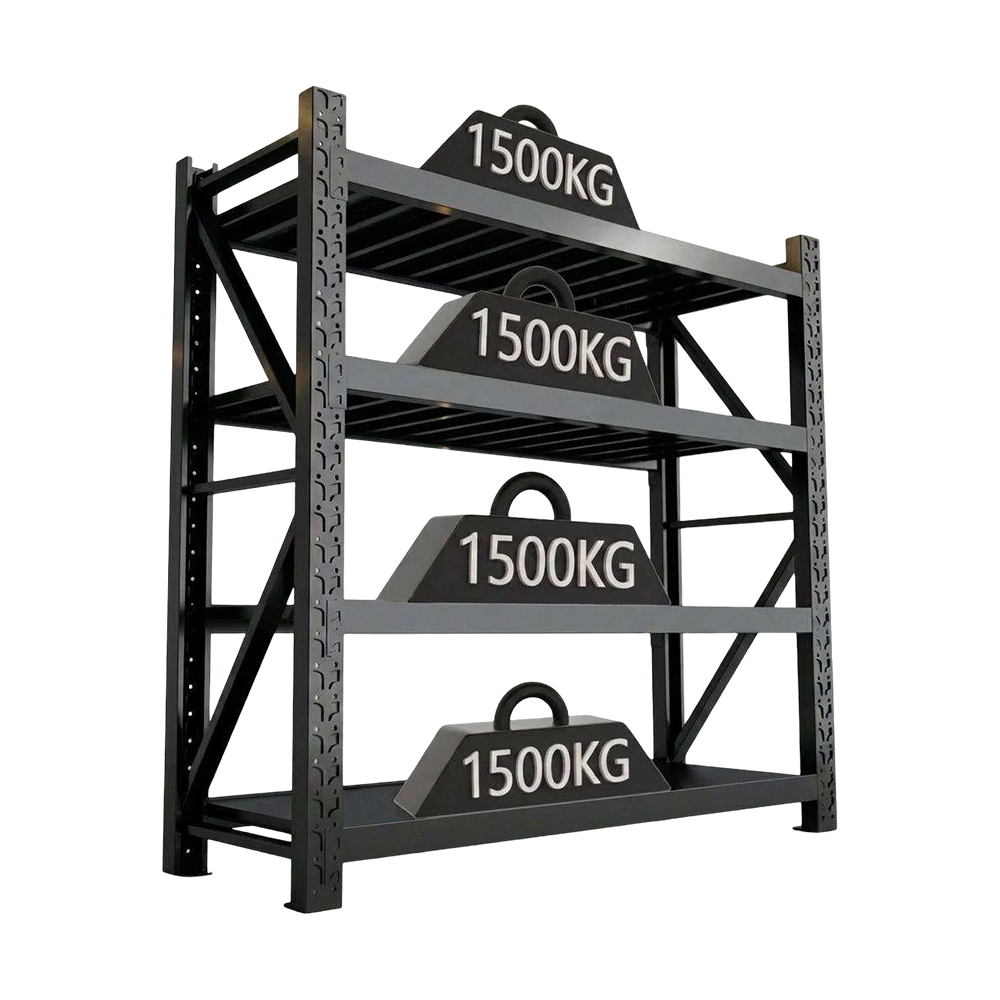
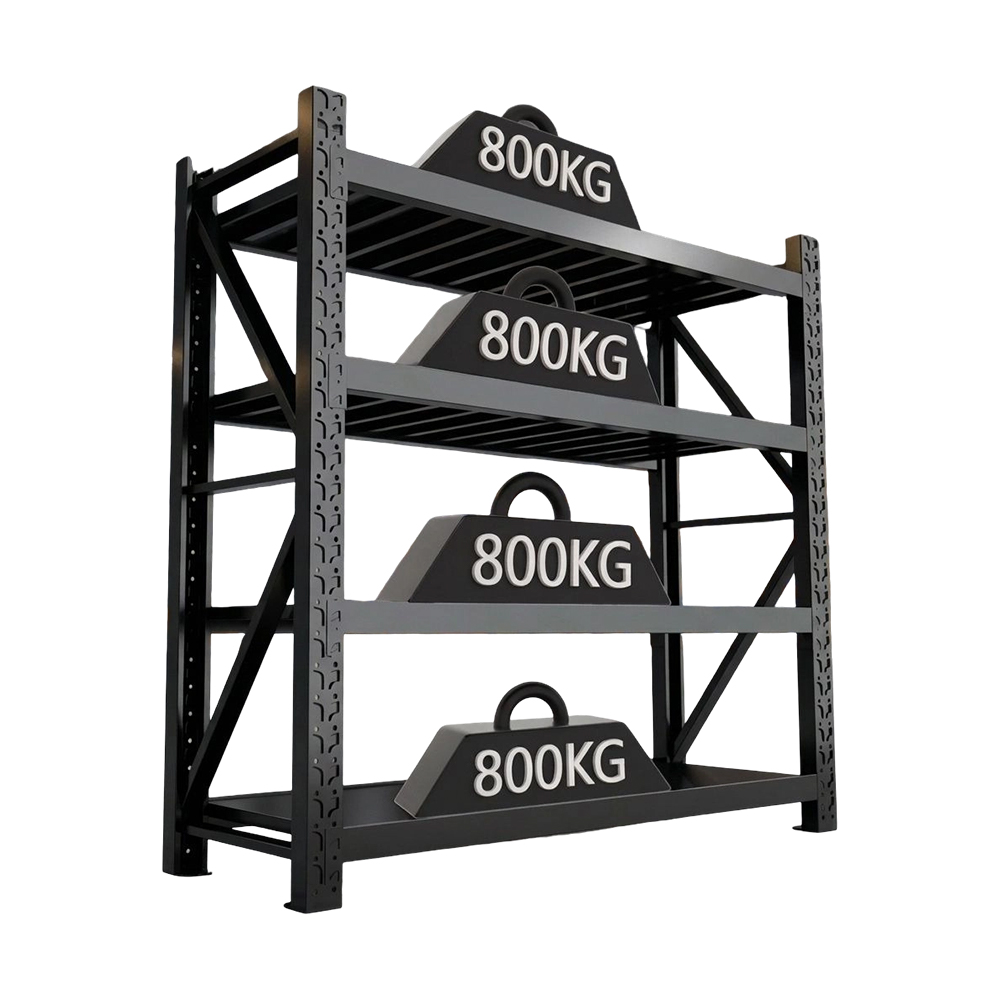
For projects that need repeatable shelf positions and a more engineered capacity than a wall bracket can provide, a complete heavy-duty rack is often the cleaner route. Our heavy-duty steel storage rack for industrial warehouse storage is built around upright frames and beam levels rather than wall anchors, so the load path stays inside the rack structure.
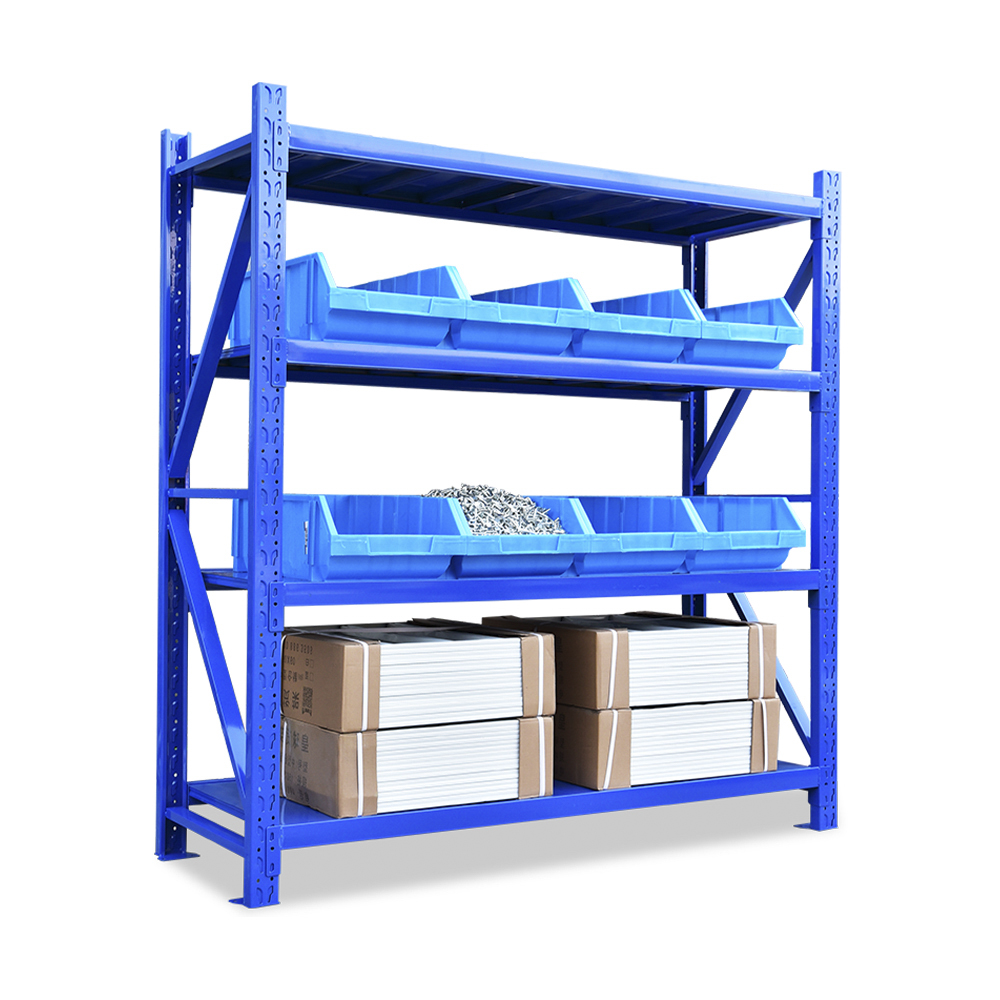 Heavy-Duty Steel Storage Rack for Industrial WarehousesFor repeatable shelf positions and engineered warehouse capacity, this upright-frame, boltless steel rack supports adjustable levels without relying on wall anchors.View Product →
Retail shelving is another category. Supermarket and convenience-store shelves often use adjustable brackets, slotting, or modular panels because the store layout changes and the display must be reset by staff. Those brackets may be “heavy duty” relative to a home shelf, but they are not interchangeable with pallet-rack beam connectors. A retail project team should define display weight, shelf depth, and adjustment frequency before choosing a bracket family. A warehouse team should define pallet weight, lift-truck impact, and beam clear span. The vocabulary overlaps, but the engineering does not.
Cantilever brackets are a separate answer for long goods. They carry pipes, timber, profiles, and panels on arms that project from a vertical column. The arm bracket must resist bending at the column, and the column must resist the overturning moment created by the load. A cantilever arm that looks like a heavy shelf bracket is not a substitute for a designed cantilever rack, especially when loads are lifted by forklift or stored at height.
Match the bracket family to the structure it connects to; a wall bracket, a retail slot bracket, and a beam connector solve different problems.
Load Ratings, Span, and Deflection: Reading the Numbers
Span changes everything. A heavy duty shelf bracket rated at 500 lb at 12 inches cannot be assumed to carry 500 lb at 24 inches. As the horizontal leg gets longer, the bending moment at the corner increases, and the bracket must resist more leverage. The same principle applies to a shelf span between brackets. Two brackets spaced 48 inches apart share a load differently from two brackets spaced 24 inches apart, especially when the load is concentrated in the middle. Buyers should ask for a load table that states span, load position, and number of brackets, or a test report that does so.
Deflection is the number that users notice first. A bracket can hold a load without collapsing and still sag enough to be a problem. A shelf that visibly bows makes boxes lean, causes items to slide, and can pull fasteners out of the wall over time. In retail, deflection affects the alignment of display panels and price strips. In a warehouse, deflection can interfere with beam disengagement or pallet placement. Many projects set a deflection limit such as L/180 or L/360 depending on the use, but the correct limit should come from the shelf design, the goods being stored, and the applicable engineering requirement. The important point is to state a limit instead of relying on “it feels solid.”
Safety factors also need context. A static shelf in a dry stockroom and a pallet rack subject to forklift impact are not the same risk. A bracket used near a loading dock may be bumped daily. A bracket in a clean office may never be touched after installation. If a supplier quotes a safety factor, ask what load case it covers. A high safety factor on paper does not compensate for a weak anchor or an unknown substrate.
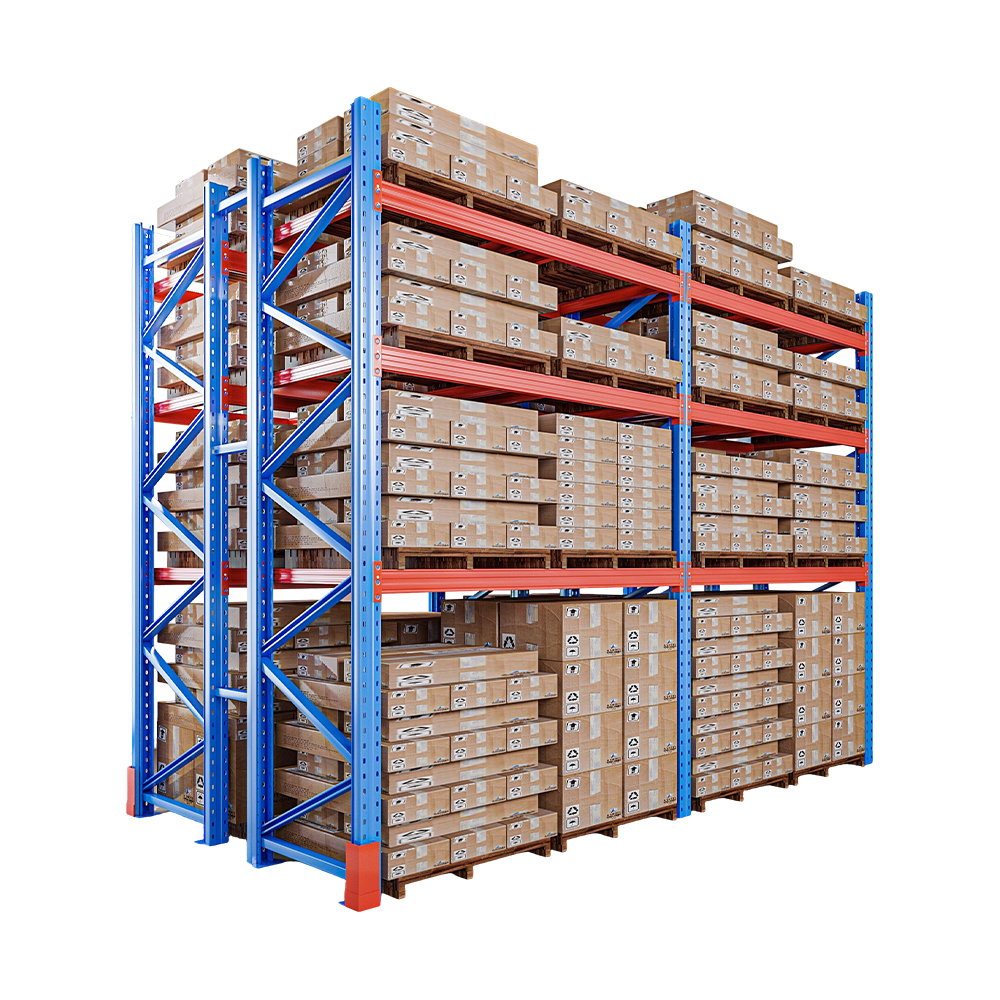
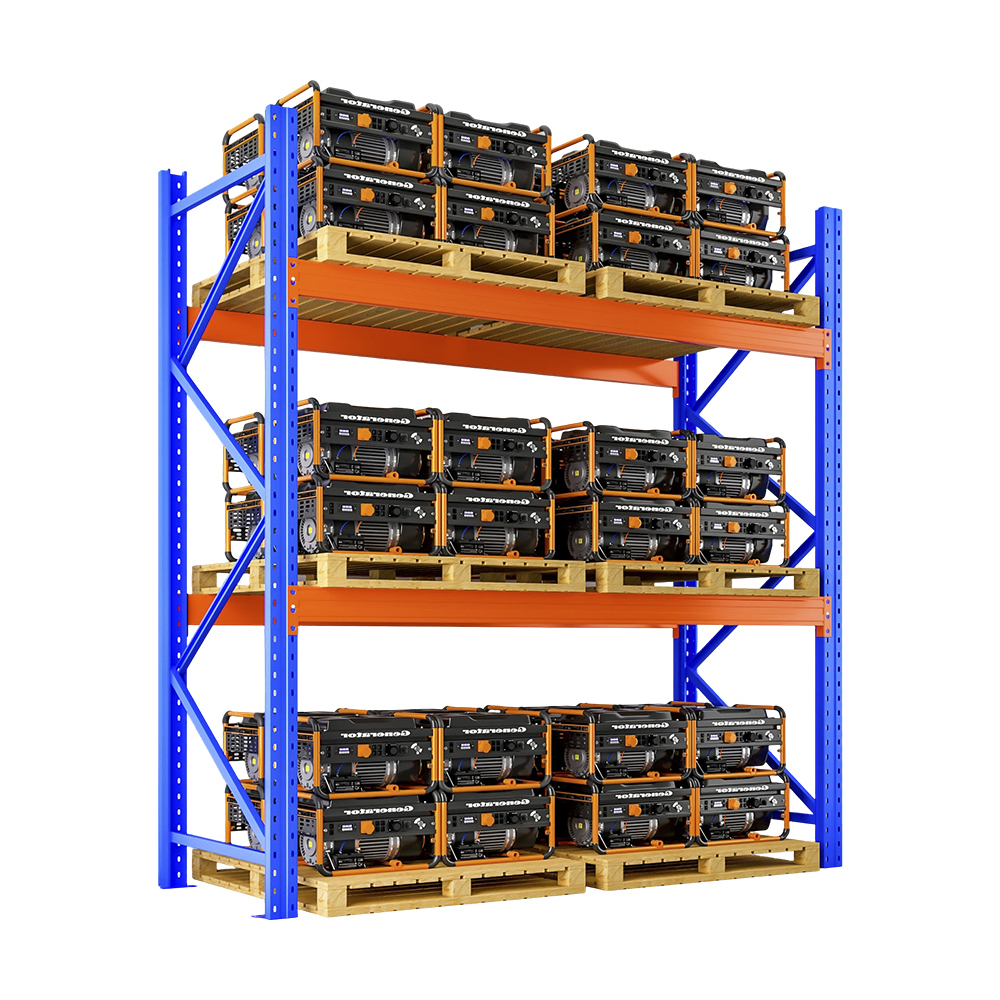
Pallet loads take this discussion out of the wall-bracket category entirely. A heavy-duty pallet rack uses upright frames, horizontal beams, beam-to-upright connectors, and decking or support bars. The beam connector is a bracket in the general sense, but it must be matched to the upright slot and beam end plate. For storage where pallets are stacked and retrieved by forklift, an engineered pallet racking system is the appropriate starting point, not a wall-mounted bracket.
 Heavy-Duty Pallet Racking System for Warehouse StackingFor forklift-handled pallet loads, this adjustable beam-and-upright racking system supports bulk storage layouts and helps compare engineered load data across quotations.View Product →
When comparing quotations, put the load data in the same format. Ask each supplier to state the load per bracket, the span, the load position, the fastener or connector, and the deflection limit. If one quotation gives a single number and another gives a table, the table is easier to verify and usually easier to install correctly. It also gives the installer a clear instruction to follow, which reduces the chance of a substitution on site.
Read every bracket rating as a set of conditions; span, load position, bracket count, and deflection limit belong in the same sentence.
Wall Substrate, Fasteners, and Installation Tolerance
The wall is often the weakest part of a heavy duty shelf bracket installation. Concrete, brick, block, drywall, steel stud, timber, and composite panels behave differently under pull-out and shear. A bracket that is strong enough for the shelf may still pull out of a hollow wall if the anchor is wrong. The buyer should define the substrate before the bracket is selected, not after the anchors arrive on site. If the wall type is unknown, the safer path is to specify a survey, a test anchor, or a floor-standing rack instead of guessing.
Fasteners should be treated as part of the bracket system. The required anchor depends on substrate, embedment depth, edge distance, hole diameter, and the load direction. A wedge anchor in cracked concrete, a sleeve anchor in block, a toggle bolt in drywall, and a structural screw in timber are not interchangeable. The installation torque matters too. Over-tightening can crack block or crush drywall; under-tightening can leave the bracket loose and allow movement that loosens the fixing over time. Supplier instructions should state the anchor type, drill diameter, minimum embedment, and torque range.
Installation tolerance is where many projects fail quietly. Walls are rarely perfectly plumb or flat. A heavy duty bracket with no slotted holes may force the installer to pack, shim, or force the shelf into place. Slots and oversized holes can provide adjustment, but they also require washers and correct tightening to avoid slip. The bracket should be designed so that the shelf can be leveled without bending the bracket or stressing the wall anchor. For long runs of shelving, a small out-of-plumb condition at one end can become a visible gap at the other. Good bracket design gives the installer a controlled amount of adjustment.
Procurement controls matter as much as the drawing. If the specification says “heavy duty anchor” without naming a type, the contractor may choose the cheapest anchor that fits the hole. If the bracket is supplied without installation notes, the installer may use the wrong screw length. A simple submittal package solves most of this: bracket drawing, load table, approved anchor list, installation sequence, and a sign-off checklist. The cost of that paperwork is small compared with the cost of a failed shelf in a busy stockroom or retail floor.
Specify the substrate and the anchor with the bracket; if the wall type is unknown, survey it before ordering hardware.
Corrosion, Finish, and Cleaning Risk
Finish selection should follow the room, not the catalogue cover. Powder coating is common for indoor shelving and retail displays because it gives a uniform color and a smooth surface. Galvanizing is used where zinc protection is needed, but the coating thickness and surface condition affect both appearance and corrosion life. Stainless steel is useful in kitchens, food areas, and wash-down spaces, but not all stainless grades perform the same way in chloride or cleaning-chemical environments. A bracket that is merely painted may look acceptable on delivery and show rust at cut edges, weld spatter, or scratched corners within a short period.
Buyers should look at edge coverage, weld treatment, and packaging. A powder-coated bracket with a sharp exposed edge or a poorly coated weld can start corroding before the shelf is fully loaded. Touch-up paint helps, but it is not a substitute for proper surface preparation. In humid or coastal locations, the fastener and the bracket should be considered together; a coated bracket with a plain steel screw can still leave a rust streak. For cold rooms and food storage, cleaning chemicals and condensation may matter more than the general indoor specification.
The finish also affects maintenance. A retail display may be wiped frequently and needs a color that hides scuffs. A workshop shelf may be exposed to oil and abrasion. A warehouse rack may be hit by equipment and need visible damage checks. The buyer should write down the cleaning method and the expected environment in the RFQ. “Indoor use” is too broad. “Covered warehouse, occasional condensation, cleaned with neutral detergent” gives the supplier a finish target that can be quoted and inspected.
Choose the finish from the cleaning and humidity conditions, and inspect cut edges, welds, and fasteners as part of the corrosion system.
From Brackets to Complete Rack Systems
There is a point where buying heavy duty shelf brackets separately stops making sense. If the project needs multiple shelf levels, repeated positions, pallet access, or long goods, a complete rack system is usually more predictable than a collection of wall brackets. A rack system puts the load path into uprights, beams, braces, footplates, anchors, and decking. The components are designed to work together, and the capacity can be documented as a system rather than guessed at each shelf position. That is especially important when different contractors install the anchors and the shelving.
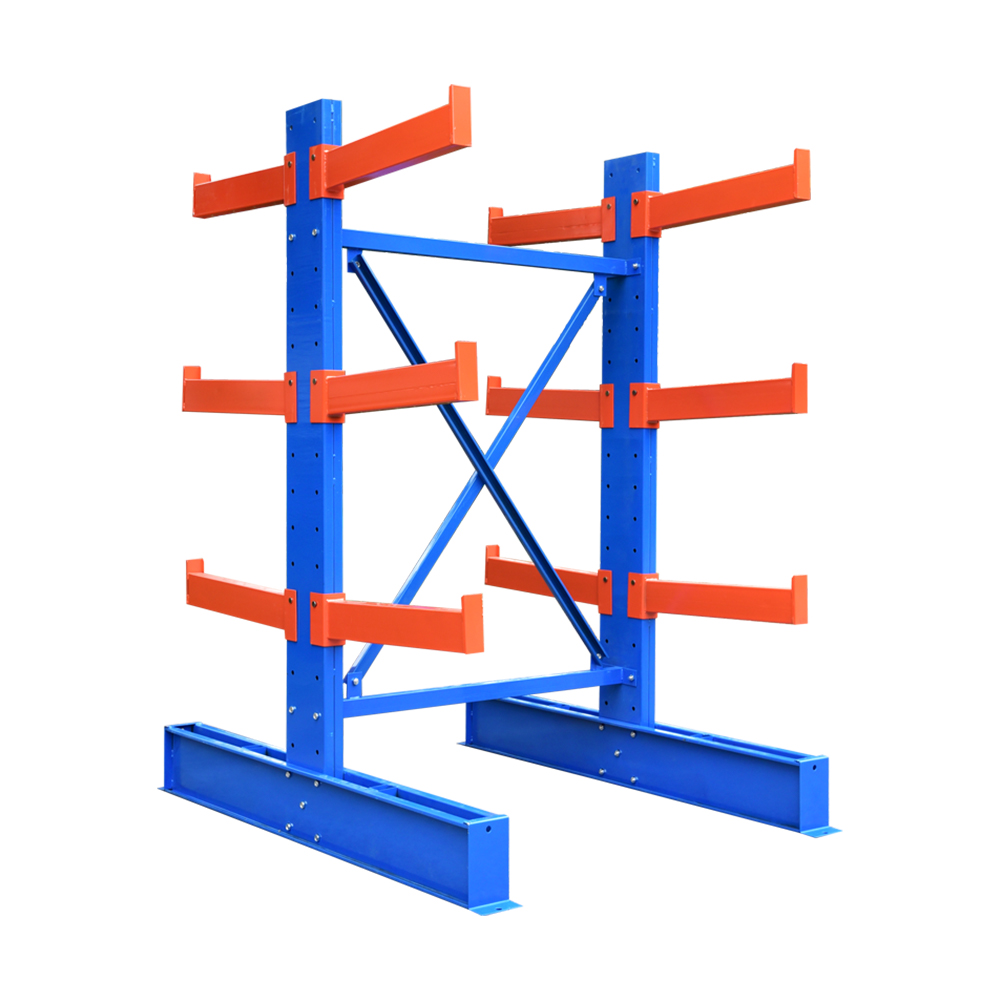
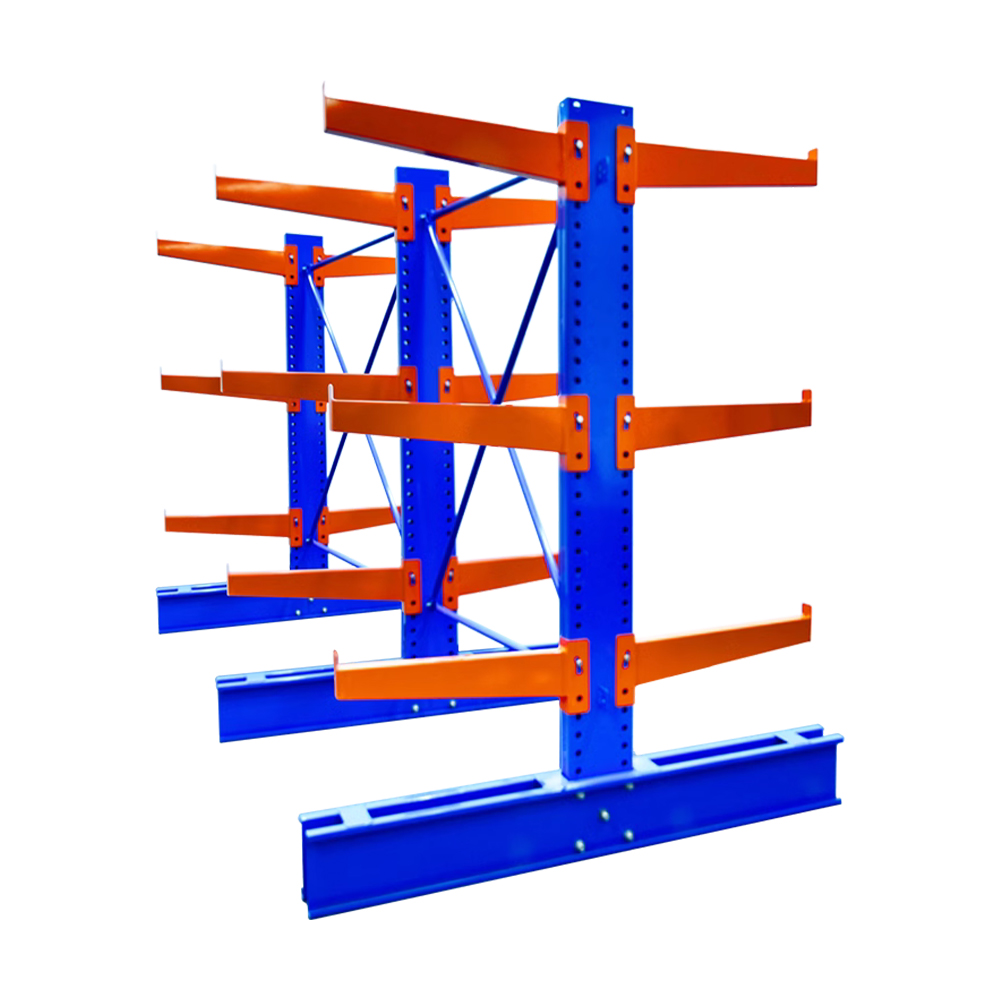
For long profiles, pipes, timber, and other goods that cannot sit on a standard shelf, a cantilever rack is a better fit. The arms project from a column, and the column resists the overturning force. The bracket arms may be adjustable, but the capacity depends on arm spacing, load distribution, and the column base. Our heavy-duty cantilever racking for industrial warehouse storage is designed around that load path rather than around a wall bracket assumption.
 Heavy-Duty Cantilever Racking for Long and Oversized GoodsFor pipes, lumber, and other long items that cannot use standard shelves, this column-and-arm cantilever system keeps loads accessible for forklift handling.View Product →
The table below compares common support approaches at a commercial level. It is not a substitute for an engineered design, but it helps a project team decide which category belongs in the RFQ.
Comparison of common heavy-duty support approaches; final selection should follow the actual load, substrate, and applicable engineering requirements.
| Approach |
Typical use |
Main constraint |
Specification focus |
| Wall-mounted heavy duty bracket |
Stockroom shelving, workshop shelves, office storage |
Wall substrate and anchor capacity |
Load at span, anchor type, deflection, finish |
| Retail slot bracket or display bracket |
Supermarket, convenience store, adjustable display |
Display weight and adjustment frequency |
Slot pattern, shelf depth, panel compatibility |
| Heavy-duty boltless rack |
Warehouse, factory, spare-parts storage |
Beam capacity and upright frame layout |
Beam levels, decking, frame protection, anchoring |
| Pallet racking system |
Pallet stacking and forklift access |
Beam-to-upright connector and impact protection |
Pallet load, clear span, lift height, safety accessories |
| Cantilever rack |
Pipe, timber, profiles, long panels |
Arm bending and column overturning |
Arm spacing, column base, load length, outdoor finish |
For a wholesaler or importer, the category decision affects packaging and inventory. A wall bracket line can be packed in small cartons and sold through retail channels. A rack system needs palletized shipment, installation instructions, and a different level of technical support. An OEM buyer may need both: a bracket line for a retail brand and a rack line for a commercial catalogue. The supplier should be able to explain which components are standard, which are configurable, and where the capacity changes. That is also where a manufacturer with in-house production and OEM/ODM experience is more useful than a trader who only resells mixed containers.
When the project needs repeated levels, pallet access, or long goods, move from bracket selection to a documented rack system.
Procurement Checklist for Brackets and Rack Components
An RFQ for heavy duty shelf brackets should give the supplier enough information to quote without guessing. The minimum package is a drawing or photo of the application, shelf length and depth, load per shelf, load position, wall or frame substrate, environment, finish requirement, target order quantity, and packaging expectation. For rack components, add upright height, beam span, pallet size, lift-truck type, and any local safety requirement. If the buyer cannot supply a drawing, a marked-up photo with dimensions is still better than a one-line request for “heavy duty brackets.”
The chart below is an indicative view of how project teams often weigh bracket and rack supply factors when they move from an informal purchase to a repeatable commercial order. It is a discussion aid rather than a universal scoring model; the actual priority depends on the application, the site, and the buyer’s risk exposure.
Indicative importance in bracket and rack supply decisions
Load path and shelf loading
Substrate and anchor compatibility
Bracket steel, weld, and hole pattern
Finish and cleaning environment
Documentation and pre-shipment checks
The first bar reflects a simple reality: a bracket quote without load conditions is hard to compare. The second bar points to the installation risk that often sits outside the bracket factory. The third bar covers the product itself: steel, weld, and hole pattern. The fourth bar reminds buyers that a finish which fails in a damp room becomes a maintenance cost even if the bracket is structurally adequate. The fifth bar is about proof: inspection records, packing photos, and clear labels reduce disputes. The sixth bar is commercial pressure; it matters, but it should not override the first four factors when the application is genuinely heavy duty.
Supplier evaluation should also separate a manufacturer from a trading company or wholesaler. A manufacturer may offer more control over steel specification, hole spacing, weld consistency, and OEM/ODM changes. A wholesaler may offer a broader mixed-carton range and faster local stock. Neither model is automatically better; the buyer should match the supply model to the order. For a private-label programme, ask who controls the tooling, the packaging artwork, and the inspection standard. For a project order, ask who can supply installation instructions and a load table in the required language.
For a more detailed comparison of rack duty classes, the guide to light, medium, and heavy-duty rack ratings is a useful reference before finalizing beam and upright selections. It helps a buyer ask better questions about capacity, rather than treating “heavy duty” as a single grade.
Read the rack duty ratings guide
Finally, put the commercial terms around the technical terms. State the sample approval process, the inspection stage, the acceptable packaging drop test, the spare-parts allowance, and the documentation language. A bracket that is correct in the sample room but arrives with the wrong screw pack or a missing installation sheet can still create a site problem. The purchase order should make the accessory list part of the product definition.
Quote the bracket as a system with load, substrate, fastener, finish, packaging, and documentation, or the lowest price will hide the highest risk.
Quality Checks Before Shipment
A pre-shipment check for heavy duty shelf brackets should be simple enough to repeat and specific enough to catch a real defect. Start with the material and dimensions: steel thickness at the specified point, leg length, hole diameter, slot length, bend angle, and hole spacing. Then check the weld or formed corner for cracks, undercut, sharp edges, and coating gaps. Verify the finish against the approved sample, including color, gloss level, and dry-film thickness where specified. A bracket can pass a visual check and still fail at installation if the hole pattern is out of tolerance or the pair does not sit flat.
For rack components, add checks for upright straightness, beam end connector fit, locking pin function, base plate flatness, and touch-up paint on handling marks. If load testing is part of the agreement, confirm the test method, sample size, and record format before production. Do not accept a generic certificate that does not identify the product, the load case, or the date. For OEM and private-label orders, inspect the carton print, label position, barcode, manual language, and accessory bag against the approved artwork.
- Dimensional report for bracket legs, holes, slots, and bend angle.
- Weld and edge inspection with photo record of any rework.
- Finish color and coating check against the approved sample.
- Fit test with the matching shelf, beam, or upright where applicable.
- Packing check for quantity, accessory bag, labels, and carton strength.
Documentation should travel with the shipment or be available before release: packing list, inspection report, finish specification, installation sheet, and any agreed load table. For buyers sourcing from a manufacturer, these records also make future repeat orders easier. The second order can be checked against the first instead of starting from a new sample. That is a practical advantage for wholesalers, importers, and project suppliers who need consistency across multiple containers.
Discuss a bracket or rack requirement
Send drawings, load cases, wall or frame details, finish requirements, target volumes, and packaging expectations. Our team can review standard rack options or discuss OEM/ODM development for a private-label programme.
Contact the manufacturer to start the review.
Inspect dimensions, weld, finish, fit, and packaging together; a bracket order is only complete when the installation accessories match the product.
FAQ: Heavy Duty Shelf Brackets
How do I know if a shelf bracket is truly heavy duty?
Look for a stated working load at a defined span, with the fastener or connector method and deflection limit included. A single capacity number without those conditions is not enough for comparison. Also check the steel specification, weld quality, hole pattern, and finish.
Can heavy duty shelf brackets be used on drywall?
Only with an anchor and bracket system designed for that substrate and load. Drywall has much lower pull-out resistance than concrete or timber, and a heavy shelf can create a high overturning force at the top of the bracket. If the wall type is uncertain, survey it or use a floor-standing rack instead of relying on a generic anchor.
What is the difference between a wall bracket and a beam bracket?
A wall bracket transfers load into the wall through anchors. A beam bracket or beam-to-upright connector transfers load into a rack frame and must match the upright slot and beam end plate. They are not interchangeable, even if both are described as heavy duty.
Does thicker steel always mean a stronger bracket?
No. Bracket shape, gusset design, weld quality, hole pattern, fastener, and substrate all affect performance. A thick bracket with a poor connection can underperform a thinner, well-designed bracket fixed correctly. Thickness is one input, not the whole specification.
How many brackets should support a heavy shelf?
The number depends on shelf length, shelf depth, load distribution, bracket capacity, and the deflection limit. Two brackets may be enough for a short shelf with uniform loading, but a long shelf or a point-loaded shelf may need three or more. The supplier’s load table should state the assumed bracket spacing.
What finish is best for a damp stockroom?
A finish suited to humidity and cleaning chemicals is more important than color alone. Powder coating, galvanizing, and stainless steel each have different edges, welds, and maintenance needs. Specify the room conditions and cleaning method, then inspect cut edges and fasteners as part of the corrosion system.
Can I mix brackets from one supplier with anchors from another?
It is possible only when the bracket hole, anchor type, substrate, and load case are verified together. Mixing parts without that check shifts the risk to the installer. A better approach is to require an approved fastener list and installation instructions with the bracket order.
When should I choose a rack system instead of wall brackets?
Choose a rack system when you need repeated shelf levels, pallet access, long-goods storage, high load density, or a load path that does not depend on a wall. A rack manufacturer can document the upright, beam, connector, and accessory combination as a system.
What should an OEM buyer include in a bracket RFQ?
Include the application, shelf size, load, substrate, finish, hole pattern, packaging, label artwork, target volume, and any private-label requirement. Ask who controls tooling, inspection, and installation documentation. That package lets a manufacturer quote a repeatable product rather than a one-off sample.
How should brackets be packed for export?
Packaging should protect the finish, keep pairs together, and include the correct fastener and installation sheet. Carton strength, label position, and accessory bag contents should be agreed before production. For mixed orders, clear carton marking reduces receiving errors and missing parts.
The safest buying rule is to compare brackets only after the load, wall or frame, fastener, finish, and documentation are defined in the same requirement.



 English
 Español
 русский
 Français
 한국어
 عربى
 ไทย
 Deutsch
 Bahasa Melayu
 Português
 Polskie