Supermarket Shelf and Display Racks: What Retail Buyers Should Decide First
A supermarket shelf that looks right in a showroom can still slow down a store opening if the bay width, shelf depth and upright spacing do not match the product range it has to carry. For retail buyers and project contractors, the practical answer is to settle store floor plan, product weight classes, shelf dimensions and finish before comparing quotations from any supermarket shelves manufacturer. Once those four points are on paper, fixtures such as display racks, shopping baskets and carts, and a checkout counter can be planned around the same grid.
Most sourcing problems in retail fit-outs come from mismatches rather than from poor materials. A gondola run is planned at one depth while the supplier quotes another, end caps arrive in a different height from the shelf bays, or a checkout counter is built for a lane width the store layout cannot spare. A clear specification, shared with the supplier at the start, removes most of these surprises.
This guide is written for supermarket owners, chain retail project managers, distributors and fit-out contractors who source metal shelving and store fixtures from China. It covers shelf formats, load planning, display racks, shopping baskets and carts, checkout counter layout, quality checks and custom orders. Four charts turn planning questions into visuals; they are worked planning examples built from stated assumptions, not market statistics.
The five fixtures in one view
Supermarket shelves: gondola, wall and end cap formats that carry the main product range.
Display racks: flexible units for promotions, impulse items and seasonal products.
Shopping baskets and carts: the carrying equipment that shapes how much a customer can buy per visit.
Checkout counter: the point of payment, where layout and height affect queue flow and accessibility.
Planning these together matters because they share floor space. A wider aisle in front of the shelves reduces the room available for display racks, and a longer checkout counter changes how many shelf bays fit near the exit. Buyers who treat the fixtures as one system usually finish the layout with fewer revisions.
Conclusion: fix the floor plan, weight classes, shelf dimensions and finish first, then plan shelves, racks, baskets, carts and the checkout counter as one system.
Supermarket Shelves: Gondola, Wall and End Cap Formats Compared
Supermarket shelves usually come in three formats. Gondola shelving stands in the middle of the floor and can be accessed from both sides, wall shelving lines the perimeter and uses the wall for support, and end caps close the ends of gondola runs and give a spot for promotions. Each format has a different balance of capacity, flexibility and floor use, so a typical store mixes all three.
A supermarket shelf system is normally built from uprights, base units, adjustable shelves, back panels and accessories such as price rails, dividers and hooks. Adjustable shelf height lets the store change the layout when the product range changes, which is one reason adjustable steel shelving remains the standard choice for grocery and convenience formats. Heights, depths and bay widths vary between catalogs, so buyers should confirm the exact dimensions with the supplier rather than assume them.
Format comparison table
Common supermarket shelf formats compared by position, access and typical role in the store.
Format
Position
Customer access
Typical role
Gondola shelf
Free-standing, mid-floor
Both sides
Core grocery and packaged goods
Wall shelf
Along walls
One side
Perimeter categories, tall display
End cap
End of gondola run
Front and sides
Promotions and featured items
Display rack
Flexible, near traffic
Open on several sides
Seasonal, impulse and trial items
Comparing three formats on five attributes
Choosing between gondola shelving, wall shelving and standalone display racks depends on what the store needs most in each zone. The radar chart below scores the three formats on display capacity, flexibility, customer access, installation speed and space efficiency. The scores are illustrative planning judgments for discussion and not measured results.
The gondola shelf reaches furthest on display capacity and flexibility, which explains why it forms the backbone of most supermarket shelves layouts. The wall shelf scores highest on space efficiency, since it uses the perimeter of the store that would otherwise carry little stock. The display rack leads on customer access and installation speed because it stands alone and can be moved when the promotion changes.
For a supplier that makes metallic shelves and racks for both home and industrial use, these formats can often share the same steel components and finishes. That lets a retail buyer order shelves, end caps and racks in a consistent color and powder coating, so the store looks like one system rather than a mix of pieces. It also simplifies later additions, because new bays can be matched to existing ones.
Because the chart is an illustrative index, it works best as a prompt for your own planning. A convenience store with a small footprint may weight space efficiency heavily, while a large supermarket may weight capacity and flexibility more. Re-score the five axes with your own priorities and see which format moves forward.
Conclusion: use gondola shelves for the core range, wall shelves for the perimeter, and end caps and display racks for items that need extra attention.
Supermarket Shelf Construction: Steel, Coating and Load Planning
Most supermarket shelf systems are made from cold-rolled steel that is formed into uprights, shelf panels and back panels, then finished with powder coating. Powder coating gives a durable, even surface that resists scratches from daily restocking and cleans easily with a damp cloth. Buyers should ask which coating process is used and what color options are available, since matching colors across a large order matters for the final look.
Load planning is the part of a shelf specification that is most often left vague. Each shelf level is rated for a certain load, and that rating depends on steel thickness, shelf span, support design and how the load is spread. Instead of quoting a single number for the whole system, serious suppliers state the rated load per shelf level and per bay, and buyers should check those figures against the heaviest products they plan to stock.
Where heavy items belong on a shelf bay
A simple rule used in merchandising is to place heavier goods on lower levels and lighter goods higher up. This is both a safety practice and a way to keep the upper shelves within comfortable reach. The stacked bar chart below shows a worked planning example of how item weight classes might be spread across four tiers.
The shares are a guideline example built from the stated rule and are not store data.
The top tier is dominated by light items, which keeps heavy packs out of overhead reach and lowers the strain on the upper shelf levels. As the eye moves down the bay, medium and heavy items take a larger share, and the bottom tier is mostly heavy goods such as bottled drinks, bags of rice or cases of canned food. This distribution matches how rated shelf loads are normally used, because lower levels carry the largest loads.
For a store planner, the chart is a reminder to ask the supplier for load ratings per shelf level before finalizing a category plan. A beverage aisle, for example, may need heavier-duty shelf panels and a different upright specification than a snack aisle. A manufacturer of heavy-duty industrial shelving as well as retail shelving can usually offer a stronger variant for those aisles without changing the look of the rest of the store.
Reach also affects usability. In the United States, the ADA Standards for Accessible Design set a forward reach range of about 15 to 48 inches (roughly 380 to 1,220 mm) above the floor for accessible elements, and many retailers use that range as a reference when thinking about shelf heights for frequently bought items. Requirements differ by country and by store type, so buyers should check the rules that apply to their own market.
Conclusion: ask for rated load per shelf level, place heavier goods low, and confirm the coating and upright specification for each category.
Display Racks: Promotion, Impulse and Category Presentation
Display racks work differently from main shelving. They stand near entrances, checkout areas or aisle ends, and their job is to catch attention rather than to hold the full range. A well-chosen display rack can carry seasonal goods, new arrivals or small impulse products without needing a full shelf bay.
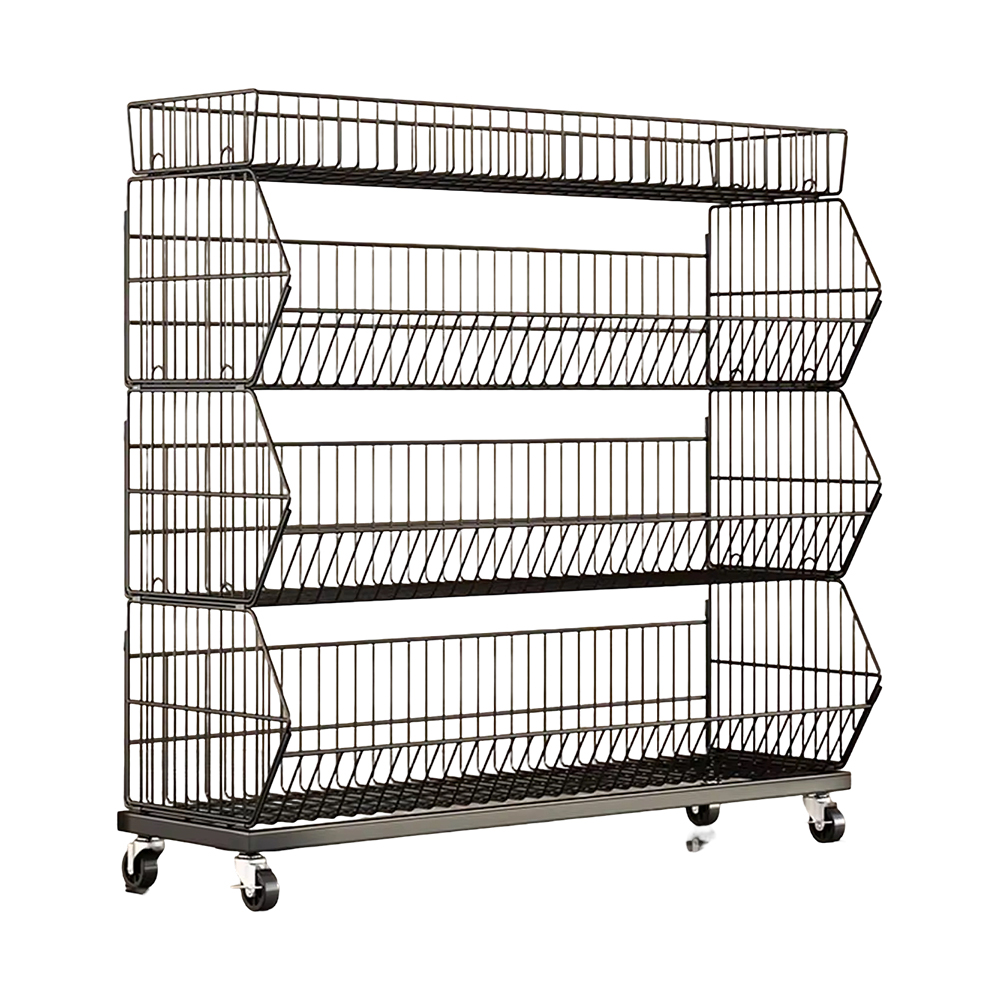
Display racks come in several forms, including wire racks, hook racks, tiered stands, rotating towers and end cap displays. Wire and hook racks suit small packaged goods, tiered stands suit boxed items and produce, and rotating towers use a small footprint to show many items. The right form depends on the product's size, weight and how customers pick it up.
Choosing a display rack by use
Seasonal and promotional goods: movable racks on casters or with flat bases that can be repositioned quickly.
Small impulse items: compact hook or tiered racks placed near the checkout counter.
Fresh and bulk categories: sloped or stepped racks that present loose or packaged produce at a visible angle.
Brand or category features: custom-finished racks with headers or signage panels.
Display racks are also where customization shows most clearly. Retailers often ask for specific heights, tier counts, colors and header boards so that racks match the store identity. A factory that works with flexible solutions can usually adapt dimensions and finishes, as long as the buyer provides a drawing or reference photo and states the product weight each tier must carry.
Stability deserves a quick check on any freestanding rack. A tall, narrow rack with heavy goods on the upper tiers can tip if bumped by a cart, so base width, weight distribution and anchoring options should be reviewed. Asking the supplier how the rack was designed to stay stable in a busy aisle is a reasonable question and shows how carefully the unit was engineered.
Conclusion: match display racks to the product and its role in the store, and review stability and base design before ordering tall units.
Shopping Baskets & Carts: Matching Capacity to Store Flow
Shopping baskets and carts decide how much a customer can carry, and that in turn shapes aisle width, parking space for carts and the layout near the entrance. A small convenience store may rely mainly on hand baskets, while a larger supermarket needs a stock of carts that can move through the aisles without blocking each other. Getting the balance right avoids both crowding and unused equipment.
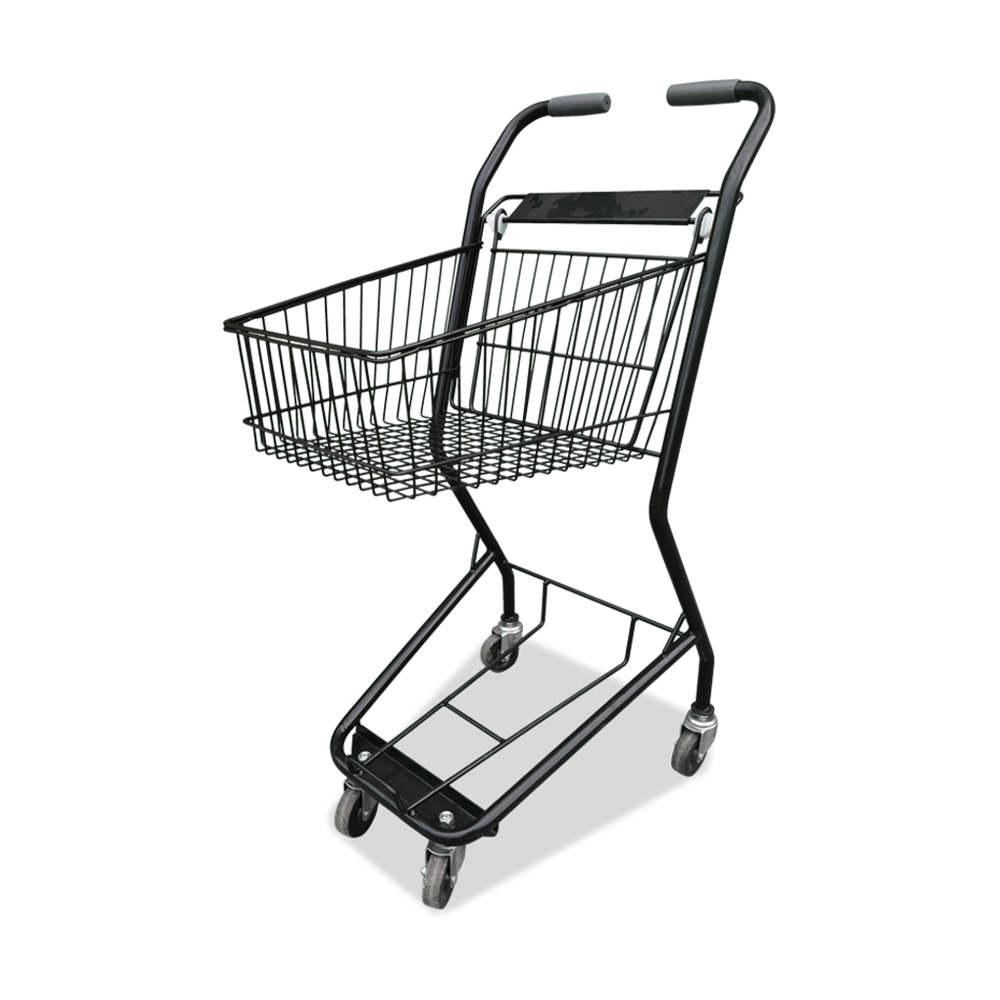
Hand baskets are usually made of plastic or metal wire, with one or two handles, and are chosen for light, short visits. Carts come in several sizes and use a frame, a basket and wheels, and some include child seats or lower trays. Material choice affects weight, cleaning, noise and durability, so buyers should consider the store's flooring, traffic and cleaning routine.
Basket and cart options at a glance
Common shopping basket and cart types compared by use and store suitability.
Type
Typical build
Best suited to
Plastic hand basket
Molded plastic, one or two handles
Convenience stores, short visits
Metal wire basket
Steel wire, coated finish
Frequent handling, easy cleaning
Basket trolley
Frame with wheels and basket holder
Mid-size shops, heavier baskets
Supermarket cart
Steel or plastic frame, wheels, lower tray
Full grocery shopping
An example fixture plan for a mid-size store
To see how these items fit together with shelving and the checkout counter, it helps to look at a simple fixture plan. The horizontal bar chart below shows a worked example for a 500 square meter sales floor. The quantities are a planning assumption chosen for illustration and do not describe any real store.
In this example the largest number of units is hand baskets, because they are cheap to hold in quantity and are used on most short visits. Shelf bays and carts follow, with the bay count reflecting how much product the floor must carry and the cart count reflecting the number of customers inside at busy times. Display racks and checkout counters are the smallest groups, yet they sit in the most visible parts of the store.
The point of the chart is that fixtures should be planned as a set. If a store adds more checkout counters, it needs more space near the exit and fewer shelf bays or display racks nearby. A supplier that makes supermarket shelves, display racks, baskets and carts together can help the buyer see these trade-offs and quote the full set from one source.
When specifying carts, ask about wheel type, swivel design, frame finish and nesting dimensions. Nesting dimensions affect how many carts fit in the return area and how many can be stacked for shipping. These small details determine daily handling comfort and container planning for an export order.
Conclusion: size baskets and carts to the store's customer flow, and plan them together with shelf bays, display racks and the checkout counter.
Checkout Counter: Layout, Height and Customer Flow
The checkout counter is where a store's layout either works or does not. A counter that is too short leaves little room for goods and bagging, one that is too long takes space from the aisle, and one placed badly can send queues into the shelving. Most retail fit-outs plan the checkout area first and then fit the shelves around it.
A typical checkout counter has a customer side with a loading area, a cashier side with a register position and storage, and sometimes a conveyor belt and a bagging area. Surfaces are usually laminate, steel or solid panels that tolerate heavy daily use. Cable routing, power outlets and space for a scanner and payment terminal should be agreed with the supplier before production.
Accessibility and floor space
In the United States, the ADA Standards for Accessible Design call for a portion of checkout counters to be accessible, with a maximum counter height of 38 inches (about 965 mm) and a minimum clear aisle width of 36 inches (about 915 mm). Other countries have their own rules and many retailers also consider customers with prams, carts and mobility aids. Buyers should confirm the requirements that apply in their own market before fixing counter dimensions.
How floor area is shared in the example store
To place the checkout counter in context, it helps to see how the whole floor might be divided. The donut chart below shows a worked example for the same 500 square meter store, split between shelving, customer aisles, checkout and entry, and promotional displays. The proportions are a planning assumption for illustration and not an industry average.
Shelving and customer aisles take most of the floor, which is typical for a self-service layout where customers need room to walk and compare products. The checkout and entry zone is smaller in area but carries the most traffic at peak times, so it needs clear space for queues and for carts to enter and exit. Promotion and display racks take the smallest share, which is why their placement near the flow of customers matters.
For a checkout counter order, the useful discussion with a supplier is how the counter modules can be combined. Straight, L-shaped and extended modules let a retailer match the counter to the lane width and add sections later as the store grows. Asking for a layout drawing with dimensions and cable routes before production helps both sides catch problems early.
Finishes at the checkout area take more wear than almost anywhere else in the store. Edge protection, scratch-resistant surfaces and easy-to-clean panels extend the time before the counter needs refurbishment. A manufacturer with its own production facility and quality control can discuss these details directly, which is usually faster than relaying questions through a trading company.
Conclusion: plan the checkout counter first, confirm accessibility rules for your market, and use modular sections so the counter can grow with the store.
About Shanghai King Global Shelf Co., Ltd.
Shanghai King Global Shelf Co., Ltd. is a manufacturer of shelving and storage solutions for logistics and warehousing. The company specializes in home racks, industrial heavy-duty shelving and warehouse optimization systems, and it was founded in 2010.
Over the years the company has built production capability around a modern facility, an experienced team and reliable quality control. It works as a metallic shelves and metallic racks supplier and a storage shelves factory in China, with products designed to improve display, storage efficiency and space utilization for different markets.
With stable quality, flexible solutions and responsive service, the company supports customers in both domestic and overseas markets. For retail buyers, this combination of retail-style shelving and heavy-duty industrial experience is useful when a project includes both a sales floor and a stockroom. A single supplier can then coordinate the steel, finish and dimensions across the whole site.
Conclusion: a shelving manufacturer that serves both retail and warehouse needs can coordinate store fixtures and stockroom racking in one project.
Quality Checkpoints for Supermarket Shelves, Racks and Checkout Fixtures
Quality problems in store fixtures usually show up as wobble, uneven shelves, chipped coating or parts that do not line up on site. Most of these can be spotted during sample review or pre-shipment inspection with a tape measure, a spirit level and a careful visual check. A buyer who knows what to look for can ask the supplier for photos or measurements at each stage.
Checks on supermarket shelf samples
Dimensions: bay width, shelf depth and upright height against the drawing.
Fit and stability: shelves seat securely in the upright slots and the assembled bay stands level.
Coating: even coverage with no bare spots, runs or sharp edges.
Load behavior: shelf deflection under the intended load is within the agreed limit.
Checks on baskets, carts and counters
Welds and joints: clean, continuous welds with no cracks or sharp spatter.
Wheels and handles: smooth rolling, secure fixing and comfortable grip.
Counter surfaces: flat, scratch-resistant panels with protected edges.
Packaging fit: parts counted and labeled so site installation runs smoothly.
Example review points for store fixtures; agree the exact tolerances with your supplier in writing.
Stage
Review point
Method
Material
Steel type and thickness
Supplier records and measurement
Forming
Dimensions and squareness
Tape measure and square
Finish
Powder coating coverage and adhesion
Visual and adhesion check
Assembly
Fit and stability of a full bay
Trial assembly with level
Packing
Part counts and labels
Packing list check
Conclusion: check dimensions, coating, stability and packing on a trial assembly before approving bulk production.
Custom and OEM Supermarket Fixtures: What to Send With an Inquiry
Retail chains and fit-out contractors often ask a supermarket shelves supplier to adapt dimensions, colors, header boards and accessories to a store concept. A clear inquiry shortens that process and helps the factory judge feasibility early. The table below lists the details that most help a supplier prepare a custom or OEM offer.
Information checklist for custom and OEM store fixture inquiries.
Item
What to state
Why it helps
Store layout
Floor plan with aisle widths and wall lengths
Sets bay counts and module sizes
Shelf dimensions
Height, depth, bay width, tier count
Defines the main product
Product weights
Heaviest item per shelf and per bay
Guides steel thickness and supports
Finish and color
Color codes and coating type
Keeps the store look consistent
Accessories
Price rails, dividers, hooks, headers
Completes the shelf system
Checkout and carts
Counter modules, cart size, basket type
Aligns equipment with lane design
Sampling and drawings
A typical custom project begins with a drawing or reference photo, followed by a confirmed layout and a sample bay or module. The buyer checks the sample for fit, finish and stability and gives written feedback. Many buyers also request a short assembly guide so the site team can install the fixtures without delays.
Conclusion: a floor plan, shelf dimensions, product weights and finish details give a supplier what it needs to offer an accurate custom solution.
Packaging, Shipping and Installation Planning for Store Fixtures
Store fixtures are bulky, and packaging has a direct effect on container space, handling and installation time. Knock-down designs, where shelves and uprights ship flat, save volume and reduce the chance of transit damage. Baskets and carts are often nested to reduce volume, and counters may ship as modules that are joined on site.
Flat-pack shelving: uprights, shelves and back panels bundled by bay, with corner protection.
Nested baskets and carts: stacked in a way that saves space without scratching the finish.
Counter modules: protected panels with labeled sections and hardware bags.
Pallets: strapped and wrapped pallets with clear marks for each store zone.
Labeling for on-site installation
Labels that match the store layout drawing, for example by aisle or zone, speed up installation and reduce mix-ups. A packing list showing quantities per carton and per pallet lets the receiving team check goods quickly. Sharing the destination country at the start also lets the supplier prepare the right documents and export packaging.
Conclusion: choose knock-down packing, label cartons by store zone and prepare a packing list so installation and customs checks run smoothly.
Working With a Supermarket Shelf Manufacturer and Supplier: Practical Steps
Choosing a supermarket shelf manufacturer or wholesale supplier is less about a single phone call and more about how clearly both sides document expectations. Buyers who build long relationships tend to share store plans early, give feedback quickly and keep specifications consistent across stores. The steps below describe a workflow many retail buyers follow with a new supplier.
Share the floor plan, product categories and heaviest item weights.
Choose shelf formats for each zone and confirm dimensions and finish.
Add display racks, baskets, carts and the checkout counter to the same specification.
Request a sample bay or module and review fit, finish and stability.
Confirm the approved sample as the reference for bulk production.
Place the order with written specifications, packing details and delivery timing.
Request inspection photos before shipment and keep them with the order file.
Questions worth asking a new supplier
Ask which shelf and rack ranges the factory makes regularly and which are made to order. Ask how steel is checked, how coating quality is controlled and what records are kept for each batch. Ask about experience with overseas projects, since export packaging and documentation are part of the job.
Clear, practical answers show whether a team has a working quality routine. A manufacturer with its own production capability and responsive service can usually answer these questions directly. That makes it easier to plan a store opening or a multi-store roll-out with fewer surprises.
Conclusion: a documented workflow from floor plan to sample, order and inspection keeps store fixtures consistent across projects.
Supermarket Shelf and Store Fixtures FAQ
Q1: What should I specify when ordering a supermarket shelf?
State the floor plan, shelf height, depth and bay width, the weight of the heaviest products per shelf and the finish color. Also name the format, such as gondola, wall or end cap. These details let the supplier select the right steel and supports.
Q2: How are display racks different from supermarket shelves?
Supermarket shelves carry the main product range in organized bays, while display racks are movable or standalone units used for promotions, impulse items and seasonal goods. Display racks are usually smaller and easier to reposition. Most stores use both together.
Q3: How do I choose between shopping baskets and carts?
Baskets suit small stores and short visits, while carts suit full grocery shopping and wider aisles. Many stores offer both, with basket trolleys as a middle option. Consider aisle width, parking space and cleaning routine when deciding quantities.
Q4: What should I confirm before ordering a checkout counter?
Confirm the counter length, height and module layout, accessibility rules for your market, cable routing and surface material. A layout drawing from the supplier helps catch problems before production. Plan the counter early because it affects the shelf layout near the exit.
【Lightweight Portable Shopping Basket】This shopping basket is designed to be lightweight and easy to carry, making it perfect for everyday shopping trips, whether you are supermarket, grocery store, farmers market or convenience store.The ergonomic design ensures comfortable carrying, even when the basket is full of groceries, reducing strain on your hands and arms.【Durable Load-Bearing Shopping Cart】This shopping cart is constructed from high-quality, durable materials, offering exceptional load-bearing capacity, making it ideal for carrying heavy groceries, household items and other purchases.The reinforced structure ensures that the cart remains stable and secure, even when fully loaded, providing a reliable and long-lasting shopping companion.【Smooth-Rolling Wheels for Easy Movement】Both the basket and cart feature smooth, high-quality wheels that roll easily on all types of surfaces, from supermarket floors to sidewalks and parking lots.This makes it easy to move your purchases around, reducing the effort required to carry heavy items and making your shopping experience much more convenient and enjoyable.【Ergonomic Design for Comfortable Use】The ergonomic handle design ensures a comfortable and secure grip, reducing hand fatigue and making it easy to carry or push the basket/cart for extended periods.The design is optimized for user comfort, with no sharp edges or uncomfortable pressure points, ensuring a pleasant shopping experience every time.【Multi-Scene Adaptable Design】This basket and cart are not just for grocery shopping! They can be used for a wide variety of purposes, from running errands and doing laundry to moving items around the house, storing toys, and even for picnics and outdoor activities.Their versatile design makes them a practical and useful addition to any household.
【Compact Space-Saving Retail Display Rack】This retail display rack features a compact, space-saving design, making it perfect for small to medium-sized retail stores, convenience stores, boutiques and other commercial spaces with limited floor area.It allows you to showcase your products effectively without taking up too much valuable floor space, helping you make the most of your store's layout.【Eye-Catching Design to Attract Customers】This display rack features an attractive, modern design that will catch the eye of your customers as they walk through your store, drawing their attention to your products.Its sleek, minimalist appearance will complement any store decor, enhancing the overall shopping experience and making your products stand out from the competition.【Adjustable Layers & Angles for Custom Display】The layers and display angles of this rack can be easily adjusted, allowing you to customize the display to fit your products and create the most attractive presentation possible.Whether you need to display flat products, angled items, or products of different sizes, this flexible design can be adapted to meet your specific display needs.【Easy to Assemble & Move】This rack comes with all necessary hardware and a detailed installation manual, making assembly quick and hassle-free, with no complicated tools required.The lightweight yet sturdy structure makes it easy to move and relocate, allowing you to rearrange your store layout quickly and easily, or move the rack to different locations for seasonal promotions and special events.【Sturdy & Durable Construction】Constructed from high-quality materials, this display rack offers exceptional stability and durability, capable of holding your products securely without wobbling or tipping over.The reinforced structure ensures that the rack remains stable even when fully loaded, providing a reliable and long-lasting display solution for your retail business.
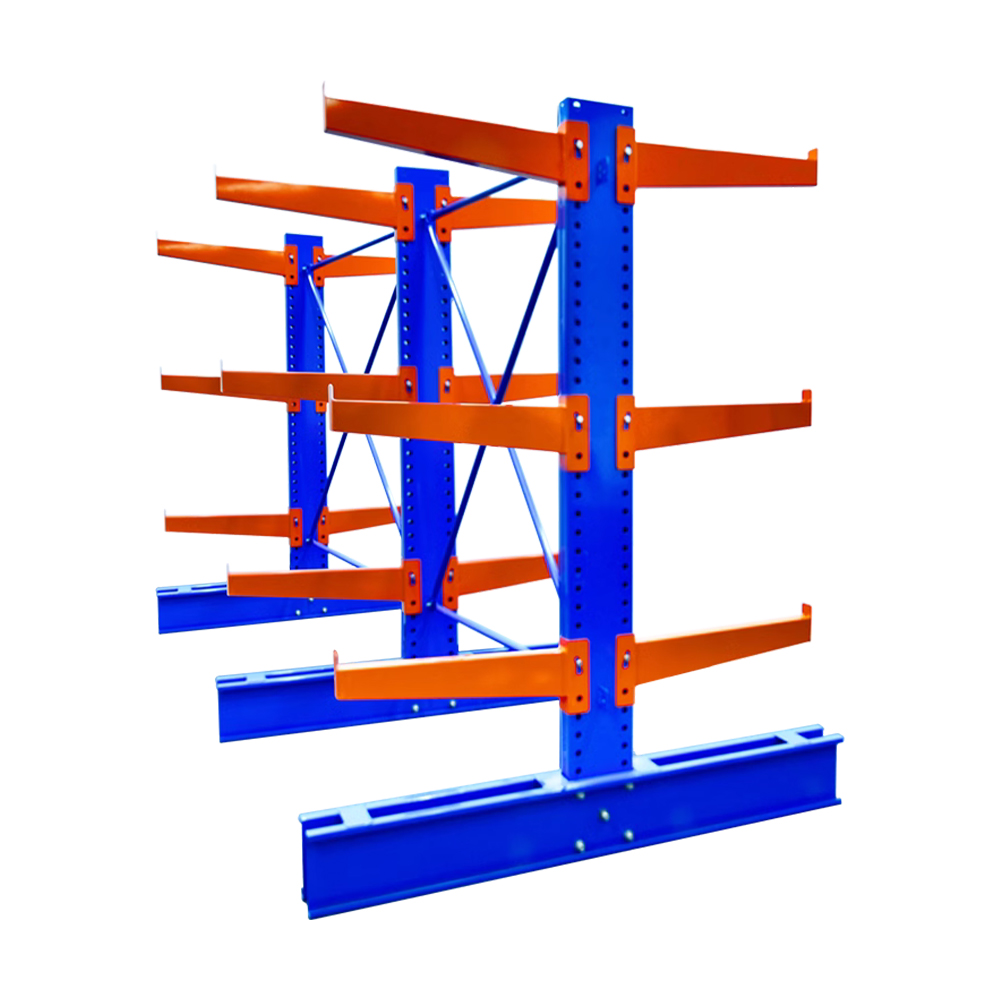
【Heavy-Duty Long Item Storage Rack】This industrial storage rack is specifically designed for storing long or irregularly shaped goods, such as pipes, lumber, steel bars, carpets, rolls of material and other oversized items.The open design and wide load capacity make it easy to access and store long items, while the reinforced steel structure provides exceptional load-bearing capacity and stability.【Wide-Load Accessible Design】The rack features an open, accessible design that allows for easy entry with wide-load handling equipment, such as forklifts, pallet jacks and cranes.This makes it easy to load and unload long or heavy items, reducing the time and effort required for material handling and improving overall operational efficiency.【Reinforced Steel Construction for Heavy Loads】Constructed from high-quality heavy-duty steel, this rack offers exceptional strength and durability, capable of supporting the weight of long, heavy items without bending or deforming.The reinforced steel columns and beams form a solid support structure, ensuring that the rack remains stable and secure, even when fully loaded with the heaviest items.【Flexible Modular Design for Customization】The modular design of this rack allows you to customize the length, height and width to fit your specific storage needs and the size of your items.You can easily adjust the spacing between the uprights to accommodate items of different lengths, making it a versatile storage solution for a wide range of long and irregularly shaped goods.【Durable Industrial Finish for Long-Term Use】The entire rack is treated with a powder coating finish, which provides excellent rust, corrosion and scratch resistance, making it suitable for harsh industrial environments.This finish extends the service life of the rack, ensuring that it remains in good condition for many years, even with heavy daily use in warehouses, factories and construction sites.
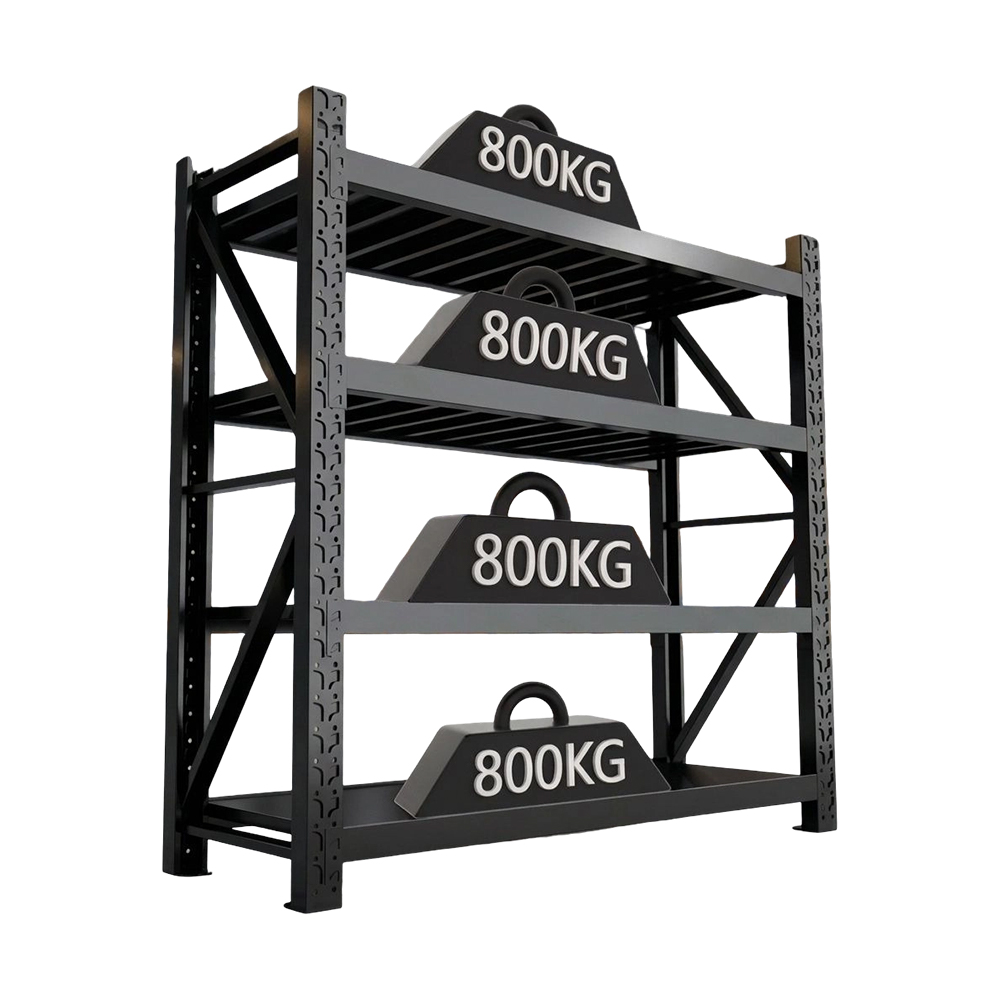
A boltless heavy duty shelf rated at 800kg per layer, made from Q235B cold-rolled steel with full-seam welded joints — built for engines, paint drums, and heavy molds that punish anything less.Detailed Product Description· Why it holds under heavy static loadWhen the load is an engine block, a drum of paint, or a steel mold, the rack either holds or it does not. This heavy duty rack is made from Q235B cold-rolled steel with full-seam welded joints and a 7-layer anti-rust coating. Each layer is rated from 800kg up to 1500kg, and the uprights, beams, and shelf panels are specified to match the load you actually store. Q235B cold-rolled steel carries a low sulphur and phosphorus content, which keeps the steel clean-welding and tough, so joints stay sound instead of becoming the weak point of the rack. We weld the full joint rather than relying on spot welds — that is what keeps a rack from opening up at the weld after years of carrying heavy static load. The Ω-shaped upright resists bending far better than a flat column made of the same steel weight, giving more load-bearing from the same footprint. The multi-folded beam profile raises load capacity by up to 20% compared with a standard beam, so you get more payload per bay without buying more steel. Diamond or inverted-8 hole uprights let beam levels drop in and lock fast, so initial installation and later level changes take minutes with standard tools.
· How it saves space and survives the plant floorMain and sub frames share one column. When you extend a run, the sub frame reuses the main frame's upright instead of doubling up columns — you save floor space, steel, and cost on every extension. The 7-layer anti-rust coating runs acid pickling, phosphating, electrostatic spray, and high-temperature curing — built for humid plants, wash-down areas, and coastal sites. Standard builds run 2–6 layers, 150/200cm long, 50/60cm deep, 200cm high; dimensions, structure, load rating, and colour are all customizable. Five standard colours — blue, white, black, yellow-black, and blue-orange — or match your plant's existing colour standard. Where it fits: heavy manufacturing with engine and motor assemblies stored at line side; paint, chemical, and drum storage where dense, awkward loads punish thin beams; molds and dies that need a stable, non-wobbling base; and bulk industrial storage of spare parts, castings, and dense cartons at full bay height.
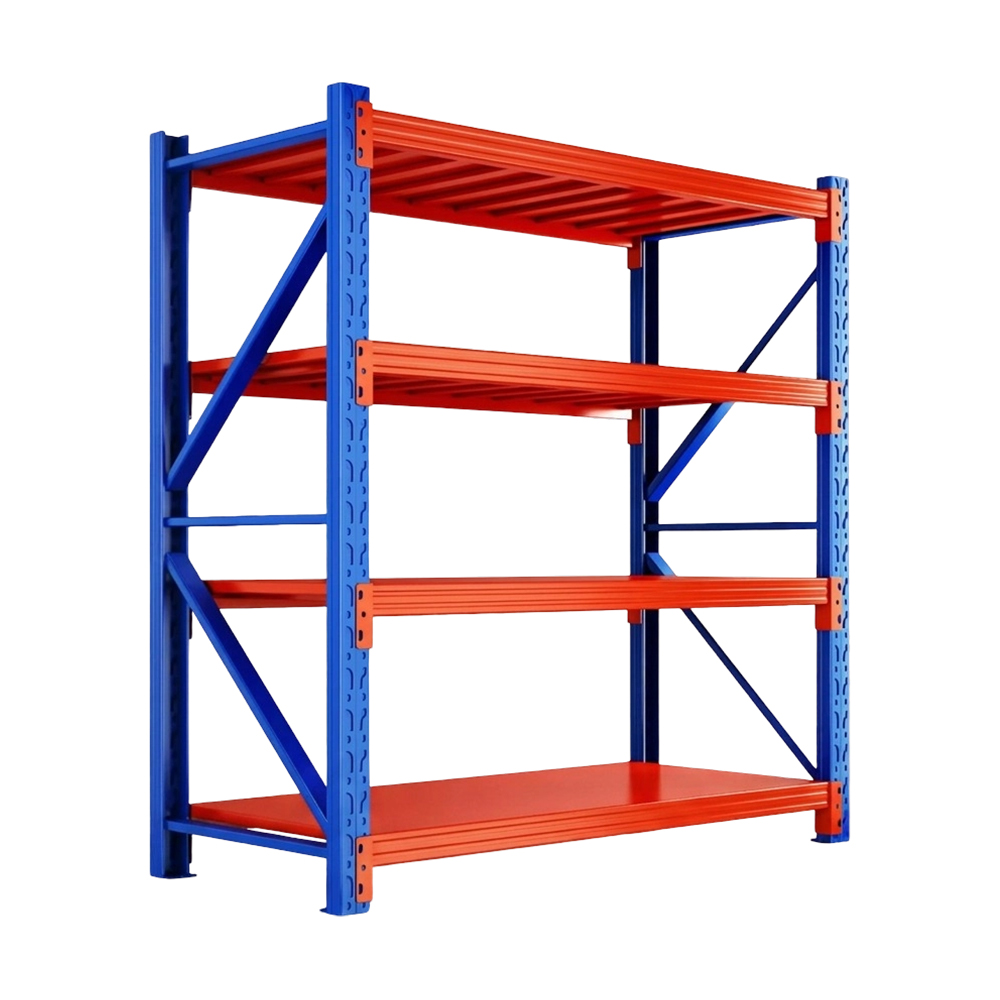
A medium duty steel shelf finished in blue and orange, rated at 500kg on every layer and built for the punishing routine of a working warehouse floor — e-commerce pick lines, 3PL client bays, and production plants that cannot afford a shelf that sags.Detailed Product Description·Built to carry, built to lastA rack is only as good as its weakest shelf. Every level here carries 500kg, so multi-SKU picking lines, component bins, and dense cartons stay exactly where you put them — through shifts, seasons, and layout changes. If your loads run lighter, the same frame family covers 300kg and 350kg per layer, with board, beam, and column gauge matched to each rating. This one is purpose-built for multi-SKU picking: e-commerce fulfilment centres chasing thousands of SKUs, 3PL warehouses holding segregated client stock, and production plants that keep components in bins instead of on the floor. The one-piece shelf edge removes the sharp joints where hands, cartons, and shrink wrap meet, while reinforced steel shelf panels resist denting under constant load. The beam profile is multi-bent for higher bending stiffness — more capacity from the same steel, and less flex when a full carton gets dropped onto a level. Ω-shaped columns, larger foot plates, and free rubber sleeves protect your floor and stop wobble in aisles where pallet trucks and trolleys pass all day. The 7-layer anti-rust coating runs acid pickling, phosphating, electrostatic spray, and high-temperature curing — built to hold up in humid warehouses, wash-down zones, and coastal sites.
·Flexible to configure, simple to changeButterfly-hole uprights and height-adjustable levels let you re-slot shelf spacing in minutes, no drilling and no new uprights, as carton sizes, SKU counts, and pick faces change. Standard builds run 2–6 layers, 150/180/200cm long, 50/60cm deep, 200cm high; custom length, depth, height, structure, and load rating on request. Choose welding type for fixed, permanent installations, or bolt type with single-column buckle assembly for fast on-site build and easy teardown when you relocate a line. Five standard colours — blue, white, black, yellow-black, and blue-orange — or match your own brand or existing racking colour code. Where it fits: e-commerce fulfilment centres for pick faces and tote storage around pack stations; 3PL warehouses needing client-segregated bays that re-slot as contracts change; warehouse build-outs and upgrades where you add bays as you grow instead of replacing an aisle; and manufacturing plants storing components, spare parts, and tooling beside the line.
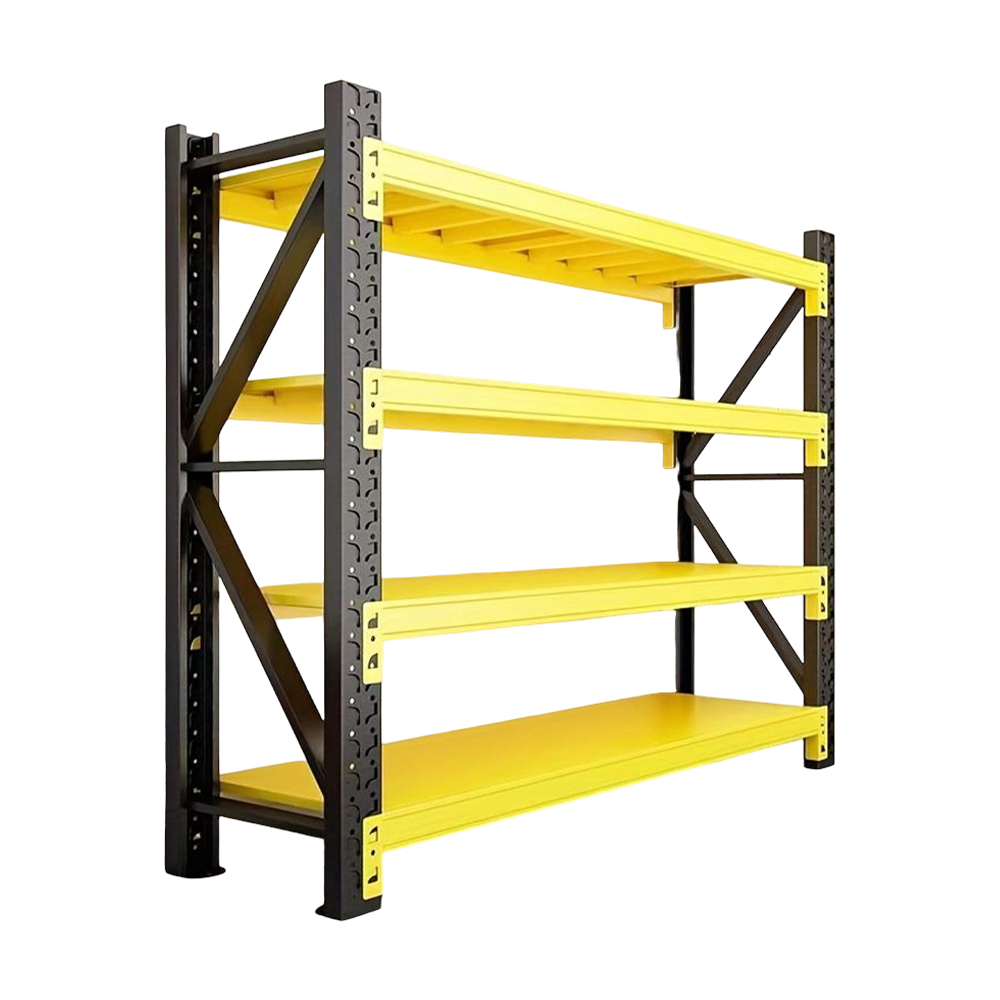
A four-layer garage shelf rated at 200kg per tier, built to shrug off humidity, oil, and daily bumps while keeping tools and seasonal gear in order.Detailed Product DescriptionGarages punish storage. Damp air, oil mist, temperature shifts, and the odd scrape against a shelf edge all add up. This rack is designed around that. Each tier holds 200kg, so one bay swallows toolboxes, paint cans, cartons, canned goods, or small appliances. A different capacity is available in the same frame family — 120kg and 250kg per layer. Assembly leans on butterfly holes and single-column buckles rather than bolts, so there is no drill and no instruction-manual frustration; one person raises the whole rack in minutes and can flat-pack it just as fast for a move or a workshop reshuffle. Levels move up and down, letting you rework the layout as storage changes: tall buckets this season, small parts bins the next. The 7-layer anti-rust system — acid pickling, phosphating, electrostatic spray, high-temperature curing — targets humid garages, basements, and coastal air. Ω-shaped columns and larger foot plates stiffen the frame, while free rubber sleeves shield floors, kill wobble, and keep things solid under full load. With the main + sub frame setup, extra bays bolt on sideways into a storage wall instead of separate racks — less floor space, lower cost per shelf. Colors run blue, white, black, yellow-black, blue-orange and more; 2–6 shelf layers; custom L×W×H, color, and capacity on request.



 English
 Español
 русский
 Français
 한국어
 عربى
 ไทย
 Deutsch
 Bahasa Melayu
 Português
 Polskie