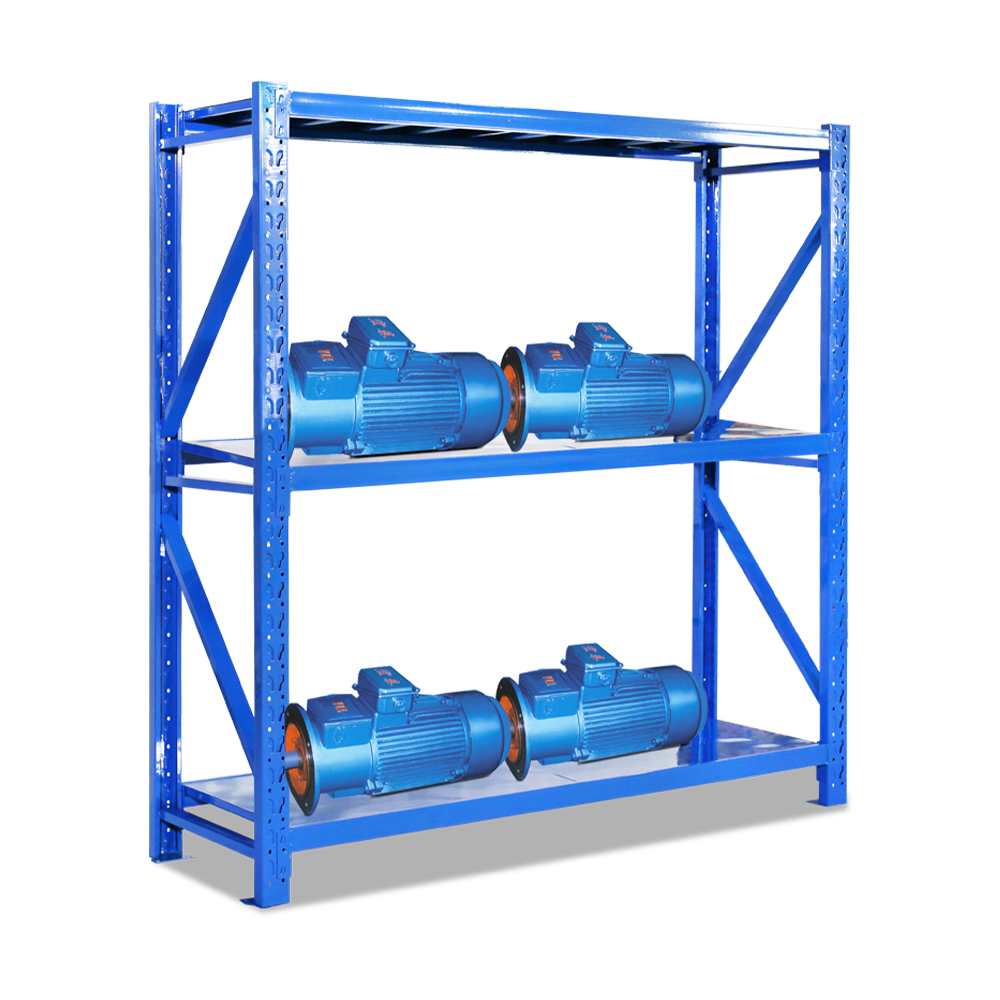
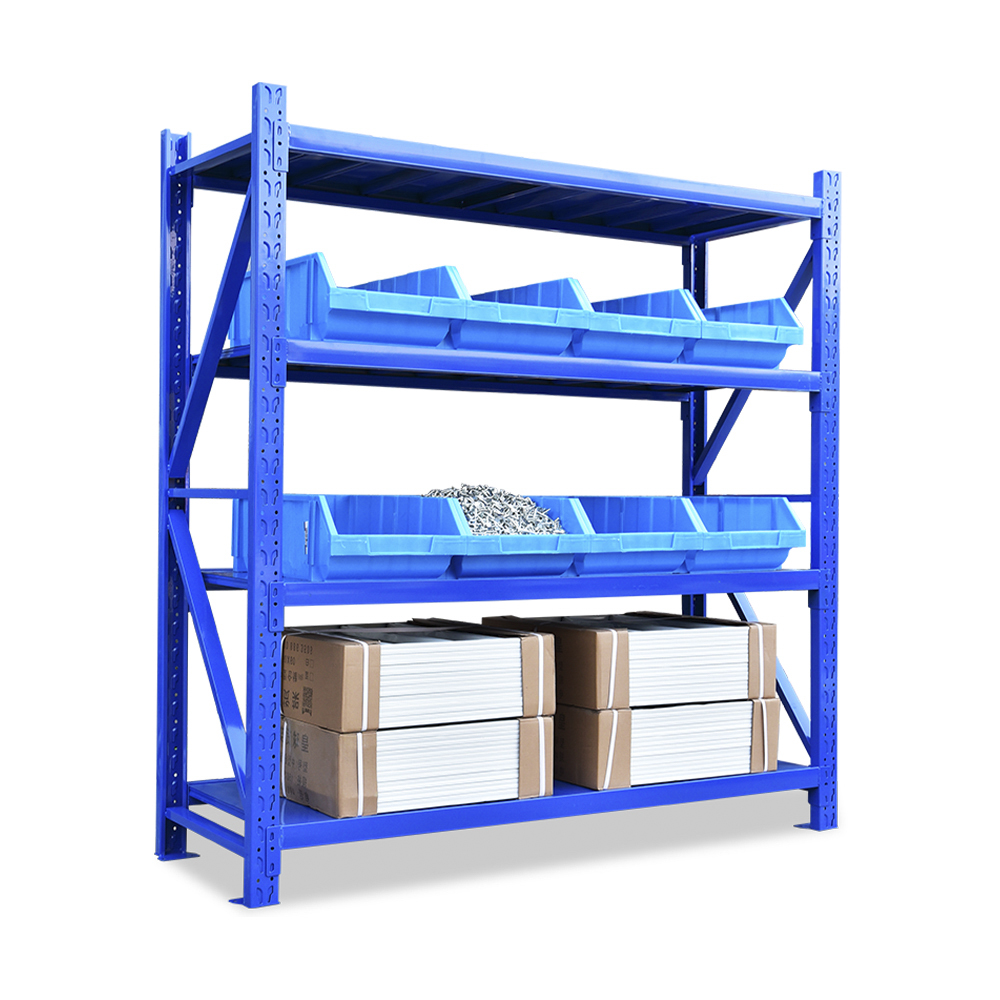
Pallet Racking Delivers the Highest Storage Density for Palletized Goods
Pallet racking is the most effective way to store palletized goods at scale, and a well-designed system can increase usable warehouse storage capacity by more than double compared with floor stacking. Pallet racking is a standard industrial storage system built from upright frames and horizontal beams that hold goods loaded on pallets in organized, multi-level configurations. Because every pallet position sits at a fixed, forklift-accessible height, warehouses can stack inventory several levels high without sacrificing direct access to any single pallet. This combination of density and accessibility is what separates pallet racking from simpler storage methods, and it is why the system has become the standard reference point whenever a warehouse evaluates how to store palletized inventory efficiently.
Unlike floor stacking or block stacking, where pallets are placed directly on top of one another, pallet racking creates a defined slot for every load. This structure protects goods from crushing damage, keeps inventory organized by SKU or batch, and allows a forklift or reach truck to retrieve any pallet without moving other loads first. For operations that handle palletized cargo on a daily basis, pallet racking is generally considered the baseline storage method against which other systems are compared.
A typical pallet racking installation is made up of a small number of standard components: upright frames that carry the vertical load, horizontal beams that create each storage level, and footplates that anchor the frame to the warehouse floor. Optional accessories such as wire mesh decking, row spacers, and column guards are often added to improve safety and load stability. Because these components are manufactured to standard dimensions, a pallet racking system can typically be installed, expanded, or reconfigured in sections rather than requiring a full rebuild whenever storage needs change. This modularity is one of the main reasons pallet racking remains the preferred storage method as a warehouse scales from a small operation into a large, high-volume distribution facility.
The sections below walk through the core advantages of pallet racking, compare it with other storage approaches using data visualizations, outline the main system types and their construction, and explain how to choose, install, and maintain the right configuration for a given warehouse.
Core Advantages of Pallet Racking Systems
Pallet racking is engineered around five core advantages: load capacity, space efficiency, flexibility, direct pallet access, and long-term durability. Each of these advantages addresses a specific operational pain point that warehouses face as inventory volume grows. Reinforced uprights and multi-folded steel beams give pallet racking the structural strength to carry heavy loads safely across multiple levels, with each level commonly supporting 500 kilograms to well over a ton, depending on the beam profile and bay width. Beam positions are also fully adjustable, so the same frame can be reconfigured as pallet sizes or product dimensions change, which extends the useful life of the racking well beyond a single inventory cycle.
Because pallet racking stores goods vertically rather than only across the floor, it makes far better use of a warehouse's total cubic volume instead of just its footprint. This is particularly valuable in facilities where floor space is limited but ceiling height is not fully utilized. Beyond the physical storage benefits, an organized pallet racking layout also supports better inventory management practices, since clearly numbered bays and levels make it easier to implement location-based tracking, whether through a simple paper system or a warehouse management platform. This structure reduces the time staff spend searching for stock and makes cycle counting significantly faster than in an unorganized floor-stacked environment. The table below summarizes how these advantages translate into measurable operational benefits.
Summary of core pallet racking advantages and their typical operational impact
Advantage
What It Means
Typical Impact
High Load Capacity
Reinforced uprights and beams carry heavy palletized loads safely
500 kg to several tons per level
Space Efficiency
Vertical storage increases density without expanding the building
Up to 2 to 3 times more capacity than floor stacking
Flexibility
Adjustable beam heights adapt to changing pallet sizes
Reconfigurable without replacing the frame
Direct Pallet Access
Every pallet is reachable without moving other loads
Faster picking and inventory turnover
Durability
Steel construction with anti-rust finishes withstands daily use
Long service life under continuous operation
Taken together, these characteristics explain why pallet racking is the default storage method in logistics centers, manufacturing plants, and distribution hubs that need both high density and fast, organized access to inventory. No single advantage alone would justify choosing pallet racking over simpler storage methods, but the combination of load capacity, space efficiency, flexibility, accessibility, and durability delivers a level of overall performance that few alternative systems can match at a comparable scale.
Common Types of Pallet Racking Systems
Not every warehouse needs the same pallet racking configuration. The right type depends on inventory turnover, pallet uniformity, and how much direct access each pallet requires. Some facilities operate a single racking type throughout the building, while others combine two or three types across different storage zones to match each zone's specific throughput and SKU profile. Below are the configurations most commonly used across logistics and manufacturing facilities.
Selective Pallet Racking
Selective racking is the most widely installed pallet racking format because it gives 100 percent direct access to every pallet position at any time. Forklifts drive down a single aisle and can retrieve any pallet without disturbing others, which makes this format ideal for operations with many different SKUs and frequent order picking. Because each bay is independently accessible, selective racking also simplifies inventory counting and rotation, since staff can reach the oldest stock in a bay without first relocating newer pallets.
Drive-In and Drive-Through Racking
Drive-in racking removes horizontal aisles and lets a forklift drive directly into the rack structure to load and unload pallets, which significantly increases storage density for high-volume, low-SKU-variety inventory such as bulk raw materials or seasonal stock. Drive-in racking is generally loaded and unloaded on a last-in, first-out basis, while drive-through racking is open on both ends of the lane, allowing a first-in, first-out flow that is often preferred for perishable or date-sensitive goods.
Push-Back Racking
Push-back racking uses nested carts on inclined rails so that loading a new pallet pushes the existing pallets backward. It balances higher density than selective racking with more accessibility than drive-in racking, and works well for facilities handling two to four pallets deep per SKU. Because each lane operates independently of the others, push-back racking also allows several different SKUs to be stored side by side without the lane-blocking limitations found in deeper drive-in systems.
Cantilever Racking
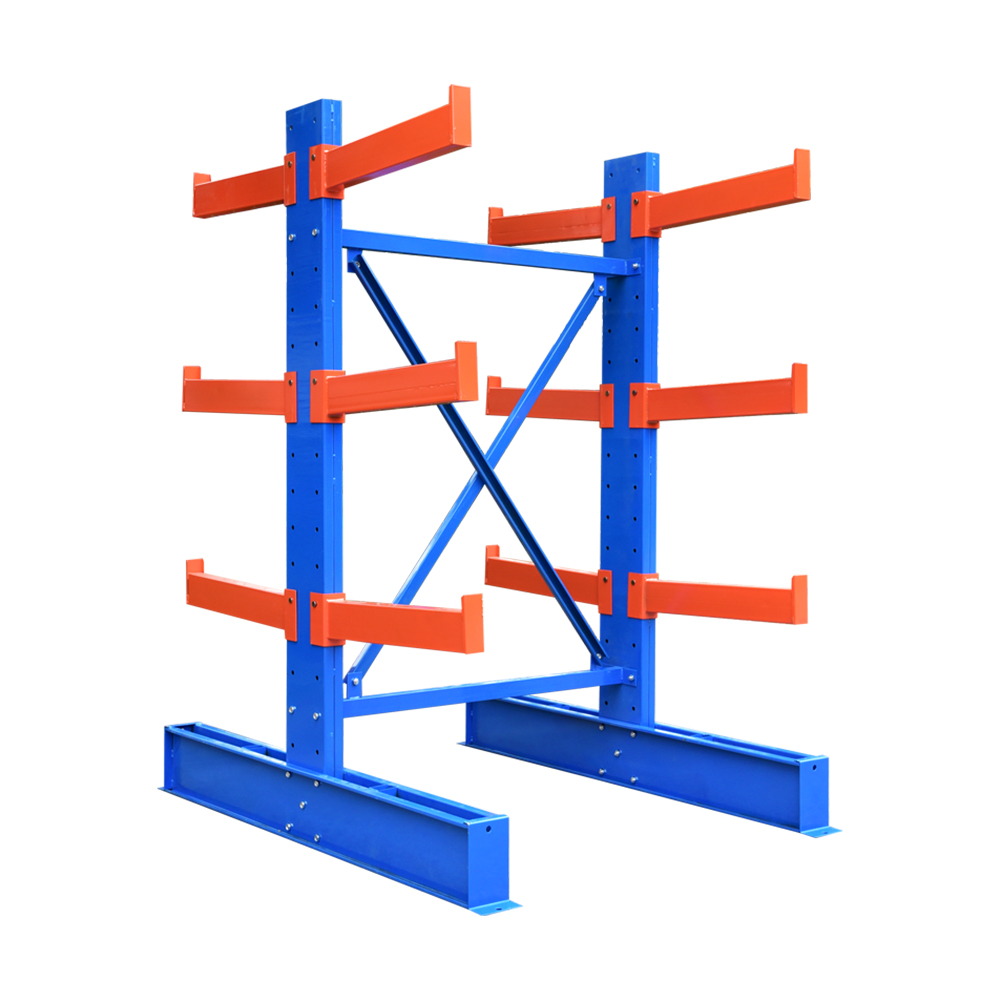
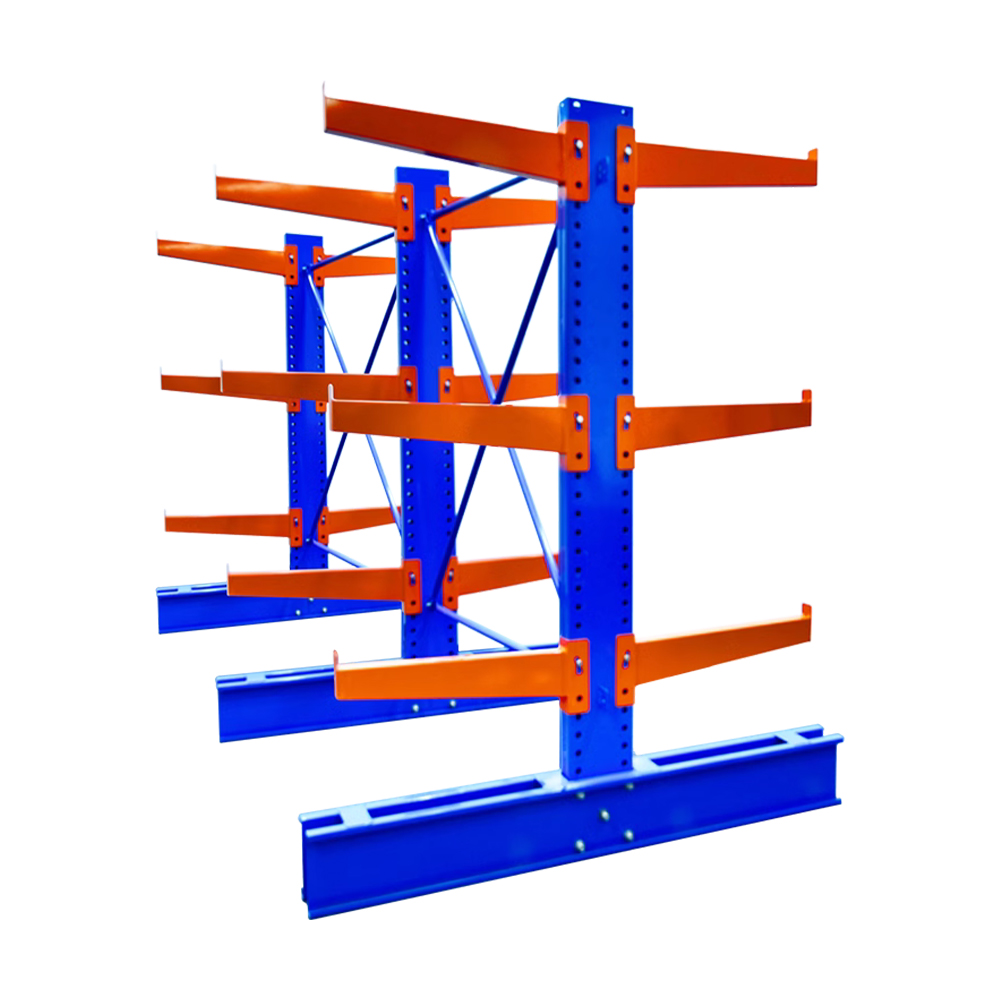
Cantilever racking replaces vertical uprights in the load path with arms extending from a single column, which makes it the preferred choice for long or irregularly shaped items such as pipes, timber, or metal bar stock rather than standard palletized cartons. The open-front design also allows loading and unloading from either side of the rack, which is useful in yards or workshops where cranes or side-loading forklifts are used.
Mobile Pallet Racking
Mobile pallet racking mounts standard racking frames onto motorized or manually operated base carriages that slide along floor-mounted rails, allowing an entire row to shift sideways and open only the aisle that is currently needed. This design can achieve some of the highest space utilization rates of any pallet racking format because it eliminates the need for a fixed aisle between every row, though it typically suits facilities with lower pallet turnover due to the time required to open an aisle.
Single-Deep and Double-Deep Configurations
Selective racking itself can be arranged in either a single-deep or double-deep configuration. Single-deep racking stores one pallet per position and gives full access to every load from the aisle, which is the standard choice when SKU variety is high. Double-deep racking places two pallets back to back in the same position, which increases storage density by roughly 40 to 50 percent over single-deep layouts but requires a deep-reach forklift and works best when pairs of pallets share the same SKU, since the front pallet must be moved to reach the one behind it.
Pallet Racking Frame and Beam Construction
The performance of any pallet racking system starts with how its frames and beams are manufactured. Upright frames are typically formed from cold-rolled steel and punched with a regular pattern of holes along their length, which allows beams to be installed and repositioned at different heights without special tools. Beams are usually manufactured as box-section or step-beam profiles, since these shapes resist bending far more effectively than a flat bar of the same steel thickness under a comparable palletized load. Frame depth and upright bracing patterns are also adjusted based on projected load and height, so a taller installation will typically use a deeper frame and a tighter bracing pattern than a shorter one carrying the same pallet weight.
Surface Finish and Corrosion Protection
Most pallet racking is finished with either powder coating or hot-dip galvanizing. Powder coating is the more common finish for indoor warehouses because it provides a durable, scratch-resistant surface in a wide range of colors, while galvanized finishes are typically reserved for cold storage, outdoor yards, or facilities with high humidity where additional corrosion resistance is required.
Standard Bay Widths and Safety Accessories
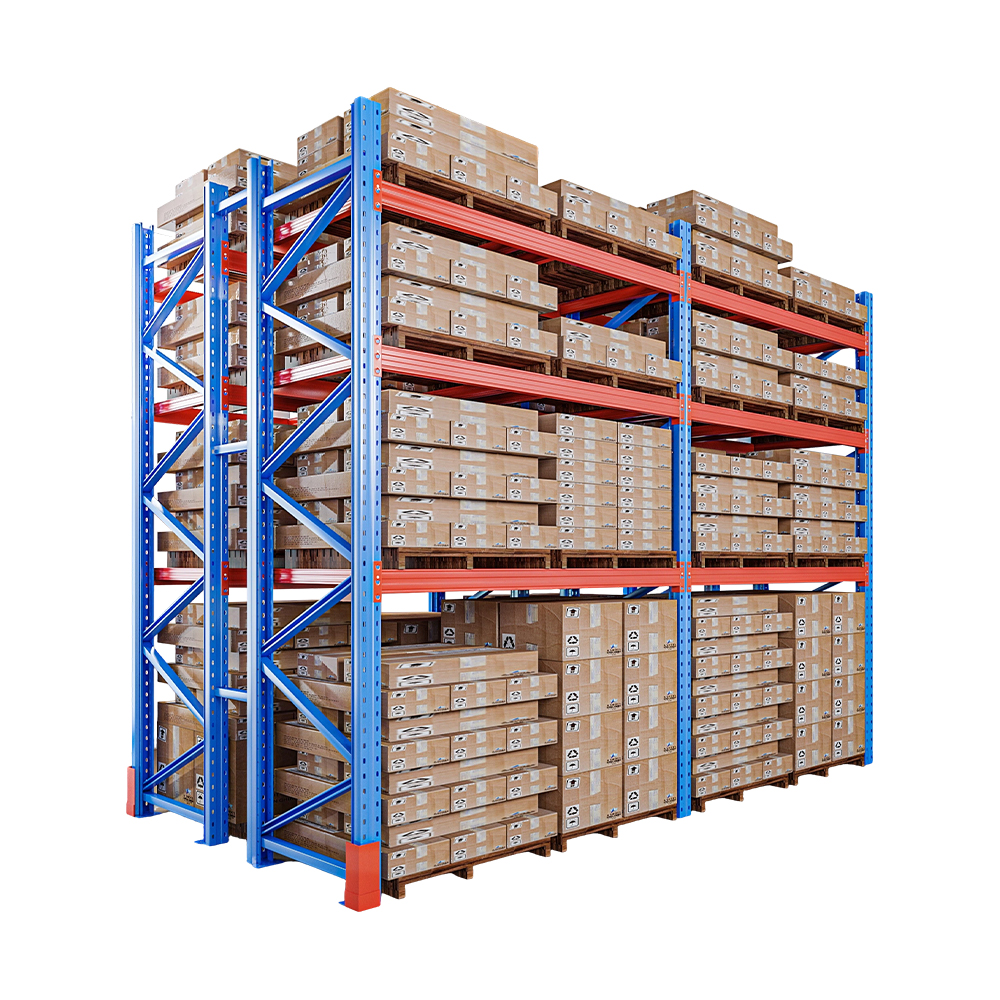
Bay widths are generally sized around common pallet dimensions, with clearances added on each side to allow safe forklift entry. Safety accessories such as column protectors, row spacers between back-to-back racks, and wire mesh decking between beams are commonly added to reduce the risk of impact damage and to prevent smaller cartons from falling through open beam levels. Frame color-coding, most often blue uprights with orange or red beams, is a widely followed industry convention that improves visibility and helps warehouse staff quickly identify structural components during daily operation and inspection.
Load Testing and Rated Capacity
Before a pallet racking design reaches the warehouse floor, reputable manufacturers test frame and beam assemblies under controlled loading conditions to confirm the rated capacity that will later appear on load capacity signage. This testing accounts for factors such as beam deflection under sustained load, upright buckling resistance, and the combined weight of a fully loaded bay across every level rather than a single beam in isolation. Warehouses should always request this rated capacity documentation from their supplier and retain it on file, since it provides the reference point used during routine safety inspections and any future layout changes.
Load Capacity Across Different Pallet Racking Types
Load capacity is one of the first specifications a warehouse manager should evaluate before selecting a pallet racking configuration, since it determines which product weights and pallet quantities the system can safely support. Underestimating load capacity can lead to beam deflection or, in severe cases, structural failure, while overestimating it can result in unnecessarily heavy, costly steel being installed for loads that never approach the rated limit. The chart below compares typical load capacity per level across four common pallet racking types, expressed in kilograms per level under standard bay and beam configurations.
As the chart shows, selective pallet racking typically supports the highest load per level among standard configurations, commonly reaching around 2000 kilograms under a standard beam profile. Push-back racking follows closely because its nested cart design still relies on a similar beam and frame structure to selective racking. Drive-in racking carries a somewhat lower rated load per level because the continuous rail system distributes weight differently than a beam-supported bay. Cantilever racking shows the lowest per-level figure in this comparison because it is designed for long, awkwardly shaped items rather than dense palletized cartons, so its capacity is measured differently in practice. These figures represent typical industry ranges under standard configurations, and actual capacity always depends on the specific steel gauge, bay width, and beam profile selected for a given project. It is also worth noting that rated capacity is usually expressed per beam level rather than for the whole bay, so a four-level selective racking bay could theoretically support several thousand kilograms in total once every level is loaded to its rated limit. Because of this, warehouses should always confirm capacity figures directly with the racking manufacturer or supplier for the exact frame, beam, and bay configuration being installed rather than relying on general industry averages alone.
How Racking Height Affects Storage Density
One of the defining advantages of pallet racking is that it turns unused vertical space into usable storage capacity. The line chart below illustrates how a relative storage density index increases as racking height grows from 3 meters to 12 meters within the same warehouse footprint.
The trend line shows a clear pattern: as racking height increases from 3 meters to 12 meters, the relative storage density index rises from 100 to 250, meaning the same floor footprint can hold roughly two and a half times more inventory at the taller configuration. This relationship is not perfectly linear because taller racking requires wider aisles and more robust upright bracing, which slightly reduces the rate of density gain at greater heights. Warehouses with limited floor space but adequate ceiling clearance can use this relationship to justify investing in taller racking rather than expanding the building footprint. It is also worth noting that going taller introduces additional considerations around forklift mast height, floor load ratings, and seismic or wind bracing requirements. For this reason, height increases should always be planned alongside a review of the facility's structural and material handling equipment limits rather than pursued in isolation. In practice, most warehouses find that the largest density gains come from the first few meters of added height, since that is where floor footprint would otherwise sit almost entirely empty above the first storage level. Beyond that point, additional height still adds capacity, but the return depends increasingly on whether the site already has forklifts, reach trucks, or automated equipment capable of operating safely at that elevation.
Space Utilization: Pallet Racking Compared with Other Storage Methods
Warehouse space utilization measures how much of a facility's available volume is actually used for storage versus lost to aisles, gaps, or inaccessible stacking. The bar chart below compares typical space utilization rates across four common storage approaches.
Floor stacking, where pallets sit directly on the ground with no vertical storage, typically reaches only around 35 percent space utilization because large gaps and limited stack height waste much of the available volume. Block stacking improves on this by stacking pallets directly on top of one another, reaching roughly 55 percent utilization, but it sacrifices direct access to lower pallets and increases the risk of load damage. Standard pallet racking raises utilization to approximately 75 percent by combining vertical storage with a dedicated aisle for every pallet position, and high-density pallet racking configurations such as drive-in or push-back systems can push utilization toward 90 percent by reducing aisle space further. This comparison highlights why most growing operations eventually transition away from floor or block stacking once inventory volume and SKU complexity increase. Choosing between standard and high-density pallet racking ultimately comes down to how much direct, per-pallet access the operation needs on a daily basis. It is also useful to think of these four methods as points along a single spectrum rather than entirely separate categories, since many warehouses combine them, using selective pallet racking for fast-moving SKUs while reserving high-density racking for slower-moving bulk inventory in the same facility. Viewed this way, the space utilization chart is less a ranking of one method against another and more a guide for matching each storage zone within a warehouse to the method that fits its specific turnover pattern.
Performance Comparison of Pallet Racking Types
Choosing the right pallet racking type involves balancing several performance dimensions at once, not just load capacity alone. Two systems can carry the same rated load per level and still behave very differently once accessibility, installation flexibility, and long-term durability are taken into account, which is why a single-metric comparison rarely tells the full story. The radar chart below compares selective racking, drive-in racking, and push-back racking across five performance dimensions, each scored on a scale of one to five based on typical industry characteristics.
The radar comparison shows that all three pallet racking types score similarly on raw load capacity, since they generally rely on comparable steel frame and beam construction. Where they diverge sharply is pallet accessibility and installation flexibility: selective racking scores highest on both dimensions because every pallet sits in its own accessible bay and the layout can be reconfigured easily as needs change. Drive-in racking trades away much of that accessibility in exchange for the highest space efficiency score, since removing aisles between bays allows far more pallets to be stored per square meter of floor space. Push-back racking lands between the two extremes on nearly every dimension, which is exactly why it is often chosen as a middle-ground solution for operations that want higher density than selective racking without giving up as much accessibility as drive-in racking. Structural durability remains broadly consistent across all three types because they are typically built from the same grade of steel with similar anti-rust treatment. This comparison is a useful starting point for narrowing down options, though the final choice should always be validated against the specific pallet dimensions, turnover rate, and forklift equipment used at a given facility.
Application Scenarios for Pallet Racking
Because pallet racking scales from a handful of bays to entire multi-level warehouses, it is used across a wide range of industrial and commercial settings. The most common application scenarios include the following.
Large logistics centers and distribution centers that need to store high volumes of mixed SKUs with fast retrieval times
Manufacturing factories storing raw materials and finished products between production stages
Warehouses with high turnover and continuous forklift operations throughout the day
Bulk cargo storage areas in supermarkets and wholesale distribution centers
In each of these environments, pallet racking allows the facility to organize inventory by zone, batch, or product category while keeping every pallet individually accessible. This is particularly important in manufacturing settings, where raw material shortages or finished goods bottlenecks can halt an entire production line if stock cannot be located and retrieved quickly. Distribution centers benefit in a similar way, since order accuracy and fulfillment speed both depend on workers being able to reach the correct pallet without repositioning other loads. Wholesale and supermarket bulk storage areas tend to favor simpler selective racking layouts because product mix changes frequently and staff need consistent, predictable access to every pallet position.
Cold storage and food distribution facilities represent another significant application area, where pallet racking is often specified with galvanized or corrosion-resistant finishes to withstand low temperatures and high humidity without degrading over time. Third-party logistics providers that manage inventory for multiple clients in a shared facility also rely heavily on pallet racking, since clear bay numbering and consistent layouts make it easier to track ownership and location across many different customer accounts within the same warehouse.
E-commerce fulfillment centers represent a fast-growing application area for pallet racking as well. These facilities typically combine bulk pallet racking in reserve storage areas with smaller shelving or carton flow systems closer to packing stations, using pallet racking to hold full-pallet replenishment stock that is broken down into individual units as orders are picked. As order volumes grow, many fulfillment operations expand their pallet racking footprint upward rather than outward, taking advantage of the same vertical storage principle described earlier in this article.
How to Select the Right Pallet Racking System
Selecting a pallet racking system is a process of matching warehouse characteristics to the strengths of each configuration type rather than choosing whichever option appears most impressive on paper. A layout that performs well in one facility can perform poorly in another simply because the pallet mix, turnover rate, or forklift fleet is different, so the evaluation should always start from the operational details of the specific warehouse in question. The following steps outline a practical evaluation sequence.
Measure available floor space and usable ceiling height to determine how many racking levels the building can accommodate
Identify pallet dimensions, weights, and SKU variety to estimate required beam spans and load ratings
Determine how often each pallet needs to be accessed individually versus stored in bulk for less frequent retrieval
Confirm the forklift or reach truck type and aisle width it requires, since this directly affects racking layout
Compare wide-aisle, narrow-aisle, and very narrow-aisle layouts, since narrower aisles increase storage density but require specialized guided equipment
Review local structural, fire safety, and seismic requirements that may affect frame bracing and height limits
Plan for future inventory growth by selecting a modular system that can be reconfigured or expanded over time
Facilities with high SKU variety and frequent order picking generally perform best with selective racking, while those storing large, uniform batches of a small number of products often benefit more from drive-in or push-back configurations. A useful rule of thumb is that accessibility and density trade off against each other, so the selection process should start by deciding which of the two matters more for daily operations before comparing specific racking types. It is also worth mapping out different zones within the same facility rather than assuming one racking type must be used throughout, since fast-moving and slow-moving inventory often have very different accessibility requirements even within a single warehouse.
Common Mistakes to Avoid When Planning Pallet Racking
Even a well-manufactured pallet racking system can underperform if the surrounding layout and planning process overlook a few common issues. Being aware of these mistakes in advance can help a warehouse avoid costly rework after installation.
Sizing aisle widths without confirming the actual turning radius of the forklift or reach truck that will be used
Choosing a high-density racking type before confirming that inventory turnover and SKU variety actually support reduced accessibility
Overlooking future growth and selecting a fixed layout that cannot be expanded or reconfigured as inventory volume increases
Underestimating floor load ratings, particularly on upper building levels or older warehouse floors not originally designed for racking
Skipping a formal inspection and maintenance schedule after installation, which allows minor impact damage to go unnoticed
Most of these issues can be avoided by involving a racking supplier early in the planning process, rather than finalizing a warehouse layout first and attempting to fit pallet racking into it afterward. A supplier with engineering experience can review pallet dimensions, forklift specifications, and floor conditions together, which reduces the risk of discovering a mismatch only after the racking has already been installed. Requesting a layout drawing and a written load capacity specification before installation begins is a simple step that gives both the warehouse and the supplier a shared reference point if questions come up later, whether during a safety inspection or a future expansion project.
Installation and Safety Practices for Pallet Racking
Proper installation and ongoing maintenance are essential to keeping a pallet racking system safe under continuous industrial use, and most safety issues that occur after installation trace back to a small number of preventable causes rather than a fundamental flaw in the racking design itself. Uprights should be anchored securely to a level, structurally sound floor, and base plates should be checked for full contact with the ground to prevent uneven load distribution. Beam locking pins or safety clips must be fully engaged on every connection point, since an unlocked beam is one of the most common causes of racking failure in daily operation.
Warehouses should also establish a routine inspection schedule to check for bent frames, damaged beams, or missing safety clips caused by forklift contact, which is one of the most frequent sources of structural damage in active facilities. Aisle widths should match the turning radius of the forklift or reach truck in use, and load capacity signage should be posted clearly on every bay so that staff never exceed the rated weight for a given level. Following these practices helps ensure that a pallet racking system continues to perform safely and reliably throughout its service life.
Routine Maintenance Checklist
Inspect upright frames and footplates for visible bending, twisting, or impact damage on a regular schedule
Confirm that every beam locking pin or safety clip is fully engaged, especially after any forklift collision
Check that load capacity signage remains legible and posted on every bay
Verify that wire mesh decking and row spacers remain securely fastened where installed
Keep aisles clear of debris and confirm floor anchors have not loosened over time
Assigning clear responsibility for these checks, whether to warehouse supervisors, safety officers, or an outside inspection service, helps ensure that minor issues are identified and corrected before they develop into a structural safety concern. Keeping a written log of each inspection also creates a useful record for tracking recurring damage patterns, which can highlight whether a specific aisle or forklift route needs additional protection such as extra column guards or revised traffic flow.
About Shanghai King Global Shelf Co., Ltd.
Shanghai King Global Shelf Co., Ltd. is a leading manufacturer of shelving and storage solutions for logistics and warehousing, specializing in home racks, industrial heavy-duty shelving, and warehouse optimization systems including pallet racking. Founded in 2010, the company has built strong production capability with a modern manufacturing facility, an experienced engineering team, and a reliable quality control process. Its pallet racking and related storage products are designed to improve display, storage efficiency, and space utilization across a range of markets, from manufacturing plants to distribution centers.
With stable product quality, flexible configuration options, and responsive customer service, Shanghai King Global Shelf Co., Ltd. supports both domestic and overseas customers in building storage systems that match their specific warehouse layout, load requirements, and operational goals. The company's engineering and production teams work with customers to translate warehouse dimensions, pallet specifications, and forklift equipment into a pallet racking layout suited to the facility, drawing on more than a decade of manufacturing experience across home rack, industrial heavy-duty shelving, and warehouse optimization projects.
Frequently Asked Questions About Pallet Racking
Q1: What is pallet racking used for?
Pallet racking is used to store palletized goods in organized, multi-level configurations so that forklifts or reach trucks can access each pallet directly. It is commonly used in logistics centers, manufacturing facilities, and bulk storage areas that need both high storage density and fast retrieval of individual pallets. Beyond general storage, pallet racking is also used to support order picking, inventory rotation, and staging areas where goods are held temporarily before shipment.
Q2: How much weight can pallet racking hold?
Load capacity depends on the beam profile, bay width, and frame gauge used, but most standard pallet racking systems support 500 kilograms to several tons per level. A qualified racking supplier can calculate the exact rated capacity based on the specific pallet weights and dimensions involved, and this figure should always be confirmed through load testing documentation rather than estimated from general product listings alone.
Q3: What is the difference between selective and drive-in pallet racking?
Selective racking gives direct access to every pallet position through dedicated aisles, making it ideal for high SKU variety. Drive-in racking removes those aisles so forklifts can drive directly into the structure, which increases storage density but limits access to the pallets stored deepest in each lane. In general, selective racking suits operations that pick individual pallets frequently, while drive-in racking suits operations storing large, uniform batches with lower turnover. Push-back and double-deep racking are often chosen as a middle option when a warehouse wants higher density than selective racking without fully committing to the reduced accessibility of a drive-in layout.
Q4: How is pallet racking installed?
Installation involves anchoring upright frames to a level, structurally sound floor, attaching horizontal beams at the required heights, and securing every beam connection with locking pins or safety clips. Installation should follow the manufacturer's load ratings and any applicable local structural or safety codes, and taller or more complex layouts are generally best handled by trained installers who can verify frame alignment and anchor strength before the racking is put into service.
Q5: How do I choose the right pallet racking system for my warehouse?
Start by measuring available floor space and ceiling height, then identify pallet dimensions, weights, and how frequently each pallet needs to be accessed individually. Operations with high SKU variety generally suit selective racking, while bulk, uniform inventory often benefits from drive-in or push-back configurations. It is also helpful to confirm forklift specifications and any local structural or safety requirements before finalizing a layout, since these factors directly affect aisle width and frame design.
Q6: Is pallet racking adjustable for different pallet sizes?
Yes. Most pallet racking systems use beams that can be repositioned along the upright frame, which allows the same structure to accommodate different pallet heights and product dimensions as inventory needs change over time. This adjustability also makes it possible to reallocate storage levels seasonally, for example lowering beam heights temporarily to fit shorter pallets during a period of higher SKU variety.
【Ideal Storage Solution for Long & Irregular Goods】If you need to store long, oversized or irregularly shaped items that don't fit on standard pallet racks, this specialized storage rack is the perfect solution.It is designed specifically to accommodate items such as pipes, lumber, steel bars, carpets, rolls of fabric, construction materials and other long goods, keeping them organized, secure and easily accessible.【Improve Material Handling Efficiency】The wide-load accessible design of this rack makes it easy to load and unload long items using standard warehouse equipment, such as forklifts and pallet jacks.This reduces the time and labor required for material handling, improves operational efficiency, and minimizes the risk of damage to your goods during loading and unloading.【Maximize Your Warehouse Storage Space】This rack allows you to make the most of your warehouse's vertical space, storing long items vertically or horizontally to maximize your storage capacity.It helps you keep your warehouse organized and clutter-free, reducing wasted floor space and improving overall space utilization in your facility.【Safe & Secure Storage for Valuable Goods】The reinforced steel structure and stable design ensure that your long and valuable goods are stored safely and securely, with minimal risk of falling, bending or damage.This gives you peace of mind, knowing that your expensive materials and equipment are well-protected and stored in a safe, organized manner.【Versatile for Multiple Industrial Applications】This rack can be used in a wide variety of industrial settings, including warehouses, factories, construction sites, lumber yards, plumbing supply companies and more.Its versatile design and customizable configuration make it suitable for almost any application that requires the storage of long or irregularly shaped items.
【Heavy-Duty Pallet Storage Rack for Warehouse Use】This industrial-grade pallet storage rack is specifically engineered for warehouse and factory use, designed to support heavy pallets and bulk inventory with exceptional stability and load-bearing capacity.The reinforced beams and uprights provide superior structural support, making it ideal for storing heavy palletized goods, industrial equipment and bulk materials.【Flexible Adjustable Beam Design】The beam levels can be easily adjusted to fit different pallet sizes and storage needs, allowing you to customize the rack to accommodate a wide range of goods.This flexible design ensures that you can make the most of your warehouse space, adapting to your changing inventory and storage requirements at any time.【High-Capacity Load-Bearing Performance】This rack is built to handle heavy loads, with each beam capable of supporting the weight of fully loaded pallets, making it suitable for the most demanding industrial storage applications.The reinforced steel construction ensures that the rack remains stable and secure, even when storing the heaviest items, eliminating the risk of collapse or damage.【Modular Bolted Design for Stability】The modular bolted design provides exceptional structural rigidity and stability, ensuring that the rack remains solid and wobble-free even when fully loaded.This professional design is widely used in industrial warehouses around the world, meeting all relevant safety standards and providing a reliable long-term storage solution.【Durable Industrial Finish for Long-Term Use】The entire rack is treated with a powder coating finish, which provides excellent rust, corrosion and scratch resistance, making it suitable for harsh industrial environments.This finish extends the service life of the rack, ensuring that it remains in good condition for many years, even with heavy daily use.
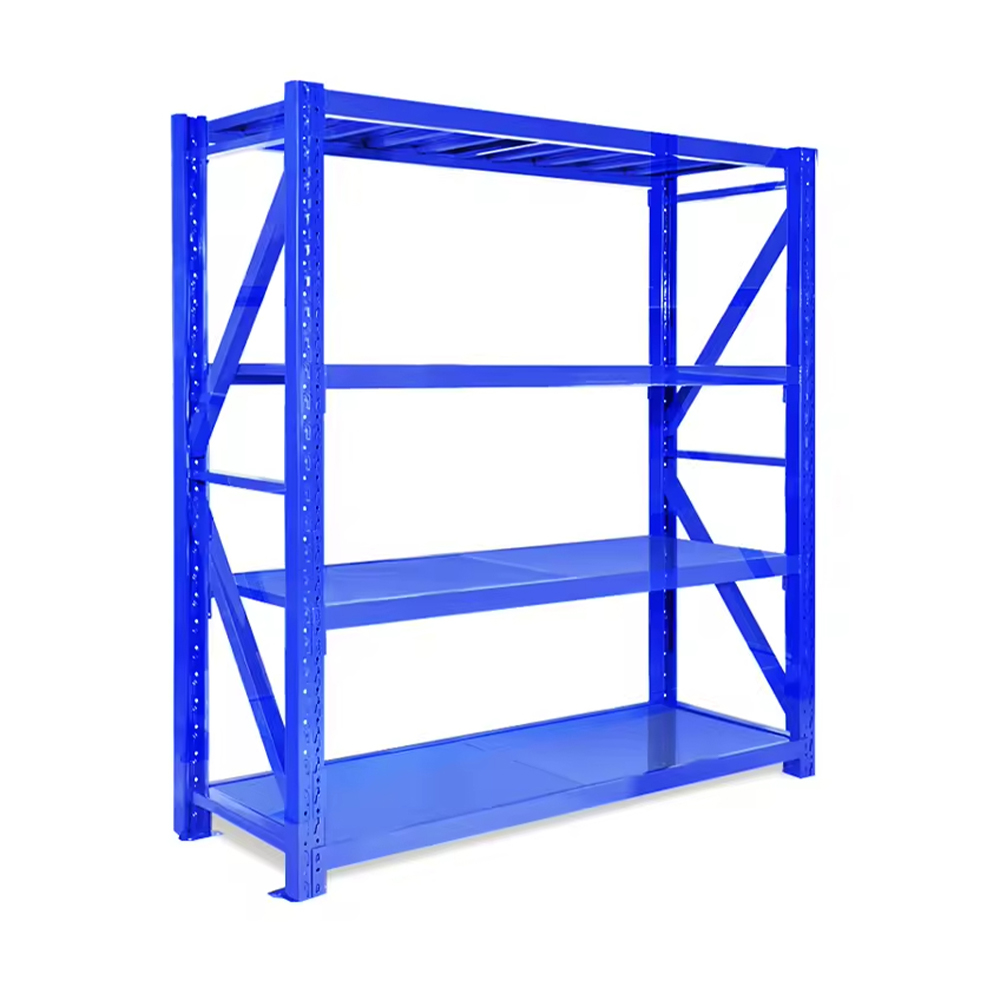
·Light-Duty High-Capacity Storage Rack This storage rack is engineered for light-duty daily use, with a load capacity of up to 200kg per layer to meet daily storage needs.The butterfly hole upright design enables tool-free installation, while the height-adjustable shelves allow flexible customization to fit items of different sizes.·Premium Anti-Rust Construction for Long-Term Use Made of high-quality steel with a professional anti-rust coating, this rack offers exceptional durability and corrosion resistance for long-term daily use.The reinforced structure ensures excellent stability, preventing wobbling even when fully loaded, making it a reliable storage solution for daily life.·Tool-Free Quick Assembly Design Featuring an innovative butterfly hole upright structure, this rack can be easily assembled without any complicated tools, saving your time and effort.The detailed installation manual is included, allowing one person to complete the assembly in a short time without professional help.·Flexible Adjustable Layer Height The shelves can be freely adjusted to different heights, making it easy to store items of various sizes, from small boxes to large luggage and home appliances.This flexible design ensures that you can make the most of the vertical space, adapting to your changing storage needs at any time.·Multi-Scene Adaptable Storage Solution This versatile storage rack is perfect for home, office, retail store and light industrial use, meeting all your daily storage needs.Whether you need to organize books in the study, sundries in the living room, goods in the retail store or tools in the workshop, this rack can handle it all.
【Heavy-Duty Long Item Storage Rack】This industrial storage rack is specifically designed for storing long or irregularly shaped goods, such as pipes, lumber, steel bars, carpets, rolls of material and other oversized items.The open design and wide load capacity make it easy to access and store long items, while the reinforced steel structure provides exceptional load-bearing capacity and stability.【Wide-Load Accessible Design】The rack features an open, accessible design that allows for easy entry with wide-load handling equipment, such as forklifts, pallet jacks and cranes.This makes it easy to load and unload long or heavy items, reducing the time and effort required for material handling and improving overall operational efficiency.【Reinforced Steel Construction for Heavy Loads】Constructed from high-quality heavy-duty steel, this rack offers exceptional strength and durability, capable of supporting the weight of long, heavy items without bending or deforming.The reinforced steel columns and beams form a solid support structure, ensuring that the rack remains stable and secure, even when fully loaded with the heaviest items.【Flexible Modular Design for Customization】The modular design of this rack allows you to customize the length, height and width to fit your specific storage needs and the size of your items.You can easily adjust the spacing between the uprights to accommodate items of different lengths, making it a versatile storage solution for a wide range of long and irregularly shaped goods.【Durable Industrial Finish for Long-Term Use】The entire rack is treated with a powder coating finish, which provides excellent rust, corrosion and scratch resistance, making it suitable for harsh industrial environments.This finish extends the service life of the rack, ensuring that it remains in good condition for many years, even with heavy daily use in warehouses, factories and construction sites.
·Medium-Duty High Load-Bearing Storage Rack This storage rack boasts a robust load capacity of 200-500kg per layer, making it ideal for storing medium-heavy items in home, office and small warehouse settings.The multi-bent beam design significantly improves the structural strength, ensuring exceptional stability and load-bearing performance even when fully loaded.·Reinforced Steel Structure for Enhanced Durability Constructed from high-quality reinforced steel shelf panels, this rack offers superior durability and resistance to bending and deformation.The one-piece shelf edge design provides added safety, preventing items from falling off the shelves and ensuring safe daily use.·Stable & Anti-Wobble Engineering Design The reinforced uprights and multi-bent beams form a solid triangular support structure, effectively preventing wobbling and ensuring overall stability.This professional engineering design ensures that the rack remains stable even when storing heavy items on the top layers, eliminating safety hazards.·Long-Lasting Anti-Corrosion Finish The entire rack is treated with a premium powder coating finish, which provides excellent rust and corrosion resistance, extending the service life of the rack.This finish also gives the rack a sleek and professional appearance, making it suitable for both home and commercial environments.·Easy to Assemble & Maintain This rack comes with all necessary hardware and a detailed installation manual, making assembly quick and hassle-free.The smooth surface is easy to clean and maintain, simply wipe with a damp cloth to remove dust and dirt, keeping the rack looking new for years.
【Heavy-Duty High-Capacity Industrial Storage Rack】This industrial-grade storage rack is engineered for heavy-duty use, with a load capacity of over 500kg per layer, making it ideal for warehouse, factory and industrial storage applications.The multi-folded beam design significantly increases the load capacity and structural strength, ensuring exceptional stability even when storing the heaviest industrial items.【Reinforced Upright Design for Quick Installation】The upright design enables quick and easy boltless installation, saving you valuable time and labor during setup.This innovative design also provides superior structural support, ensuring that the rack remains stable and secure even when fully loaded with heavy goods.【Industrial-Grade Steel Construction】Constructed from high-quality cold-rolled steel, this rack offers exceptional durability, bending resistance and load-bearing performance, meeting the rigorous demands of industrial use.The reinforced structure is designed to withstand long-term heavy use, making it a reliable storage solution for industrial environments.【Boltless Modular Design for Flexibility】The boltless modular design allows for easy assembly and disassembly, as well as flexible reconfiguration to adapt to changing storage needs.You can easily adjust the shelf height, add or remove shelves, or even expand the rack as your storage requirements grow, without the need for complicated tools or professional help.【Durable Anti-Corrosion Industrial Finish】The entire rack is treated with powder coating finish, which provides excellent rust, corrosion and scratch resistance, making it suitable for harsh industrial environments.This finish also gives the rack a professional and rugged appearance, perfect for warehouse and factory settings.



 English
  Español
  русский
  Français
  한국어
한국어  عربى
عربى  ไทย
ไทย  Deutsch
  Bahasa Melayu
  Português
  Polskie