


 English
  Español
  русский
  Français
  한국어
한국어  عربى
عربى  ไทย
ไทย  Deutsch
  Bahasa Melayu
  Português
  Polskie


Content
- 1 What Are Floating Bookshelf Brackets?
- 2 Types of Floating Bookshelf Brackets
- 3 Load Ratings and Wall Types: What Actually Matters
- 4 How to Choose the Right Floating Bookshelf Brackets
- 5 Installation Steps and Common Mistakes
- 6 Maintenance and Long-Term Safety
- 7 When to Consider a Freestanding or Wall-Mounted Shelf System
- 8 FAQ
- 8.1 How much weight can floating bookshelf brackets hold?
- 8.2 Do I need to hit a stud?
- 8.3 What size screws should I use for floating shelf brackets?
- 8.4 Can I install floating bookshelf brackets on drywall only?
- 8.5 How do I hide the brackets completely?
- 8.6 What is the best shelf material for floating brackets?
- 9 Related Resources
You have a wall, a stack of books, and a plan to keep the floor clear. The floating bookshelf bracket is the small metal component that decides whether that plan looks effortless or ends up sagging by next month. Brackets are rarely visible once the shelf is loaded, but they carry every kilogram of the books, the shelf board, and any accidental downward force from someone leaning on the edge. Choosing the wrong bracket, the wrong wall anchor, or the wrong screw length can turn a clean design into a safety problem. This guide explains how floating bookshelf brackets work, what separates a reliable bracket from a weak one, and how to match hardware to your wall type and load expectations.
The bracket is the structural heart of a floating shelf: if it is undersized for the wall and the load, the shelf will fail no matter how good the wood looks.
What Are Floating Bookshelf Brackets?
A floating bookshelf bracket is a concealed support that transfers the weight of the shelf and its contents into the wall. Unlike a traditional L-shaped bracket that sits under the shelf and remains visible, a floating bracket usually consists of a metal rod, a flat steel plate, or a pair of pins that slide into holes drilled into the back edge of the shelf board. The visible result is a shelf that appears to emerge directly from the wall.
Most floating brackets are made from cold-rolled steel, stainless steel, or aluminum. Steel is the common choice for load-bearing shelves because it resists bending under sustained load. Aluminum is lighter and easier to handle, but it may need a thicker profile to match the stiffness of steel. The bracket’s job is not just to hold the shelf up; it also resists the shelf’s tendency to tip forward when books are placed near the front edge. That tipping force is why the length of the bracket inside the shelf and the quality of the wall fixing both matter.
There are three broad families of floating bookshelf brackets: hidden rod brackets, steel plate brackets, and cleat systems. Each has a different installation method, load profile, and tolerance for wall imperfections. Understanding these differences prevents the common mistake of buying a bracket that looks strong but cannot handle a row of hardcover books.
A floating bracket must resist both downward load and forward tipping, so its hidden length inside the shelf is as important as its wall fixing.
Types of Floating Bookshelf Brackets
Hidden Rod and Pin Brackets
Hidden rod brackets use one or more metal rods that insert into pre-drilled holes in the shelf. The rods are welded to a wall plate that screws into studs or anchors. These brackets are popular for narrow shelves and light to medium loads. The rod diameter typically ranges from 6 mm to 12 mm. A 6 mm rod may support a shallow display shelf, while a 10 mm or 12 mm rod is better for books. The critical measurement is the insertion depth: the rod should extend at least two-thirds of the shelf depth into the board. If the rod is too short, the shelf can rock or split at the back edge.
Steel Plate Brackets
Steel plate brackets use a flat steel plate that is screwed to the wall and a protruding arm or pair of arms that slide into a routed slot in the shelf. They offer a larger contact area with the wall, which spreads the load across more anchors. This design is often stronger than a single-rod bracket and can support deeper shelves. The trade-off is that the shelf needs a precise slot, usually cut with a router. Plate thickness commonly ranges from 3 mm to 6 mm. Thicker plates resist bending better, especially on shelves deeper than 250 mm.
Cleat and French Cleat Systems
A cleat system uses a horizontal strip fixed to the wall and a matching strip fixed to the back of the shelf. The two interlock and pull the shelf tight against the wall. French cleats are cut at a 45-degree angle, which creates a strong mechanical lock and allows easy removal. Cleats are excellent for wider shelves because they distribute load along the entire length. However, they are not fully invisible unless the shelf is designed with a recess. Many DIY floating shelf kits combine a steel cleat with a decorative cover panel.
For book loads, a steel plate or cleat system usually outperforms a single thin rod because it spreads force across a wider area and resists tipping.
Load Ratings and Wall Types: What Actually Matters
Bracket packaging often promises a weight limit, but that number assumes a perfect wall and a perfect installation. In reality, the wall is the weakest link in most floating shelf failures. Drywall alone has very little pull-out strength. A plastic expansion anchor in drywall may hold a picture frame, but it will not safely hold a shelf full of books. The same bracket can behave very differently on concrete, brick, timber studs, or hollow drywall.
Another factor is the anchor type. A steel toggle bolt spreads load behind the drywall and can support moderate weights. A chemical anchor for solid brick or concrete creates a very strong bond. Lag screws directly into a timber stud are excellent if the stud is located accurately. The bracket’s screw holes must align with the stud or anchor pattern, which is why adjustable wall plates are useful.
Finally, the shelf material matters. A solid oak board can accept a threaded rod and hold it tightly. A particleboard shelf may crush around the rod, especially if the hole is drilled too large. Medium-density fiberboard (MDF) is denser than particleboard but can still strip if the bracket is overloaded. For heavy books, solid wood or plywood shelves are safer choices.
The chart below shows typical safe working loads for a single well-installed floating bracket under ideal conditions. These are indicative figures, not certified ratings, but they illustrate the gap between wall types. Always follow the bracket manufacturer’s instructions and use a safety factor.
expansion bolt
chemical anchor
lag screw
toggle bolt
plastic anchor
The chart shows a clear hierarchy. Concrete with a proper expansion bolt gives the highest safe load, often around 80 kg per bracket in ideal conditions. Solid brick with a chemical anchor follows at roughly 60 kg. A timber stud with a lag screw can hold about 45 kg. Drywall with a toggle bolt drops to about 25 kg. Drywall with a simple plastic anchor is at the bottom, around 10 kg. These numbers are per bracket, and a shelf usually has two brackets. That means a pair of brackets in drywall with toggle bolts might theoretically support 50 kg, but the shelf itself and the wall’s condition may reduce that figure.
The gap between concrete and drywall is not a minor difference; it is a factor of eight. This is why a shelf that feels solid in a concrete wall can pull out of drywall with the same bracket and the same screws. It also explains why many floating shelf failures happen at the anchor, not at the bracket. The bracket may be perfectly rigid, but the drywall crumbles around the anchor under load.
Another trend is the diminishing return of adding more brackets. Two brackets share the load, but they do not double the capacity of the wall if both are fixed into the same weak drywall area. In fact, adding a third bracket can help only if it reaches a stud or a stronger anchor point. For heavy loads, the best approach is to fix at least one bracket into a stud and use the second bracket as a stabilizer. If no stud is available, a French cleat fixed with multiple toggle bolts across several points can distribute the load more effectively than two isolated rod brackets.
The chart also highlights why the shelf depth and bracket length matter. A bracket that inserts only 50 mm into a shelf creates a short lever arm. When books push down on the front edge, the back edge tries to lift. A longer insertion depth, say 100 mm, resists that lifting force. The same principle applies to the wall plate: a taller plate with four screws spreads the load better than a small plate with two screws.
Temperature and humidity also affect performance. Wood shelves expand and contract. Metal brackets do not. If the bracket is too tight in the shelf hole, seasonal movement can split the wood. If it is too loose, the shelf will wobble and gradually enlarge the hole. A snug fit with a small amount of play is usually better than a forced fit. For shelves in humid areas, stainless steel brackets and coated screws reduce corrosion, which can weaken the fixing over time.
Finally, the chart assumes a static load. Real life includes dynamic loads: someone leans on the shelf, a heavy book drops onto it, or a child pulls on the edge. A safety factor of at least two is wise. If the chart says 25 kg for a drywall toggle bolt, plan for a maximum working load of about 12 kg per bracket. That is enough for a few paperbacks, but not for a full row of hardcovers.
The wall fixing, not the bracket, usually sets the real weight limit: concrete and studs can be trusted, while drywall-only anchors demand a large safety margin.
How to Choose the Right Floating Bookshelf Brackets
Start with the load. Estimate the weight of the shelf board and everything you plan to put on it. A 1-meter oak shelf 25 mm thick can weigh 8–10 kg. A row of 20 hardcover books can weigh 15–20 kg. Add a safety factor of two, and you need a system rated for at least 50–60 kg total. That usually means two steel plate brackets or a full-width cleat, fixed into studs or solid wall anchors.
Next, check the wall. Use a stud finder to locate timber studs or masonry. If you have drywall with no studs in the desired position, decide whether you can move the shelf or whether you need a different support strategy. A floating shelf on drywall alone is possible for light loads, but a wall-mounted cleat with multiple toggle bolts is safer than two small rod brackets.
Then match the bracket to the shelf. The bracket arm must fit the shelf’s drilled hole or routed slot. Measure the shelf depth and choose a bracket with an insertion depth of at least two-thirds of that depth. For a 250 mm deep shelf, look for at least 150 mm of insertion. Also check the bracket’s wall plate height and screw hole spacing. A taller plate with four holes gives more options for hitting studs or spreading anchors.
Material and finish matter for durability. Powder-coated steel resists rust in kitchens and bathrooms. Stainless steel is better for humid or coastal environments. Zinc-plated steel is common and affordable but may corrode if scratched. If the shelf is in a dry living room, standard steel is fine.
Consider adjustability. Some brackets have slotted holes that allow minor leveling after installation. This is useful when walls are not perfectly flat. Others have a fixed plate, which is stronger but less forgiving. For older homes with uneven plaster, a slotted plate can save a lot of frustration.
The table below compares common bracket types on key selection criteria.
| Bracket type | Typical load per pair | Wall contact | Installation difficulty | Best for |
|---|---|---|---|---|
| Single rod | 15–25 kg | Small plate | Easy | Light decor shelves |
| Double rod | 25–40 kg | Medium plate | Moderate | Paperback books, small plants |
| Steel plate | 40–70 kg | Large plate | Moderate to hard | Hardcover books, heavy loads |
| French cleat | 50–90 kg | Full-width strip | Moderate | Wide shelves, easy removal |
Choose the bracket after you know the wall and the load; a pair of steel plate brackets or a French cleat covers most book-shelf needs safely.
Installation Steps and Common Mistakes
Installation begins with marking. Hold the shelf against the wall and mark the bracket positions with a pencil. Check for level and for studs. If you are using two brackets, make sure they are parallel; a twisted bracket will force the shelf to sit at an angle. Drill the wall holes to the diameter specified by the anchor manufacturer. For timber studs, drill a pilot hole smaller than the screw shank. For concrete, use a masonry bit and clean the dust out of the hole before inserting the anchor.
Next, prepare the shelf. Drill the holes for the rods or route the slot for the plate. Use a drill press or a guide block to keep the holes straight. If the hole is angled, the shelf will not sit flush. For rod brackets, apply a small amount of wood glue inside the hole if the fit is loose, but do not fill the entire hole. The glue adds friction and prevents wobble. For plate brackets, the slot should be tight enough that the plate must be tapped in with a rubber mallet.
Then fix the wall plate. Use the screws recommended by the bracket manufacturer. If you are using anchors, tighten them according to the anchor instructions. Do not overtighten, especially in drywall, or you will crush the paper face and weaken the fixing. Once the plate is secure, slide the shelf onto the bracket. Check for level and for any rocking. If the shelf rocks, the bracket may be bent, the wall may be uneven, or the holes may be misaligned. Small shims behind the wall plate can correct minor wall unevenness, but large gaps should be filled with a solid spacer, not just tightened screws.
Common mistakes include using drywall screws for structural loads, skipping pilot holes in hardwood, and drilling shelf holes too large. Another frequent error is installing the bracket upside down. Most brackets are designed so the rod angles slightly upward into the shelf, which preloads the connection and resists tipping. If installed upside down, the shelf can slide forward. Always check the orientation arrow or the manufacturer’s diagram.
Another mistake is underestimating the shelf board. A thin MDF shelf may split when the rods are inserted. A shelf that is too thin for the bracket depth can also crack. For floating shelves, a minimum thickness of 25 mm is common for rod brackets, and 38 mm is safer for heavy loads. If the shelf is decorative only, 18 mm may be acceptable, but the load must be very light.
Most installation failures come from oversized shelf holes, undersized wall fixings, or brackets installed upside down; precision at each step protects the whole system.
Maintenance and Long-Term Safety
Floating bookshelf brackets need very little maintenance, but an annual check is smart. Look for signs of movement: a gap between the shelf and the wall, a slight sag at the front edge, or a wobble when you press down gently. These signs often indicate that the shelf hole has enlarged or that the wall anchor is loosening. Tighten any accessible screws, but do not overtighten. If the bracket feels loose inside the shelf, you may need to remove the shelf, clean the hole, and re-glue or use a slightly larger rod.
In humid environments, check for rust on the bracket. Surface rust on a powder-coated bracket is usually cosmetic, but rust on the screw threads can weaken the fixing. Replace rusty screws with stainless steel equivalents. In kitchens and bathrooms, wipe the bracket area dry if it is exposed to steam. For shelves in garages or workshops, keep the area free of standing water and consider a stainless steel bracket from the start.
Load discipline matters over time. A shelf that was installed for paperbacks should not gradually become a storage place for heavy tools or a full set of encyclopedias. If your storage needs change, upgrade the bracket system instead of adding more weight to an existing one. Re-check the wall for cracks around the anchor points. Small hairline cracks in plaster are normal, but cracks that radiate from a screw hole may indicate movement.
If you ever need to remove the shelf, support it from below before sliding it off the bracket. Pulling it straight out can damage the wall or the shelf. Once removed, inspect the bracket for bends. A bent bracket should be replaced, not straightened, because bending changes its strength. Store the bracket with its screws in a labeled bag if you plan to reuse it.
An annual wobble check and a strict load limit are the two habits that keep a floating shelf safe for years.
When to Consider a Freestanding or Wall-Mounted Shelf System
Floating brackets are ideal for a clean, minimal look, but they are not the only option. If your wall is weak, if the load is very heavy, or if you need adjustable storage, a dedicated shelving system may be a better investment. A freestanding metal rack does not rely on wall anchors at all. It can be moved, reconfigured, and loaded without the same risk of pull-out. For home offices, a light-duty adjustable rack can hold binders, books, and equipment while keeping the floor organized.
As a manufacturer of shelving and storage products, we see many customers who start with a floating shelf and later need more capacity. A wall-mounted storage rack or a foldable multi-tier shelf can complement floating shelves or replace them in high-load areas. These systems are designed with known load ratings and can be anchored into studs or used freestanding. If you are planning a home library, consider mixing floating shelves for display with a heavier rack for the main collection.
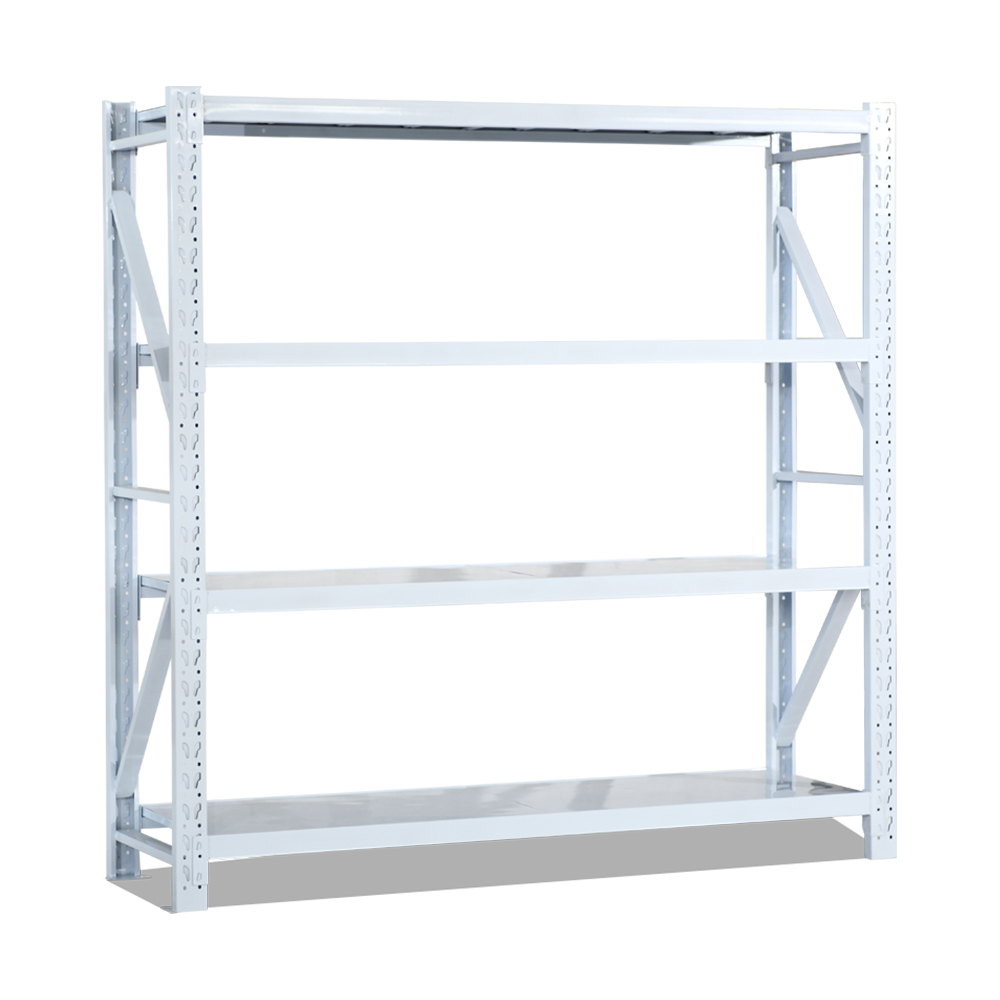 Light-Duty Adjustable Storage Shelving for Home, Office & Retail·Space-Saving Storage for Small Apartments This vertical storage rack maximizes your vertical space, helping you keep your home tidy and organized without taking up to...View Product →
 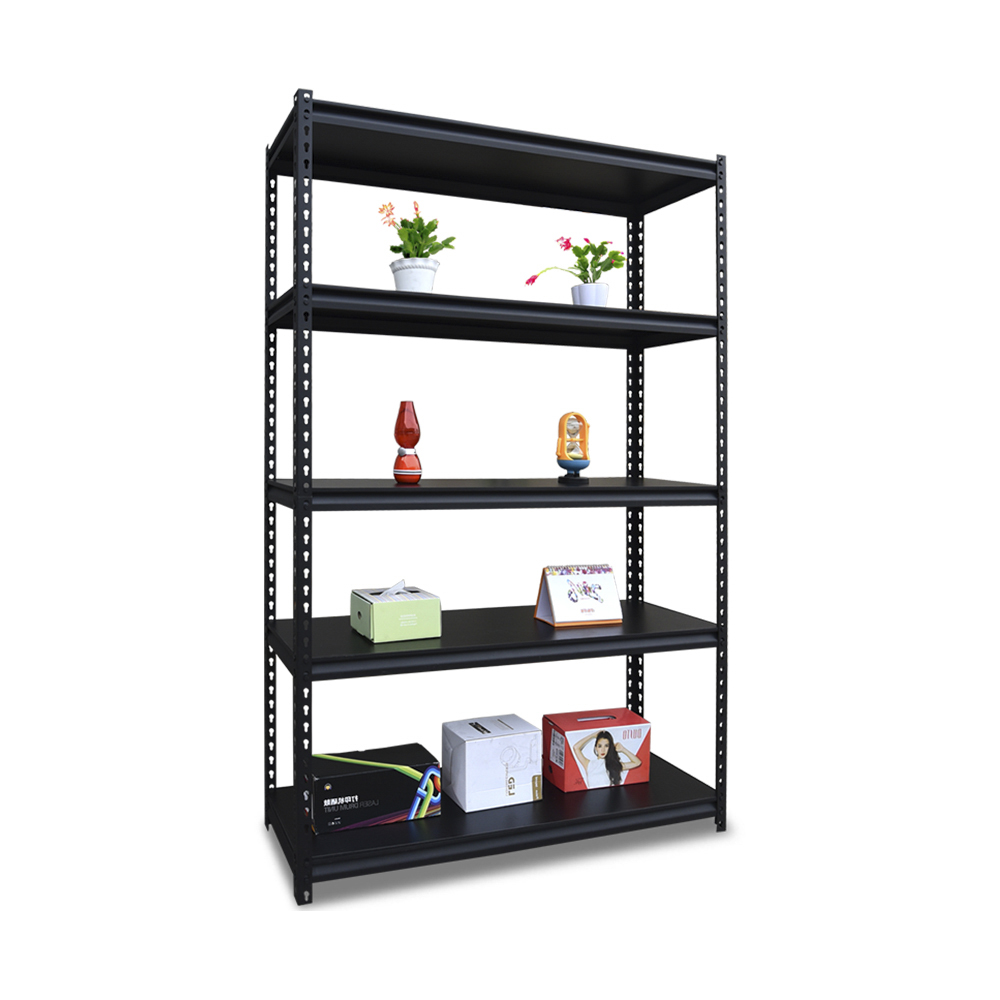 Adjustable Metal Shelving for Home, Office & Warehouse【Keep Your Home Organized Clutter-Free】 This light-duty home storage rack is the perfect solution for organizing your home and keeping it free of clutter. With its adj...View Product →
For spaces where the wall cannot be trusted, a foldable storage shelf offers a practical alternative. It can be assembled without wall fixings and still provides multiple tiers of storage. This is especially useful in rented apartments where drilling large anchors is not allowed.
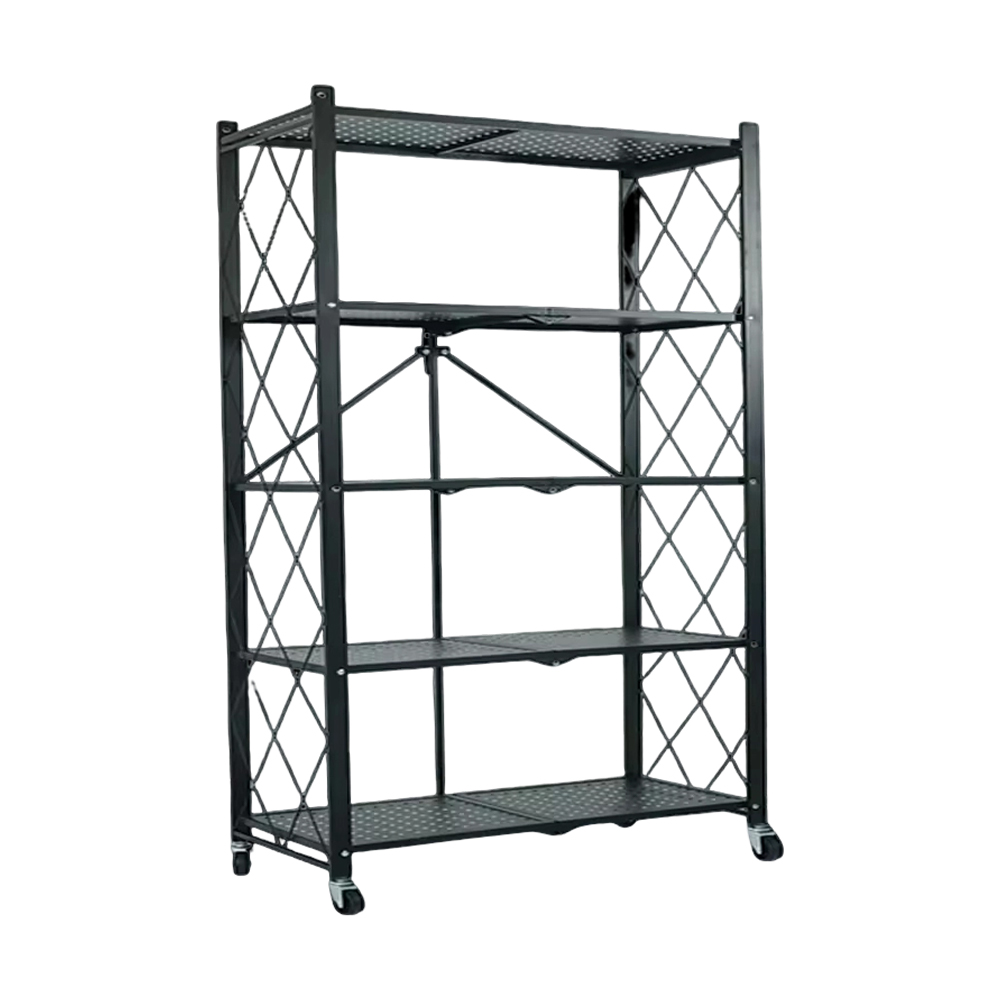 Large Capacity Foldable Multilayer Storage Racks for Home【Foldable Space-Saving Storage Rack】 This innovative storage rack features a foldable design, allowing you to easily fold it up and store it away when not in use, savi...View Product →
When wall strength or load capacity is uncertain, a freestanding or wall-mounted shelf system is a safer long-term choice than forcing a floating bracket beyond its limits.
FAQ
How much weight can floating bookshelf brackets hold?
It depends on the wall. A single rod bracket in drywall with a toggle bolt may safely hold about 10–15 kg per pair. A steel plate bracket fixed into timber studs or concrete can hold 40–70 kg per pair. Always apply a safety factor of two and follow the bracket’s published rating.
Do I need to hit a stud?
For heavy books, yes. Hitting at least one stud with one bracket dramatically improves safety. If no stud is available, use a full-width French cleat with multiple toggle bolts or choose a freestanding shelf instead.
What size screws should I use for floating shelf brackets?
Use the screws supplied with the bracket. For timber studs, lag screws of 6–8 mm diameter and 60–80 mm length are common. For concrete, use expansion bolts or chemical anchors sized for the bracket plate. Never use drywall screws for structural loads.
Can I install floating bookshelf brackets on drywall only?
You can, but only for very light loads. Use toggle bolts or heavy-duty hollow-wall anchors. Avoid plastic expansion anchors for anything heavier than a small decorative item. Check for wobble regularly.
How do I hide the brackets completely?
Choose a bracket that inserts into the shelf from the back, such as a rod or plate bracket. The shelf must be deep enough to conceal the insertion. A French cleat can be hidden if the shelf has a recessed back. For a truly invisible look, the shelf must be designed for the specific bracket.
What is the best shelf material for floating brackets?
Solid wood or plywood is best because it holds the bracket firmly. MDF is acceptable for light loads if the holes are precise. Particleboard is the least reliable because it crushes easily around the bracket.
Match the bracket, the anchor, and the shelf material to the real load; if any one of the three is weak, the whole shelf is only as strong as the weakest link.
Related Resources
For more detail on load ratings and shelving selection, explore these resources from our site:
These pages explain how professional shelving systems are rated and how to choose storage that matches your real capacity needs.
Use the same load-first thinking for floating shelves and full shelving systems: identify the wall, the weight, and the safety factor before you buy.


