Content
- 1 What a Garage Rack System Must Handle in Real Garages
- 2 Load Ratings, Bay Geometry, and Safety Factors
- 3 Materials, Finish, and Corrosion Control for Garage Conditions
- 4 Layout Patterns: Wall, Corner, Island, Overhead, and Mobile Rack Systems
- 5 How to Choose a Garage Rack System: Eight Practical Checks
- 6 Installation, Anchoring, and Floor Protection
- 7 Cost, Lead Time, and Supplier Evaluation for B2B Buyers
- 8 Performance Comparison: Garage Rack System Use Cases
- 9 Maintenance, Inspection, and Common Failure Points
- 10 FAQ: Garage Rack System Questions Buyers Ask
- 11 Next Steps for Your Garage Rack System Project
A garage rack system is a structural storage decision, not a decorative shelving accessory. The right system keeps tools, parts, seasonal equipment, and business inventory organized while protecting the floor, walls, and daily workflow of the garage. The wrong system, however, can waste vertical space, create unsafe loading points, rust early, or become impossible to expand when storage demand grows.
For homeowners, workshop managers, retailers, and e-commerce operators, the buying decision usually comes down to a few practical questions. How much weight will each shelf carry? Will the rack stand on the floor or hang from the wall? Does the garage see humidity, road salt, or temperature swings? Is the goal a one-time tidy-up or a scalable storage system that a manufacturer, supplier, or wholesaler can support with repeat orders and custom sizes?
The most reliable approach is to define the load, bay size, finish, and installation method before comparing prices. A garage rack system that is correctly specified often costs less over its service life because it needs fewer replacements, less repair, and less unsafe improvisation. Buyers who treat racking as part of the building infrastructure, rather than as furniture, make better decisions at every budget level.
Key takeaway: A garage rack system should be specified around load, bay geometry, finish, and installation, because those four factors determine safety, service life, and long-term cost.
What a Garage Rack System Must Handle in Real Garages
A real garage is a mixed-use environment. It may hold automotive tools, paint cans, bicycles, tires, lawn equipment, camping gear, packaged inventory, and spare parts. Each item creates a different loading pattern. A stack of tires concentrates weight in a small area. Boxes of inventory may create a uniform load across a shelf. Long pipes, lumber, or ladders create point loads and require support at the correct intervals. A garage rack system must be selected for the worst realistic load, not the average daily load.
Space is another constraint. Many residential garages have ceiling heights between 8 and 12 feet, but garage door tracks, openers, lights, and ventilation ducts reduce usable height. Wall-mounted systems can free up floor space, but they transfer load into studs, blocking, or concrete. Floor-standing systems are easier to relocate, but they consume floor area and need leveling feet or shims. Overhead systems can recover unused ceiling volume, yet they demand careful anchoring and clearance planning.
Climate also matters. In coastal areas, humid climates, or regions with winter road salt, standard painted steel can corrode at cut edges, welds, and footplates. Powder coating helps, but it is not the same as hot-dip galvanizing or stainless steel. If the garage is attached to a house, moisture from vehicles, laundry equipment, or poor drainage can accelerate rust. A rack system sold for dry retail storage may not perform well in a damp workshop.
Finally, the garage rack system should support future change. A fixed shelf height may work today, but a new tool, a larger compressor, or a different inventory mix can make it obsolete. Adjustable beams, slotted uprights, and modular bay widths give the system a longer useful life. For business users, modularity also simplifies reconfiguration when a warehouse or service area changes layout.
When buyers compare a light-duty home rack with a heavy-duty industrial rack, the difference is not only steel thickness. It is also the beam profile, upright gauge, connection design, decking, anchoring requirement, and safety tolerance. A rack that flexes under load may still stand, but flex can loosen connections, damage powder coating, and make workers avoid using the system. Stability and predictable deflection are part of the specification.
Key takeaway: A garage rack system should be chosen for the heaviest concentrated load, the available height, the moisture exposure, and the need for future reconfiguration.
Load Ratings, Bay Geometry, and Safety Factors
Load ratings are often misunderstood because they can refer to different measurements. A manufacturer may state a capacity per shelf, per pair of beams, per bay, or per upright frame. The number is also affected by how the load is distributed. A uniformly distributed load across a shelf is easier for the structure to carry than the same weight placed in the center as a point load. For safety, buyers should confirm whether the published capacity assumes even distribution, static loading, and a specific beam length.
Bay geometry matters because span controls deflection. A 48-inch beam behaves differently from a 96-inch beam, even when both are made from the same steel gauge. Longer beams need deeper profiles or additional support. In a garage, wide bays are convenient for large boxes, but they can sag under heavy tools. Narrow bays increase the number of uprights and reduce open storage width, but they usually improve rigidity and load control.
Table 1. Typical garage rack system duty classes and best-fit applications.
| Duty class |
Typical shelf capacity |
Common bay width |
Best-fit garage use |
Installation focus |
| Light duty |
50 to 150 lb per shelf |
24 to 36 in |
Paint, hand tools, small bins, household overflow |
Wall anchoring, level floor, basic wall studs |
| Medium duty |
150 to 400 lb per shelf |
36 to 48 in |
Workshop supplies, auto parts, packaged goods, retail backstock |
Concrete anchors, braced uprights, beam locking |
| Heavy duty |
400 to 1,000 lb or more per shelf |
48 to 96 in |
Tires, engines, machinery, dense inventory, commercial storage |
Slab condition, seismic bracing, engineered layout, forklift or pallet access |
| Pallet and cantilever |
Project-specific, often 1,000 lb and above |
Varies by load and equipment |
Pallets, long lumber, pipe, steel stock, bulky equipment |
Professional design, impact protection, clear operating aisles |
The table shows why capacity alone is not enough. A medium-duty rack with a 400 lb shelf rating may be suitable for packaged inventory, but the same rack may be unsafe if the load is concentrated on one small area or if the slab is cracked. Similarly, a heavy-duty rack rated for 1,000 lb per shelf still needs correct anchoring and beam engagement. The rack is a system, and the weakest connection controls the real-world result.
Safety factors are also affected by usage. If the garage rack system will be loaded by hand, the user can place boxes carefully. If it will be loaded with a pallet jack, forklift, or rolling cart, impact forces become part of the duty cycle. Uprights need protection from vehicle bumps and equipment strikes. In commercial garages and workshops, adding guard rails, corner protectors, and clearly marked load limits can prevent expensive damage.
For a deeper explanation of duty classes, see this warehouse rack duty ratings guide. It is useful for buyers who need to compare light, medium, and heavy rack construction before selecting a garage layout.
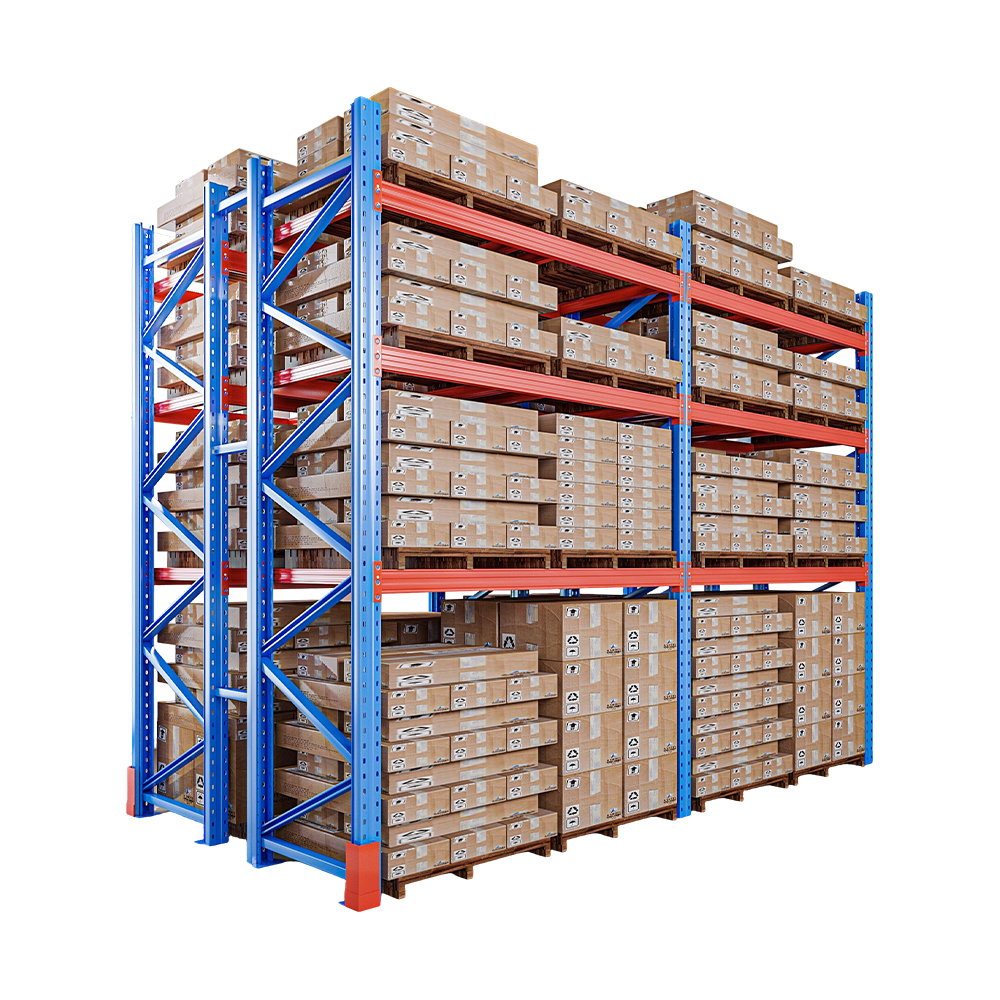
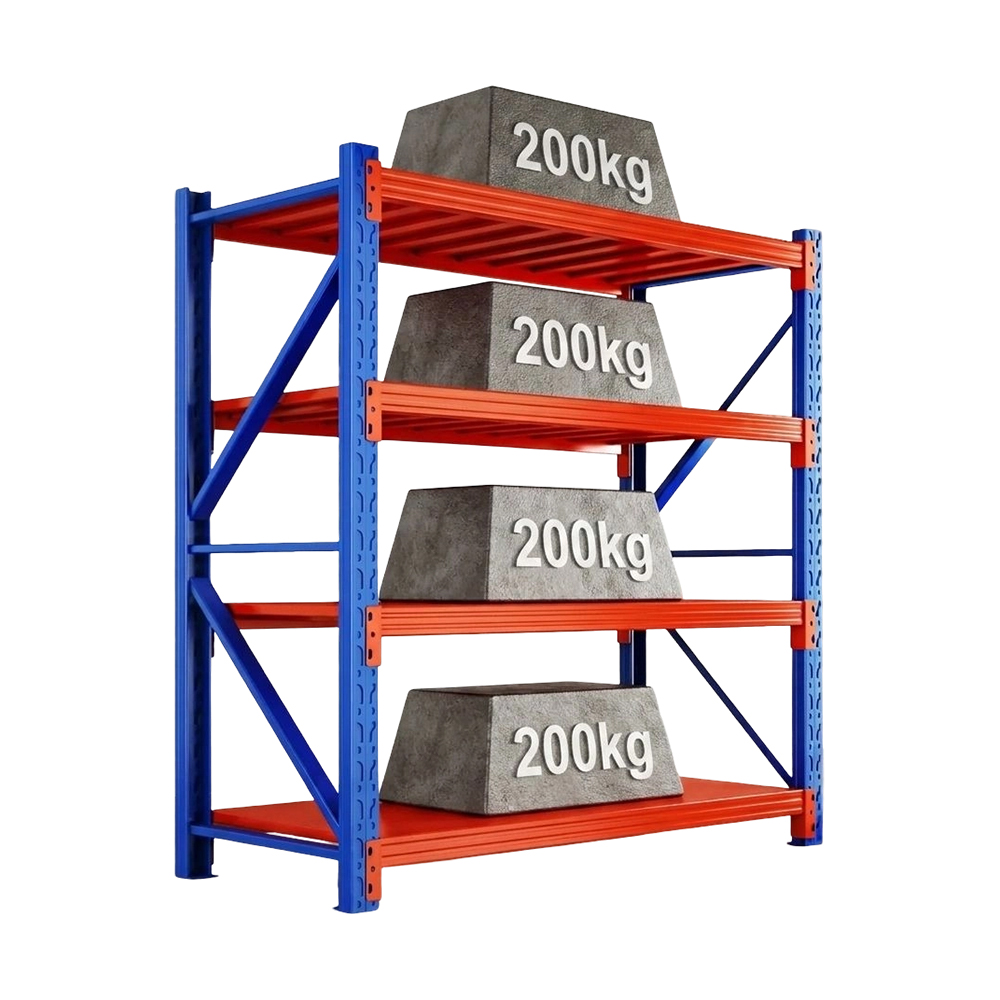
 Heavy Duty Industrial Steel Storage Rack for WarehouseEngineered for industrial storage with over 500 kg per layer, multi-folded beams, boltless uprights and powder-coated cold-rolled steel; a strong option when duty-class guidance calls for higher capacity.View Product →
When in doubt, step up one duty class rather than pushing a lighter rack to its limit. The cost difference is usually smaller than the cost of replacing a bent rack, repairing a wall, or dealing with an unsafe storage area. A professional supplier can calculate load per bay and recommend a safe beam length for the intended items.
Key takeaway: Match the rack duty class to the actual load pattern and bay span, because a shelf rating without installation and load distribution context can be misleading.
Materials, Finish, and Corrosion Control for Garage Conditions
Steel is the default material for a durable garage rack system, but not all steel storage is equal. The uprights, beams, shelf panels, and footplates may use different gauges and finishes. A powder-coated finish provides color and moderate protection, but moisture can reach cut edges, weld seams, and scratched areas. In a dry garage, powder coating is often adequate. In a humid, coastal, or road-salt environment, galvanized or stainless steel parts may deliver better long-term value.
Corrosion usually starts where water sits. Footplates, floor anchors, and the bottom of uprights are common problem areas. If the garage floor is washed regularly or snow melts from vehicles, water can pool around the base. Raised footplates, sealed concrete, drainage, and corrosion-resistant coatings help. For food-adjacent, medical, or wash-down areas, stainless steel shelves are easier to clean and less likely to rust, although they cost more.
Decking also affects performance. Solid steel panels contain small items and resist damage, but they can trap moisture if the garage is damp. Wire decks allow air movement and reduce dust buildup, but small parts may fall through. Particleboard or wood decks are quiet and affordable, yet they can swell if exposed to water. For a workshop, steel decking with a reinforced underside often provides the best balance of durability and cleanliness.
Finish quality should be checked at the following points: welded joints, beam end plates, locking tabs, upright slots, footplates, and shelf edges. A smooth finish with no sharp burrs reduces injury risk and improves corrosion resistance. Buyers requesting OEM or ODM production should define the finish standard clearly, including color, gloss level, salt-spray expectation, and touch-up requirements.
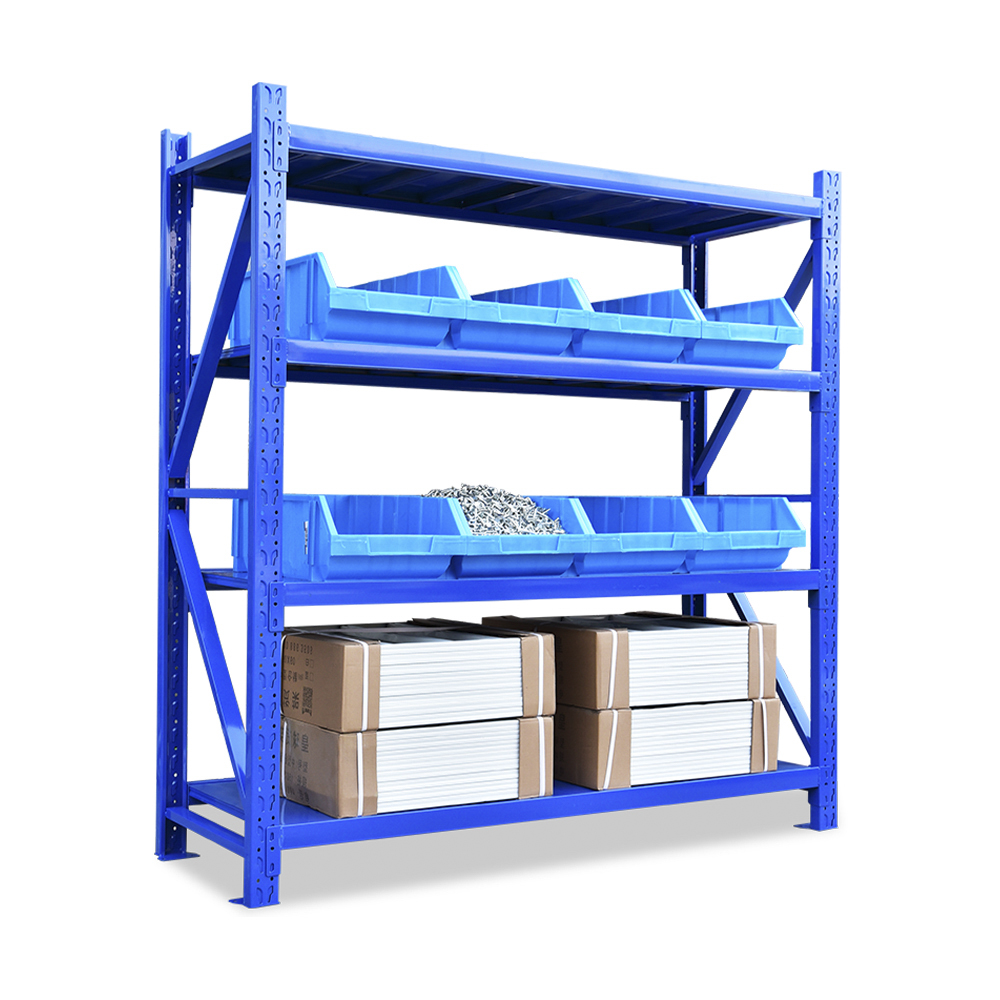
 Medium Duty Steel Storage Rack with Corrosion ProtectionMedium-duty rack with 200–500 kg per layer, multi-bent beams, one-piece shelf edges and powder-coated steel; useful for garage or factory storage where finish corrosion resistance matters.View Product →
For garage use, a medium-duty rack with corrosion protection is often the practical middle ground. It can handle automotive parts, tools, and packaged stock without the cost and weight of a full pallet racking system. The key is to confirm that the coating is suitable for the actual humidity and chemical exposure, not just the showroom appearance.
Key takeaway: Powder coating, galvanizing, and stainless steel serve different garage conditions, so choose the finish based on moisture, salt, cleaning, and chemical exposure rather than color alone.
Layout Patterns: Wall, Corner, Island, Overhead, and Mobile Rack Systems
Layout determines how much a garage rack system improves daily work. A wall rack along the side wall keeps the center bay clear for vehicles. A corner layout uses otherwise dead space and creates a compact storage zone. An island rack can divide a workshop from parking space, but it must not block doors, walkways, or natural light. Overhead racks recover ceiling volume, yet they require strong anchoring and safe loading practices.
Start with clearances. A typical walking aisle needs about 36 inches. A cart or wheelchair-friendly path may need 42 to 48 inches. If a vehicle door opens into the garage, allow enough space for the door swing and for people to move around the vehicle. Keep at least 18 to 24 inches of clearance below ceiling-mounted racks for comfortable access, and more if large items must be lifted. Garage door tracks often limit overhead placement, so measure the highest point of the door travel before ordering.
For a one-car garage, vertical wall racks and narrow bay shelving usually work best. For a two-car garage, a combination of wall racks, overhead storage, and one tall cabinet zone can preserve parking space. For a workshop or small business, define zones: incoming goods, work-in-progress, tools, finished inventory, and shipping supplies. A garage rack system that separates these zones reduces handling time and prevents mixed inventory.
Mobile rack systems are useful when the garage layout changes often. Heavy-duty casters allow a loaded rack to move for cleaning or events, but they reduce the safe load rating compared with fixed racks. If mobility is required, confirm caster capacity, floor condition, braking, and wheel material. Soft wheels protect epoxy floors but may flatten under heavy loads. Hard wheels roll easily but can damage coatings and create noise.
For retail or e-commerce garages, the layout should support picking. Place fast-moving items at waist height, heavy items on lower shelves, and slow-moving items higher or deeper. Label each bay with a location code. This simple step makes a garage rack system behave like a small warehouse system, improving accuracy and reducing search time.
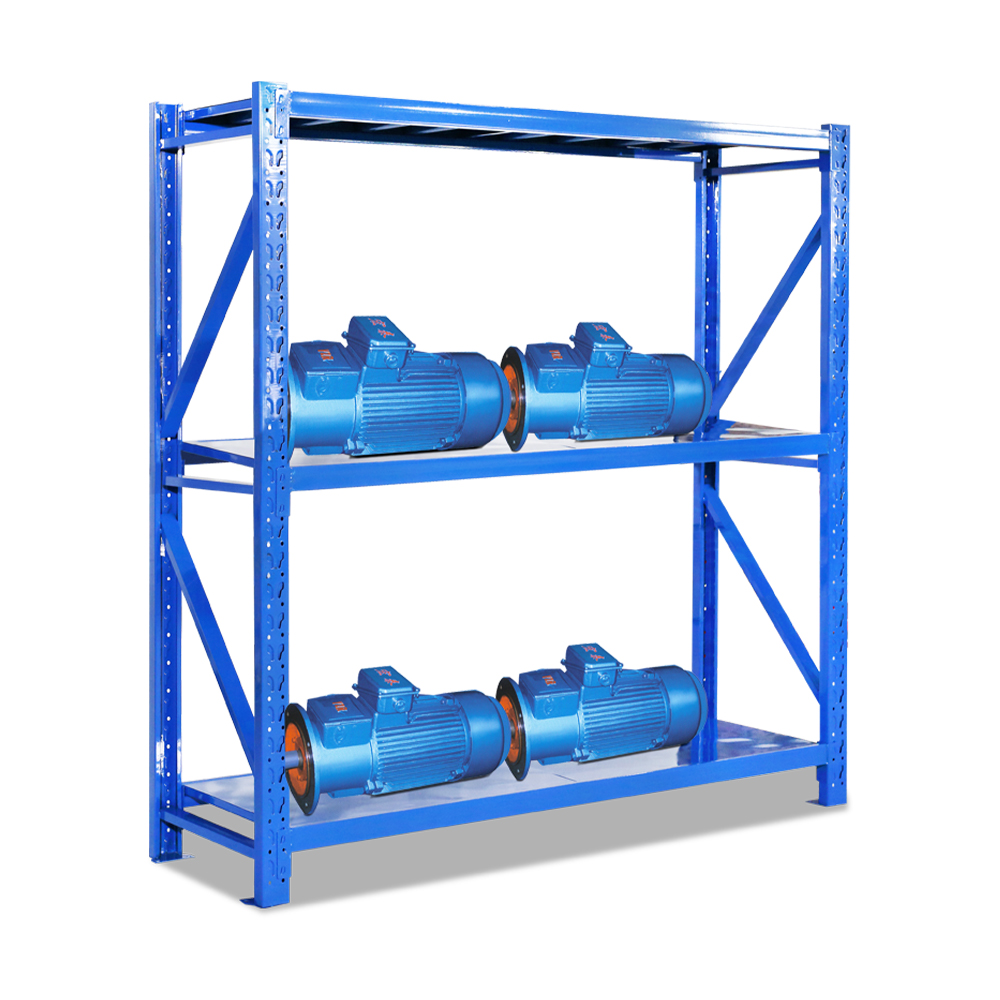
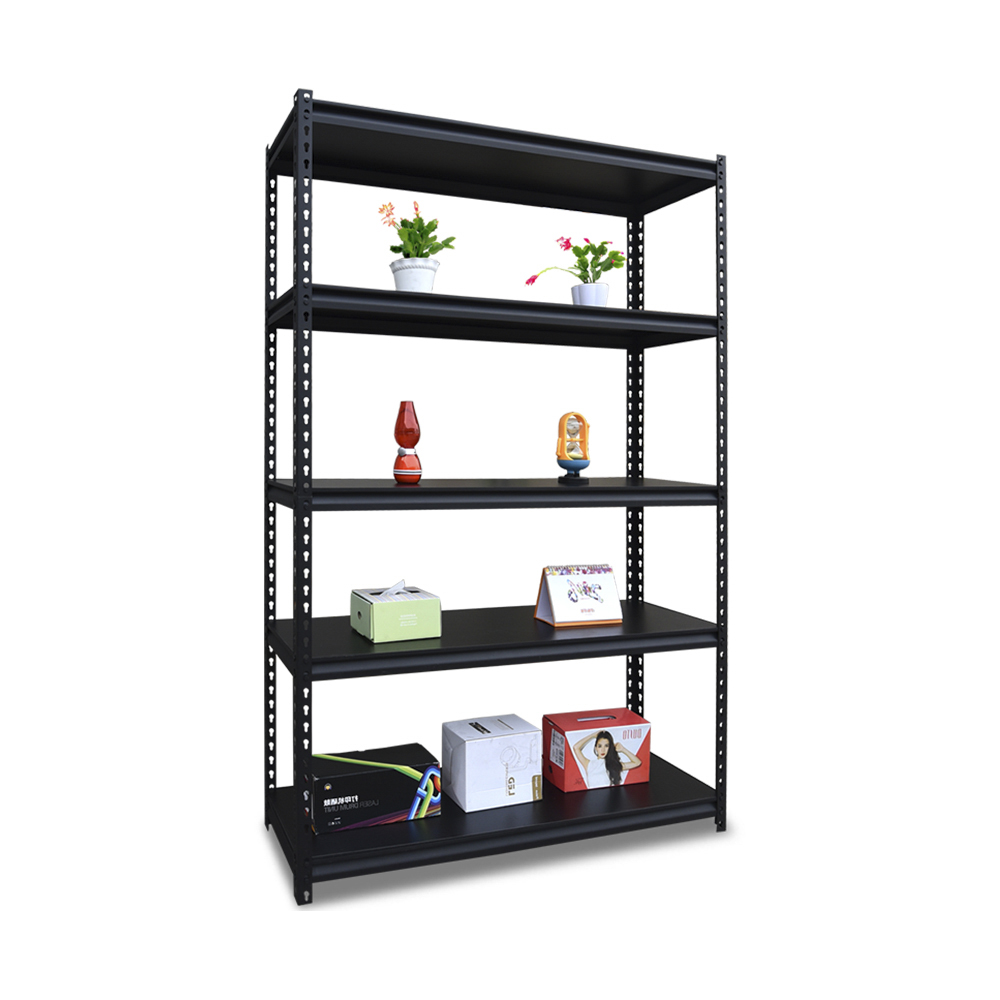 Adjustable Metal Shelving for Home Office and WarehouseLight-duty adjustable shelving with multiple layers and an anti-rust finish, suited to compact home, office or retail storage where shelf heights and bay layouts need to change.View Product →
Adjustable metal shelving is especially useful in layouts that must adapt. Shelf heights can change without replacing the entire rack, and additional bays can be added as storage demand grows. The trade-off is that adjustable systems may have lower per-shelf capacity than fixed heavy-duty racks, so the load plan must stay within the manufacturer's limits.
Key takeaway: A good garage rack system layout protects vehicle clearance, walking aisles, and loading zones while using vertical space for items that are safe to store overhead.
How to Choose a Garage Rack System: Eight Practical Checks
Buying a garage rack system is easier when the decision is broken into checks. These checks apply to a single home garage, a commercial workshop, or a wholesale order for multiple locations. They also create a fair comparison between quotes from different manufacturers and suppliers.
- Measure the garage accurately. Record length, width, ceiling height, door height, door swing, opener position, and any obstructions such as pipes, electrical panels, or water heaters.
- List the heaviest items and their approximate weight. Include the container or pallet weight, not just the product weight. Identify whether the load is uniform, concentrated, or dynamic.
- Choose the duty class. Light duty suits household overflow. Medium duty suits tools and packaged inventory. Heavy duty suits tires, machinery, and dense commercial storage.
- Select the bay width and shelf depth. Wider bays reduce upright count but may increase beam deflection. Deeper shelves hold more but reduce aisle space.
- Confirm the finish. Powder coating is common for dry garages. Galvanized or stainless steel is better for damp, coastal, or wash-down environments.
- Review anchoring requirements. Wall racks need blocking or concrete anchors. Floor racks need leveling, footplates, and sometimes seismic bracing.
- Plan for growth. Adjustable beams, modular uprights, and compatible accessories reduce the cost of future changes.
- Evaluate the supplier. Ask for drawings, load charts, finish specifications, packaging details, lead time, and after-sales support.
One common mistake is to order the largest rack that fits the wall without considering how items will be lifted onto the top shelf. If a shelf is above shoulder height, it should hold light, seasonal, or infrequently used items. Heavy items belong between knee and waist height. This simple rule reduces strain and improves safety in both home and commercial garages.
Another mistake is to compare only the price per bay. A low-cost rack may use thinner steel, fewer welds, or a finish that fails within a year. A better comparison includes steel gauge, beam profile, load test data, warranty terms, and the cost of anchors or installation. For B2B buyers, the total landed cost also includes freight, duties, packaging, and inventory carrying cost.
Key takeaway: Choose a garage rack system through measured load, bay, finish, anchoring, growth, and supplier checks, not by shelf count or lowest unit price alone.
Installation, Anchoring, and Floor Protection
Installation quality determines whether a garage rack system performs as rated. A rack that is assembled correctly but anchored poorly can shift, rock, or pull away from the wall. A rack that is anchored well but assembled out of square can bind beams and reduce load capacity. The installation sequence should follow the supplier's drawings and tolerances.
Concrete slabs are common in garages, but not all slabs are equal. A thin, cracked, or unreinforced slab may not hold heavy anchors under tension. For heavy-duty racks, consider core drilling or chemical anchors specified by an engineer. For medium-duty racks, expansion anchors may be sufficient if the slab is sound and the hole is cleaned properly. Never anchor into a slab without checking for post-tension cables, conduits, or heating pipes.
Wall-mounted racks require solid blocking or correct stud anchoring. Drywall alone is not a structural attachment. If the wall is finished, locate studs with a reliable detector and confirm their condition. In masonry walls, use anchors rated for the base material. In steel-frame buildings, attach only to structural members approved by the building designer. When in doubt, add vertical supports to the floor instead of relying on drywall.
Floor protection is often overlooked. Steel footplates can scratch epoxy coatings or create rust stains if moisture collects underneath. Adding plastic or rubber foot pads may help, but they must not reduce stability. Leveling shims should be firm, non-compressible, and secured so they cannot work loose. In garages exposed to melting snow, a small raised curb or drainage channel can keep the rack base drier.
After installation, load the rack gradually. Start with the bottom shelves and work upward. Check for movement, beam deflection, and anchor soundness as load is added. Recheck all connections after the first week and again after the first month. For commercial installations, document the load plan and train users on the maximum capacity per shelf and per bay.
Key takeaway: Correct anchoring, square assembly, and gradual loading are as important as the rack's published capacity, especially for wall-mounted and heavy-duty garage rack systems.
Cost, Lead Time, and Supplier Evaluation for B2B Buyers
For businesses, a garage rack system is often part of a larger storage project. Buyers may need multiple bays, consistent colors, private labeling, or custom dimensions. This changes the supplier conversation from a retail purchase to a manufacturing and supply chain decision. A manufacturer controls steel selection, tooling, welding, coating, and quality checks. A supplier may distribute several product lines. A wholesaler may focus on volume pricing and fast shipment. Each role can be useful, but the buyer should know which one is actually responsible for the specification.
Request drawings before production. The drawing should show upright height, beam length, shelf levels, load capacity, finish, and anchor points. For OEM and ODM projects, confirm who owns the tooling, what tolerances apply, and how samples will be approved. A small dimensional error in a garage rack system can create installation delays across dozens of sites, so approval drawings are not a formality.
Lead time depends on material availability, coating schedule, order quantity, and shipping method. Standard racks may ship in weeks, while custom colors, non-standard depths, and private-label packaging can add time. Buyers should ask for a production schedule with milestones: drawing approval, material preparation, welding, coating, packing, and dispatch. This is especially important for construction or retail opening schedules.
Quality control should cover raw steel, welding strength, hole alignment, coating thickness, load testing, and packaging. Packaging matters because a rack can be damaged before it reaches the garage. Uprights and beams should be separated, protected at contact points, and bundled with clear labels. Missing hardware is a common cause of installation delay, so a packing list and spare fasteners should be included.
For project buyers, compare suppliers on total cost of ownership. A lower-priced rack that arrives with inconsistent hole pitch, thin coating, or missing parts can cost more in labor and rework. Ask for references, sample joints, and load test reports. If the garage rack system will be used in a public or employee area, also review safety documentation and warranty support. Buyers who need scalable storage can review warehouse rack systems for heavier commercial applications and compare them with garage-grade medium-duty options.
Key takeaway: B2B buyers should evaluate the manufacturer, supplier, or wholesaler on drawings, load data, coating control, packaging, lead time, and total installed cost, not only the quoted price per bay.
Performance Comparison: Garage Rack System Use Cases
The chart below compares typical garage rack system use cases by relative suitability, not by a single universal score. It is intended to show where each configuration tends to perform well when load, access, and space are considered together. The percentages are directional planning aids, not certified load ratings.
Before reading the chart, note that a higher bar does not mean the system is better in every garage. It means the use case aligns more strongly with that rack type in common layouts. A home garage with light boxes, for example, does not need the same structure as a workshop storing engine parts.
Relative Fit by Garage Use Case
Light household storage
High
Workshop tools and parts
High
Tire and heavy equipment storage
Very high
Overhead seasonal storage
Medium
Mobile or reconfigurable storage
Medium
Retail backstock and picking
High
The chart suggests that heavy-duty and medium-duty rack systems cover the broadest range of garage needs, especially when tools, parts, and dense inventory are involved. Light-duty shelving remains useful for household overflow, but it should not be loaded with tires, engines, or bulk fluids. Overhead storage solves a space problem, yet its suitability depends on ceiling structure and safe lifting access. Mobile racks offer flexibility, but their load capacity is usually lower than fixed racks of the same size.
For retail backstock and picking, the best results usually come from labeled bays, consistent shelf heights, and a layout that keeps fast-moving items within easy reach. For heavy equipment, the priority shifts to upright strength, beam profile, and floor anchoring. The chart does not replace a load calculation, but it helps buyers narrow the shortlist before requesting detailed drawings and capacity data.
Key takeaway: Use the chart as a shortlisting tool, then confirm the final garage rack system with actual weights, bay spans, anchoring conditions, and access requirements.
Maintenance, Inspection, and Common Failure Points
A garage rack system needs periodic inspection because garages change. New items arrive, old items are moved, and moisture or impact damage may go unnoticed. A simple inspection routine can catch problems before they become safety issues. Monthly visual checks and annual detailed checks are reasonable for most home garages. Commercial garages and workshops may need weekly checks in high-traffic areas.
Check the following points during inspection: loose beam clips, bent beams, dents in uprights, missing anchors, cracked concrete, rust at footplates, damaged shelf panels, and overloaded top shelves. Pay attention to any new tilt or wobble. A rack that moves when pushed is not properly anchored or has a damaged foot. If a beam is bent, replace it rather than bending it back. Steel that has yielded once has lost capacity.
Rust is a gradual failure point. Surface rust can be cleaned and touched up, but deep pitting at a weld or footplate may require part replacement. Keep the garage dry where possible. Fix roof leaks, improve ventilation, and avoid storing wet items directly on steel shelves. If road salt is common, rinse the floor around the rack base during winter and keep the coating intact.
Impact damage is another common issue. Bicycles, lawn equipment, and vehicle doors can strike uprights. In busy garages, add protective posts or place the rack out of the main traffic path. For commercial use, define a no-parking zone near rack ends and install guard rails if vehicles or pallet equipment operate nearby.
Finally, review the load plan after any major change. If a shelf that once held pillows now holds paint cans, the load may exceed the rating. Label the maximum load per shelf and per bay in a visible location. This small habit keeps a garage rack system safe for years and helps new users understand its limits.
Key takeaway: Inspect for loose connections, bent beams, rust, and impact damage, and replace damaged components instead of returning them to service.
FAQ: Garage Rack System Questions Buyers Ask
What is a garage rack system?
A garage rack system is a structured steel or metal storage system designed for garages, workshops, and light commercial spaces. It usually includes uprights, beams, shelf panels or decks, and optional wall or floor anchors. The system may be fixed, adjustable, mobile, wall-mounted, or overhead.
How much weight can a garage rack system hold?
Capacity varies widely. Light-duty racks may hold 50 to 150 lb per shelf, medium-duty racks may hold 150 to 400 lb per shelf, and heavy-duty racks may hold 400 to 1,000 lb or more per shelf. Always confirm whether the rating is per shelf, per bay, or per pair of beams, and whether it assumes uniform load distribution.
Do I need heavy-duty racking for a home garage?
Not always. Heavy-duty racking is useful for tires, engines, machinery, and dense inventory. For paint, hand tools, holiday boxes, and normal household overflow, a light-duty or medium-duty adjustable rack is often sufficient if it is anchored correctly and not overloaded.
Can I mount a garage rack system on drywall?
No. Drywall alone cannot support a loaded rack. Wall-mounted racks must attach to studs, blocking, masonry, or structural steel. If suitable structural support is not available, use a floor-standing rack instead of relying on drywall anchors.
What is the best rack for a small garage?
Small garages usually benefit from tall, narrow wall racks, adjustable shelf heights, and overhead storage for light seasonal items. Keep the vehicle bay clear and use vertical space instead of deep floor footprints. Mobile racks can help if the garage must be rearranged often, but check caster capacity and floor condition.
Will powder coating prevent rust in a garage?
Powder coating resists rust better than bare steel, but it is not permanent protection. Moisture, road salt, scratches, and cut edges can still corrode. For damp or coastal garages, consider galvanized or stainless steel components, especially at footplates and lower shelves.
How should I compare quotes from rack manufacturers or suppliers?
Compare drawings, steel gauge, load ratings, coating specification, anchor requirements, packing method, lead time, warranty, and spare parts support. Ask whether the supplier is a manufacturer, supplier, or wholesaler, and confirm who is responsible for load calculations and after-sales service.
Can a garage rack system be customized for OEM or ODM orders?
Many manufacturers support OEM and ODM projects with custom sizes, colors, branding, and packaging. Buyers should approve drawings and samples before mass production, and define tolerances, coating standards, and packing requirements in the purchase order.
Key takeaway: The most common garage rack system questions come back to capacity, anchoring, corrosion, layout, and supplier responsibility, so clear answers should be documented before purchase.
Next Steps for Your Garage Rack System Project
The practical next step is to create a one-page storage brief. List the garage dimensions, ceiling height, door swing, heaviest items, loading method, moisture exposure, and desired future capacity. Add a simple sketch showing where vehicles, workbenches, and walkways must remain clear. This brief gives a manufacturer or supplier enough information to recommend a safe rack type instead of guessing from a photo or a single measurement.
For home users, the priority is usually a stable, adjustable, corrosion-resistant rack that fits the available wall or floor space. For business users, the priority is a repeatable specification with consistent load ratings, finish, packaging, and lead time. Both paths benefit from comparing light, medium, and heavy-duty options honestly, then choosing the lowest duty class that safely carries the real load.
Finally, plan the installation before the rack arrives. Confirm anchor locations, concrete condition, wall structure, and aisle clearances. A well-planned garage rack system does more than tidy a garage. It protects equipment, improves access, reduces duplicate purchases, and turns unused vertical space into useful, organized capacity.
Key takeaway: A successful garage rack system project starts with a measured storage brief and ends with correct anchoring, clear labeling, and a load plan that matches real use.



 English
 Español
 русский
 Français
 한국어
 عربى
 ไทย
 Deutsch
 Bahasa Melayu
 Português
 Polskie